
A jumpsuit quotation scope checklist helps buyers compare the complete one-piece garment rather than a price based on an incomplete design description. A jumpsuit joins the bodice and trouser sections, but its quotation must still account for each fabric area, closure, lining, trim and operation. Missing one detail can change consumption, sample work and the final order price.
This guide explains six checks for preparing a clear request for quotation and comparing supplier responses. It focuses on the evidence behind the price: the identified pattern, size assortment, component list, sample assumptions and delivery scope. It does not propose a universal unit price or assume that every jumpsuit requires the same construction.
Use the jumpsuit manufacturing page for the product enquiry. Send the jumpsuit quotation scope checklist with your technical references and order assumptions so the development discussion covers the whole garment, including details that may be hidden in a front-view photograph.
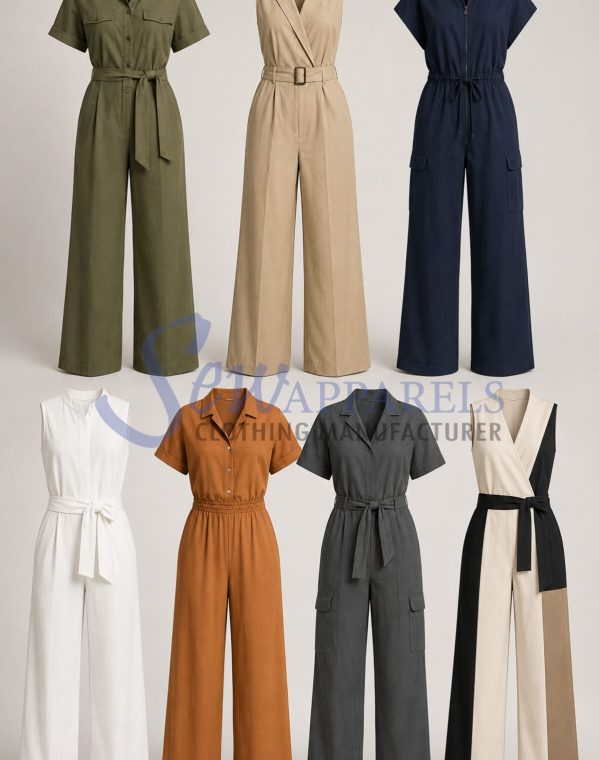
1. Identify the jumpsuit quotation scope checklist reference garment
Begin with a style reference that can be recognized by everyone preparing the quotation. Include front and back drawings, a component description, fabric references and the intended fit. A sleeveless fashion jumpsuit with a concealed closure is a different costing exercise from a long-sleeved utility style with a front opening and multiple pockets.
Record the jumpsuit manufacturing quotation inputs in one dated request. Separate confirmed requirements from options still under discussion. If a photograph is the only reference, mark unresolved details such as lining coverage, internal finishing, seam treatment and belt construction instead of allowing each supplier to make a different assumption.
A jumpsuit pattern version RFQ should identify the pattern revision used for the estimate. Changes in torso length, sleeve shape, leg width or pocket size can affect material use and sewing work. If the pattern is not ready, ask for a provisional quotation with its assumptions listed, then confirm how the price will be reviewed after development.
Define the requested quantity by style, color and size, along with the quotation currency and validity period. Keep optional variants separate. The jumpsuit quotation scope checklist should make it possible to trace every quoted version back to one set of inputs, rather than mixing the price of one construction with the image of another.
2. Connect fabric allocation to the actual size assortment
Jumpsuit bodice trouser fabric allocation should account for every shell pattern piece, not simply add a standard shirt estimate to a standard trouser estimate. The joined garment may have different layout constraints, waist construction and matching requirements. Include collars, sleeves, pockets, belts, facings and other fabric components where the design uses them.
State the fabric identity, usable width and any relevant layout restrictions. Directional surfaces, stripes, checks or prints can affect how pattern pieces are arranged. A change in width or matching requirement can therefore change the estimate even if the garment measurements remain unchanged. Record who supplied the fabric information and whether it has been verified.
Jumpsuit graded marker costing should relate to the proposed graded patterns and ordered size range. Ask whether the estimate uses an identified marker, a development calculation or a preliminary allowance. Each can be useful at a different stage, but the buyer should understand which evidence supports the current quotation.
Record jumpsuit size ratio consumption with the actual assortment. An estimate based on one development size is not automatically the order average. If the buyer changes the size mix after receiving a quote, review the relevant consumption assumptions rather than demanding that an earlier estimate cover a different order without clarification.
Use the jumpsuit quotation scope checklist to distinguish shell fabric, contrast materials, lining and reinforcement. State whether the price includes sourcing, development and any material minimums. These are questions to confirm for the specific order, not standard charges that should be copied into every enquiry.
3. Include the complete component and operation scope
Prepare a jumpsuit complete component scope that covers visible and hidden items in the jumpsuit quotation scope checklist. List closures, buttons, snaps, elastic, labels, pocket materials, reinforcement and any belt hardware. Identify quantities per garment and the proposed component references. A description such as premium zipper does not establish a length, type, finish or procurement basis.
The jumpsuit trim bill quotation should distinguish approved components from temporary sample substitutes. If the bulk component has not been selected, record the basis of the estimate and the point at which it will be confirmed. Avoid treating an attractive development sample as evidence that all quoted bulk components are identical.
For a jumpsuit optional lining quote, specify coverage and material separately. Full lining, bodice lining and localized pocket or facing materials do not represent the same scope. Describe how the lining is attached and finished so that material and sewing estimates reflect the intended garment rather than an undefined lined option.
Jumpsuit closure operation costing should include the complete assembly, not only the purchased closure. Identify access, reinforcement, facing and finishing requirements. The selected opening can also affect dressing convenience and sample revisions, so quotation scope should connect the construction drawing with the operation assumptions.
Coats’ thread consumption guide explains that seam and stitch choices, material thickness and construction influence thread use. Its guidance supports construction-specific estimating. The published examples are not a universal thread quantity or waste allowance for a jumpsuit, and they do not establish Sew Apparels’ component sourcing.
4. Separate sampling, revisions and decoration options
Jumpsuit sample revision scope should explain the sample stage included in the offer and what happens when the buyer requests changes. A first development sample, a revised fit sample and an approval sample are different activities. Confirm whether patterns, materials, shipping or additional iterations are included or separately quoted.
Record jumpsuit sample iteration assumptions before comparing supplier prices. A low initial quotation may assume that the buyer provides a finished pattern and approves the first sample. Another offer may include development work. Neither price can be understood properly until those assumptions are visible and the buyer chooses the required service scope.
Jumpsuit decoration quote inclusions should identify placement, size, artwork condition and the proposed decoration method. Separate optional embroidery, printing or special labeling from the undecorated garment where appropriate. If artwork is not finalized, record the estimate as provisional rather than presenting an undefined decoration as a fixed commitment.
Use a jumpsuit one piece quotation worksheet with separate lines for development, garment production, decoration and optional changes. Mark whether each line is included, excluded, provisional or awaiting information. This simple distinction helps the buyer see where a quotation is complete and where further decisions are required.
The jumpsuit quotation scope checklist should also identify the approval sequence. Record which fit, material and decoration decisions must be completed before bulk production can be confirmed. Avoid assuming that an early quotation automatically reserves production capacity or guarantees a shipment date before the remaining inputs are agreed.
5. Compare packing and delivery responsibilities explicitly
List the packing format, labels, bag requirements and carton arrangement requested for the order. Separate buyer-mandated details from supplier proposals. If packing information is not available, ask the quotation to identify its basis so that later additions can be reviewed as documented scope changes.
Jumpsuit supplier quote exclusions should be easy to find. Ask about sample transport, inspection arrangements, freight, insurance, documentation and other order-specific items as relevant. The purpose is not to assume that every item must be included in the garment unit price; it is to prevent buyers from comparing prices that cover different responsibilities.
The International Trade Administration’s Incoterms overview explains how these terms allocate delivery-related tasks, costs and risks, while noting that they do not define every sale condition or payment arrangement. For a real quotation, identify the agreed rule, version and named place with the appropriate parties rather than using a delivery abbreviation without context.
Keep payment terms, quotation validity and production timing separate from the garment specification. Confirm them through the actual commercial offer. A jumpsuit quotation scope checklist is a comparison tool; it does not replace the final purchase agreement or resolve responsibilities that the buyer and supplier have not agreed.
If a delivery requirement changes, revise the comparison worksheet. Record which part of the offer changed and which garment assumptions remained the same. This preserves a clear basis for discussion instead of making the final total appear inconsistent with an earlier offer covering a different delivery scope.
6. Make the quotation comparison traceable before approval
A useful jumpsuit manufacturing scope comparison places equivalent requirements side by side. Check pattern identity, fabric basis, size assortment, components, sampling and delivery before comparing totals. Where one supplier has proposed a different construction, show that difference as an option rather than calling it an equivalent price.
Ask for clarification on unresolved assumptions in a single consolidated request. Keep the supplier response attached to the quotation version. If the buyer accepts a substitution or removes a requirement, record that decision so the approved price can be understood without searching through separate messages.
For custom jumpsuit manufacturing, the quotation discussion works best when the buyer supplies a clear technical brief and allows unresolved development questions to be identified. A realistic scope supports better decisions about cost and construction. It does not require inventing specifications solely to obtain an apparently final price sooner.
In private label jumpsuit production, startup brands can use the same worksheet to compare a manageable initial specification with optional additions. Discuss feasible order and development arrangements through the enquiry. Minimum quantities, sample services and payment commitments should come from the actual offer rather than assumptions in an educational article.
Retain the approved jumpsuit quotation scope checklist with the selected quotation, technical revision and decision record. When the order changes, update the affected fields before asking for a revised price. This keeps the buyer’s chosen design and the supplier’s commercial scope aligned.
Review jumpsuit entry closure planning before fixing the opening-related component and operation scope. Confirm the intended access on a sample rather than pricing the zipper alone.
Common quotation questions
Can a front-view image support a final quotation?
It can start a discussion, but hidden construction, material identity, sizes and service assumptions may still be unresolved. Ask which details were assumed and whether the offer is provisional. Confirm those details before treating the price as the approved basis for production.
Should every development cost be included in the unit price?
The parties can agree different pricing structures. What matters for comparison is that included and separate charges are visible, along with the quantity and service scope. A clear worksheet helps the buyer understand the total relevant offer without requiring one universal quotation format.
What should be approved before accepting the offer?
Confirm the reference garment, material and component basis, size assortment, development assumptions and commercial responsibilities. Use the jumpsuits buying guides to connect quotation decisions with torso fit and entry construction before finalizing the brief.
The final jumpsuit quotation scope checklist should show what the buyer requested, what the supplier priced and what remains conditional. That clarity makes a complete one-piece garment easier to compare, develop and approve without confusing a lower number with a better matched offer.