
A reversible bucket hat is not simply a standard hat turned inside out. Both faces must look intentional, the construction must hide or control seams, labels need a workable solution, and decoration may affect both appearance and comfort. Reversible bucket hat quotation comparison separates these requirements so a buyer can compare a reversible design with a single-sided version on the same commercial basis.
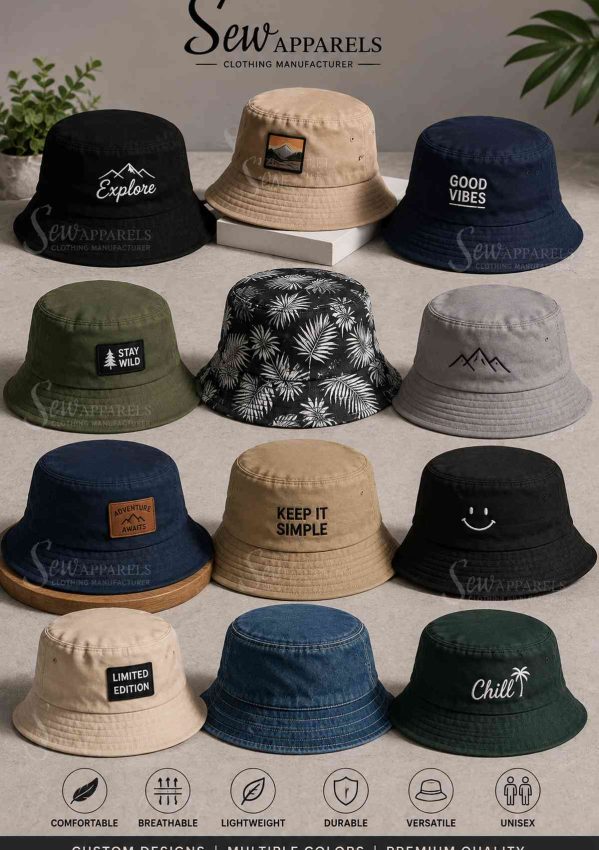
The objective is not to assume a fixed price premium. It is to obtain written specifications and supplier quotations that show which materials, operations, development work and packing assumptions are included.
1. Define the Two Intended Wearing Faces
Start with technical drawings for Face A and Face B. Identify crown panels, side panels, brim, topstitching, eyelets, ventilation, decoration, labels and any pocket or fastening. State whether both sides are equally marketable or whether the second face is a simpler alternative.
A bucket hats double sided bucket hat quote should reference one controlled specification. Give every material and operation a face designation. Avoid phrases such as “same inside” because they do not define colour, seam finish, artwork, label placement or quality expectation.
Use reversible bucket hat quotation comparison to list the single-sided baseline beside the reversible proposal. The baseline may include an outer shell, lining and conventional internal labels, while the reversible version may require two presentation fabrics and concealed construction. The comparison should show the actual difference rather than treating the lining as a second wearable face.
2. Compare Material Consumption by Side
Request consumption for every fabric, interlining, reinforcement, tape, thread and trim. The bucket hats reversible bucket fabric consumption calculation should reflect marker efficiency, pattern pieces, directional prints, shrinkage allowances and the quoted width for each face.
A bucket hats reversible hat two fabric cost line should separate Face A fabric from Face B fabric. Record supplier, composition, construction, weight, colour, finish, unit price, purchasing unit and minimum commitment. Do not blend the costs into one average that hides a high-exposure second material.
Track bucket hats second face material commitment independently from finished-hat quantity. The second fabric may have a different mill minimum, dye-lot requirement or stock status. Ask who owns unused material, whether it can be stored and what happens if the reversible version is cancelled.
For prints, checks or directional motifs, request the actual marker and matching allowance assumptions. For coated or highly structured fabrics, confirm whether the material can turn cleanly and remain comfortable on both faces.
Check colour interaction as well as cost. A dark face may shadow through a light face, transfer colour during care or show seam allowances that were invisible in the original concept. Add sampling, colourfastness or opacity evidence where relevant. The reversible bucket hat quotation comparison should include those confirmed evaluation costs instead of treating corrective development as free.
3. Separate Construction Labour and Label Solutions
Reversible construction may require different assembly sequencing, seam concealment, turning, pressing, topstitching and quality inspection. The bucket hats reversible construction labour allowance should identify these extra operations rather than appearing as an unexplained unit-price increase.
Create a bucket hats reversible design cost breakdown with labour lines for cutting, panel preparation, brim assembly, crown joining, turning, closing, topstitching, finishing and two-face inspection. Use quoted values only; do not invent factory minutes or efficiency.
Labels need special attention because a conventional inside label may become visible on one wearing face. The bucket hats reversible hat label cost can include a removable label, pocketed label, edge-mounted solution, separate information tag or another compliant method. Confirm permanence and placement requirements in every destination market.
The U.S. Federal Trade Commission’s textile and wool labelling guidance explains fibre, origin and responsible-business information and notes specific scope treatment for headwear and wool hats. Headwear is excluded from the Textile Act list, while wool hats remain covered by the Wool Rules. Check fibre composition and destination-specific obligations before choosing a label solution; reversibility does not create a universal exemption.
Reversible bucket hat quotation comparison should show which label solution was quoted, which information appears on the product or packaging, and who approves compliance. A low-cost label solution is not acceptable if it becomes unreadable, detachable when permanence is required or visually damages one face.
4. Price Decoration on One or Both Faces
Decoration may be visible from both sides or may require backing concealment. The bucket hats two face decoration pricing should identify artwork, dimensions, position, technique, stitch count or colour count where relevant, setup, sampling and unit cost for each face.
Ask whether Face A decoration affects Face B. Embroidery backing, stitch penetration, patch attachment and heat-transfer pressure may create visible or tactile evidence on the opposite side. A clean reversible result may require separate panels, patches, appliqué strategies or another construction decision.
Compare a one-face decoration scenario with a two-face scenario. Preserve separate artwork approvals and sample codes. Do not assume that one setup charge covers both designs or that the lower-cost method provides the intended appearance on both materials.
Include quality-control access in the construction review. Concealed seams and closed reversible assemblies may be harder to inspect or repair after closing. Ask how inline and final inspections will verify hidden joins, decoration backings and foreign-material control. If additional checkpoints are quoted, keep them visible in the reversible bucket hat quotation comparison.
5. Include Sampling and Packing Implications
A reversible sample must confirm both complete looks and the transition between them. The bucket hats reversible sample development fee should state the number of samples, colourways, artwork trials, material substitutions, courier scope and revision allowance.
Record what the development charge does not cover. Custom print screens, embroidery digitising, moulds, expedited materials, special testing and additional rounds may be separate. Keep sample charges distinct from refundable or bulk-adjusted items and obtain the conditions in writing.
Define the bucket hats double face hat packing assumption. State which face is presented outward, whether the brim is folded, how shape is protected, where tags are attached and whether the two-face selling message requires different packaging. Verify carton and handling consequences rather than assuming they match the baseline hat.
Identify the trade item as it is priced, ordered and invoiced. Two wearable faces do not by themselves turn one reversible hat into two separately sold products. Review item-identification rules for the actual style, colourway, size and selling unit. GS1’s GTIN Management Standard supports consistent decisions about trade-item identification. Apply the current rules to the way the product is sold; do not create or reuse identifiers based only on the manufacturing description.
6. Reversible Bucket Hat Quotation Comparison: Scope Checklist
Create a bucket hats single versus double sided cap budget with common rows:
- Face A shell or presentation fabric;
- lining or Face B presentation fabric;
- reinforcement, trims, thread and labels;
- construction and reversible finishing labour;
- Face A and Face B decoration;
- development, testing, packing and logistics assumptions;
- material commitments, unused balances and stated exclusions.
Run a bucket hats reversible hat quantity scenario for the realistic order range. Material commitments may make the per-unit result nonlinear. Show the confirmed quote validity, currency, tax or duty basis, payment terms and quantity breaks without presenting an estimate as a supplier commitment.
List bucket hats reversible quote exclusions beside the total. Common areas to confirm include custom-dyed second fabric, matched print placement, two-face decoration setup, special labels, repeated samples, testing, packing changes and unused-material storage.
The completed bucket hats reversible hat buyer quotation should identify the specification revision, sample reference, supplier quotation, included operations, exclusions and approval owner. Resolve contradictions before comparing totals.
Use reversible bucket hat quotation comparison to decide whether the second wearable face creates enough product value to justify its material, construction and development exposure. The cheapest unit total is not necessarily the best decision if it excludes essential operations or leaves one face commercially unfinished.
Before approval, perform a line-by-line normalization. Convert currencies and units only with dated assumptions, place optional lines in a separate column and confirm whether freight, taxes or testing are included. Do not erase a supplier’s original quotation. The normalized reversible bucket hat quotation comparison should link back to each source so procurement can reproduce the decision.
The final bucket hats reversible version purchase decision should record the selected version, reasons, approved scope, open risks and retest or requotation triggers. Archive the rejected scenario so later teams understand the commercial trade-off.
Low MOQ Reversible Bucket Hat Development
For low-MOQ orders, prioritize fabrics that can support both intended faces without unmanageable material balances. In custom bucket hat manufacturing, confirm label and decoration feasibility before committing to a two-material range. Actual minimums depend on the written material and production quotations.
Startup Brand Reversible Hat Quotation Brief
Startup brands can compare a strong single-sided hat with a controlled reversible version before spending on multiple colourways. During private label bucket hat production, one transparent cost sheet helps the brand choose where the second face adds genuine retail value. Confirm material availability, order minima and sample or development charges in the actual written proposal before committing to a launch range.
Use the bucket hat brim structure review to define the layers and finishing included in both quotation scenarios. Matching outside dimensions alone does not make a lined baseline and a two-face construction equivalent.
Connect the Quote with Bucket Hat Development
Use the Bucket Hat Buying Guides to organize related decisions. Review the custom bucket hat manufacturing service and request a quote with your two-face specification and comparison sheet to discuss sample feasibility and the written scope needed for a comparable quotation.
A reliable reversible bucket hat quotation comparison ends with two comparable scopes: defined faces, traceable material commitments, visible labour and decoration lines, confirmed label and packing solutions, written exclusions and an approved purchase decision.