
Running shorts race bib pin damage is a development concern when a buyer expects an identification attachment to pass through a lightweight shell. The initial pin mark may be small, yet its appearance and stability under movement, removal and care need separate review. A finished short should not be described as resistant to every race pin simply because one sample survived a brief attachment trial.
Start by establishing whether the intended attachment belongs on the shorts at all. Competition rules, the organiser’s instructions and garment suitability answer different questions. This guide explains six checks for permitted use, pin location, puncture observation, movement loading, removal and approval. It provides a practical sample-review framework, not a certified puncture test or a guarantee that a proposed mounting method is accepted at every event.
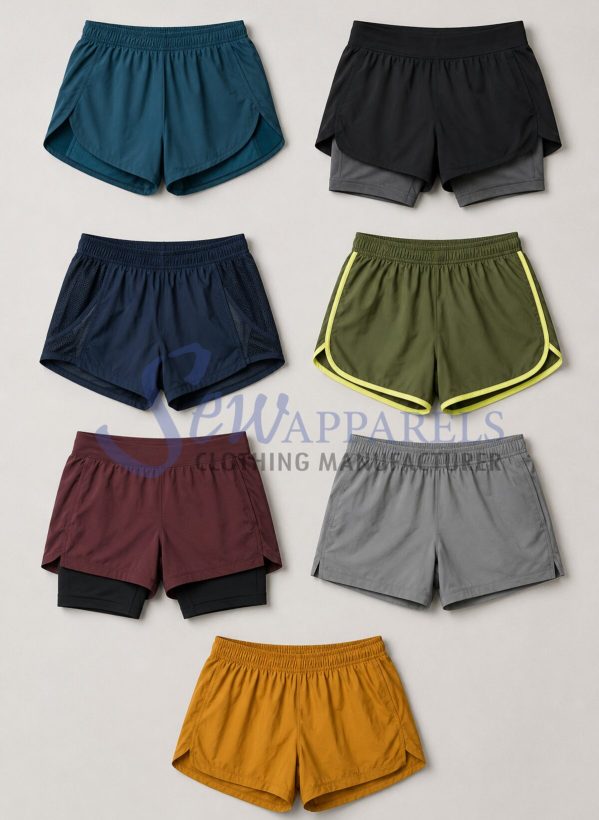
1. Define running shorts race bib pin damage within the permitted use
Identify the event type, identification item and mounting instructions before puncturing a sample. A main race bib, an additional hip number and a temporary training identifier are different items. Their placement and attachment requirements may differ. Lightweight shorts race number attachment should therefore begin with a written use description, rather than assuming the runner can choose any convenient location.
The World Athletics Book of Rules is the official publication point for its Competition Rules and Technical Rules; its current listing identifies the combined rules edition dated 1 July 2026. Consult the applicable bib provisions and the particular organiser’s instructions before selecting a mounting location. A main race bib and an additional hip identification number may have different placement and attachment requirements. Do not assume that a pinned main bib on shorts is accepted simply because the fabric can hold it. Record the event-approved arrangement before assessing the garment.
Running shorts race bib pin damage should be assessed only after the intended arrangement is defined. Record the bib or identification material, attachment count, pin design, mounting location and garment revision. If the organiser specifies an adhesive hip number, do not substitute a safety pin and present that as equivalent compliance. The garment review should follow the relevant permitted arrangement.
Keep the approval responsibilities clear
Permitted attachment guidance should distinguish the event decision from the product decision. The organiser confirms what identification arrangement is allowed. The brand and supplier review whether the chosen garment construction is suitable for that arrangement. A favourable sample result cannot override an event rule, while event permission does not prove that a thin shell will remain undamaged.
2. Map pin locations and inspect the starting shell
A pin location assessment should identify the proposed position relative to seams, hem openings, pockets, liner and waistband. Record the location on a drawing or measured sample description. Avoid allowing one reviewer to attach through a folded edge while another uses a single shell layer, then treating their outcomes as directly comparable. The layer arrangement is part of the trial condition.
Before assessing running shorts race bib pin damage, inspect the sample for existing marks, pulled yarns, holes or abrasion. Record the shell material, construction, finish and stretch direction. Keep an unpunctured comparison area or reference sample where practical. Without a starting record, a later defect may be incorrectly attributed to the attachment rather than earlier handling or garment production.
Lightweight shell pin damage can appear as a visible opening, displaced yarns, a pulled filament or a local tear. Describe what is actually observed rather than grouping every mark under one term. The relevant concern may be appearance, spreading damage, wearer contact or interference with a nearby seam. Define the buyer’s acceptance questions before examining the result.
Check the pin itself on an unworn sample. Identify its size, point condition and closure design, and exclude damaged or unreliable pins from a wear trial. Keep sharp points away from the wearer and do not attach a pin through a garment while it is being worn. If the attachment cannot be secured safely, stop and review another arrangement before movement testing.
3. Document puncture behaviour without inventing a test standard
Running shorts bib pin puncture can be reviewed with the nominated attachment on a controlled sample. Agree how the pin passes through the fabric, how the bib is positioned and whether the review concerns one insertion or repeated attachment. Record those details. A casual push through an unspecified location is not a repeatable basis for approving a production programme.
Running shorts race bib pin damage observations should include the initial mark and the same location after the agreed trial sequence. A puncture enlargement trial needs a clear baseline, consistent viewing conditions and an agreed way to describe or measure the change. Record the number of attachment operations and do not introduce extra holes into the same area unless that repetition is part of the defined use.
Running short fabric puncture propagation is a different question from the force needed to insert a pin. The buyer may want to know whether an existing mark spreads under the selected loading conditions. A fabric tear method can help a laboratory assess a relevant material property, but it does not automatically reproduce the puncture, pin contact and bib movement in a finished short.
For context, ISO 13937-2 concerns tear force using trouser-shaped fabric test specimens. It is not a race-bib pin test. Ask a competent laboratory to review the material and question before specifying a method or acceptance threshold. Keep laboratory material results separate from the finished-garment attachment observations, and avoid describing an internal trial as ISO-certified.
Make the record traceable
A pin hole propagation record should identify each marked location and its sequence of observations. Note the direction of any visible spreading, affected layer and proximity to construction details. If photographs support the internal record, use a consistent scale and viewing arrangement. Written descriptions should still explain the result so another reviewer can understand the decision without relying on a favourable image alone.
4. Compare movement loading and practical alternatives
A race shorts bib attachment trial should begin with a stationary safety and placement review. Progress to an agreed movement sequence only when the attachment is secure and suitable for the wearer. Use a controlled area, identify the sample fit and record the duration or repetitions. Stop if a point becomes exposed, the attachment loosens or the wearer experiences unacceptable contact.
Running shorts race bib pin damage during movement may depend on bib size, mounting orientation, fabric tension and how the identification item moves relative to the shell. A running motion load comparison should keep these conditions consistent between candidates. Do not compare a loose garment with a tighter fit and attribute every difference to the fabric alone.
Record whether the bib flaps, twists, pulls at one corner or contacts a hem split. Inspect the attachment locations after the movement sequence and distinguish those observations from comfort feedback. A sample can retain the bib yet show local damage, or remain visually intact while the wearer finds the arrangement intrusive. Both outcomes belong in the approval record.
Race number mounting alternatives may include an organiser-approved belt, a suitable non-piercing holder or an adhesive arrangement where explicitly required or permitted. Review each option against its actual instructions and event requirements. A non-piercing method avoids that particular pin puncture, but it may introduce slipping, rubbing, residue or material compatibility concerns. Do not present any alternative as automatically accepted or harmless.
5. Inspect removal and relevant care exposure
Attachment removal inspection should take place after the agreed sequence, using a safe procedure on the unworn garment. Open and remove the pin carefully rather than dragging the point through the shell. Check the mark, surrounding yarns, nearby seam and any inner layer. Record removal damage separately when it can be distinguished from damage observed before removal.
Running shorts race bib pin damage may become more visible after the fabric relaxes or after an agreed care exposure. Define when observations are taken and how the sample is conditioned. If the programme includes a care review, remove all pins and identification items before washing and follow the garment’s approved care instructions. Do not wash the short with an attached safety pin to simulate normal care.
Bib pin care damage review should compare the identified puncture locations before and after the specified garment care. Record the procedure and number of cycles, and inspect only when the sample is ready for the agreed evaluation. Note spreading, pulled yarns or appearance changes without assuming that every care-related difference originated from the pin.
If the result is uncertain, request another controlled sample rather than approving by guesswork. A revised seam location, shell construction or permitted attachment arrangement may warrant a separate trial. State what changed and repeat the relevant comparison. Do not combine results from different materials or pin designs into one broad durability statement.
6. Close the external attachment approval with clear limits
External attachment approval should identify the accepted arrangement, garment revision, pin or alternative holder, permitted location and evidence reviewed. Include unresolved questions and any instructions required for the user. If the garment should not be pierced at a particular panel, make that restriction clear in the appropriate product guidance rather than leaving it only in an internal conversation.
A puncture test scope review should explain what the internal trial does and does not demonstrate. Record the sample sizes, attachment operations, movement conditions and care exposure. A limited review supports a defined development decision; it does not establish resistance to every point shape, repeated user operation or race environment. Avoid universal damage-free claims without evidence matching that scope.
Use the Running Shorts Buying Guides to coordinate attachment decisions with hem construction, liners and storage reviews. Keep each approval question distinct. Passing an attachment trial does not establish overall fit, pocket security or compliance with every competition requirement. Check split hem construction separately when the permitted attachment sits near an opening.
For custom running shorts manufacturing and private label running shorts production, share the identified attachment brief with the custom running shorts manufacturer in Bangladesh. Startup brands can use the same focused process to clarify sample requirements. Agree development scope, quantities and commercial terms in the quotation, with any attachment limitation retained in the product specification.
Running shorts race bib pin damage checklist
- The proposed identification arrangement is permitted for its intended event.
- Pin design, location, layer arrangement and garment revision are recorded.
- Initial puncture and later spreading observations are distinguishable.
- Movement loading, comfort and removal are reviewed safely.
- Care exposure and alternative mounting methods have defined limits.
- Approval wording matches the sample evidence actually held.
Running shorts race bib pin damage review is complete when another developer can understand the accepted arrangement and its limitations from the record. Retain the approved sample and revisit the decision whenever the shell, attachment, construction or intended event use changes.