
Running shorts wet opacity testing helps an activewear buyer review visual coverage when a finished garment becomes wet, stretches or moves. A shell that looks opaque on a flat table can behave differently on the body, particularly in pale colours or areas under strain. The approval should identify the sample, wetting condition, lighting and fit used, rather than relying on an undefined promise of complete coverage.
Begin with the coverage question the buyer actually needs answered. Is the concern visible contrast through the shell, a liner outline, cling against the body or exposure as the hem moves? These are related observations but they are not interchangeable. This guide explains six controls for sample selection, water loading, viewing conditions, movement, care exposure and evidence-based approval. It does not establish a universal opacity threshold or a certified laboratory method.
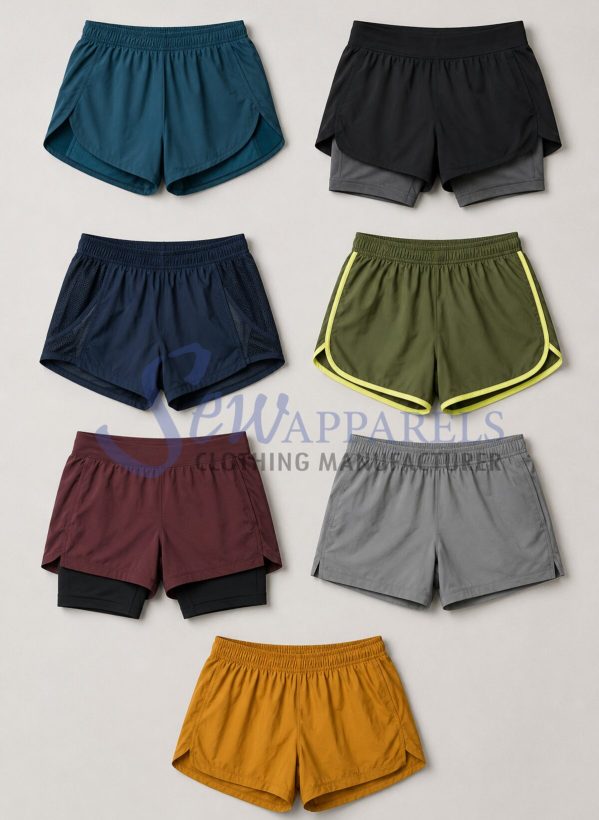
1. Define running shorts wet opacity testing around the finished product
Identify the garment revision, shell construction, colourway, liner and intended fit before comparing coverage. Record whether the product is lined, unlined or designed to be worn with a separately specified layer. A shell-only fabric observation cannot establish the coverage of a finished short, while a favourable result with one liner cannot automatically support an unlined version.
The current World Athletics Book of Rules lists the Competition Rules and Technical Rules, with the combined edition dated 1 July 2026. Review the applicable clothing requirements for the intended event directly; this internal wetting and viewing procedure does not establish compliance with those rules. Check the applicable competition requirements separately and do not present an internal sample review as official competition certification.
Running shorts wet opacity testing should have a written coverage brief identifying the concern and proposed acceptance reference. The reference may be an approved garment under defined conditions or a buyer-agreed observation criterion. Avoid an instruction such as “make it completely opaque” without explaining the intended fit, wet condition and viewing arrangement. Those details determine what a reviewer can meaningfully compare.
Specify pale colours deliberately
A pale colour coverage brief should identify each relevant shade, shell and liner combination. White, a pale pastel and a darker shade should not be grouped into one approval simply because they share a pattern. A pale running shorts coverage trial needs the actual candidate colourway and an identifiable reference. Keep the colour sample and garment revision together in the development record.
2. Control the dry comparison and wet sample water loading
Inspect the dry garment first. Record visible defects, liner outlines, pocket bags and differences between relaxed and strained areas. A dry versus wet shell comparison is useful only when its starting condition is documented. Use consistent fit and viewing conditions so a change in the review arrangement is not mistaken for a change caused by water.
Running shorts wet opacity testing requires an agreed wetting procedure. State whether the review uses local wetting, broader wetting or another defined condition representative of the development question. Record the water type, application method, affected area and time between wetting and observation. Do not describe a lightly sprayed sample and a thoroughly wetted sample as equivalent exposures.
Wet sample water loading should be traceable. Where appropriate to the agreed procedure, record sample mass before and after wetting or another clear indicator of the applied condition. Explain any draining or blotting step. An internally selected water-loading arrangement is a development control, not automatically an industry standard or a simulation of every rain and perspiration condition.
Running shorts sweat darkening assessment should remain separate from transparency. A colour can look darker when wet without the observer seeing more contrast through it. Conversely, the coverage concern may be local cling or a liner edge even when the overall colour change is small. Describe each observed effect rather than treating wet darkening as proof of either satisfactory or unsatisfactory opacity.
Do not call water a complete sweat simulation
Clean water can support a controlled comparison, but it does not reproduce every aspect of perspiration, body temperature, humidity or drying during a run. State that limitation in the record. If the buyer needs a particular perspiration or environmental claim assessed, ask a competent testing specialist to help define the evidence required instead of extending a simple water trial beyond its scope.
3. Standardise lighting, contrast and observation
Controlled lighting conditions should be recorded before reviewing running short fabric wet transparency. Identify the viewing location, light source, observation direction and whether the sample is front-lit or backlit. A bright window behind the garment and a softly lit room can create very different observations. Keep the selected arrangement consistent when comparing materials or colourways.
Running shorts wet opacity testing can use an agreed contrast reference behind the sample for initial material comparisons. Identify that reference and the contact or spacing arrangement. Do not assume a favourable result against one background establishes coverage against every underlying colour or texture. A material comparison also needs a finished-garment review when the approval concerns the actual shorts.
Use reviewers consistently and describe what they can distinguish: underlying contrast, a liner boundary, a pocket outline or a construction detail. If an observation scale is used, define its categories before reviewing candidates. Keep subjective descriptions separate from measurements. An internally chosen visual grade is not a certified opacity value unless a recognised method and appropriate report actually support that description.
Photographs can supplement the buyer’s internal evidence when suitable, but camera exposure, processing and display settings can change apparent coverage. Keep those settings consistent and avoid approving a sample solely from a flattering photograph. Another developer should be able to understand the viewing conditions and outcome from the written observations and retained sample.
4. Assess liner show-through, cling and movement separately
A liner show through review should distinguish the outline of a lining edge from transparency through the complete garment system. Record whether the observer sees a seam, colour contrast, a pocket bag or underlying detail. The corrective action might involve the liner colour or edge construction rather than simply increasing shell weight. Identify the effect before requesting a revision.
Running shorts wet opacity testing on a worn sample requires privacy and a suitable, agreed review arrangement. Use safe controlled conditions and an appropriate underlying layer or test fixture where needed for the question. Do not pressure a wearer into exposure to demonstrate coverage. Document the sample fit and the review method so the result remains interpretable.
In running shorts wet opacity testing, wet fabric cling assessment concerns how the shell lies against the body or supporting layer. Cling can change the visible outline even when contrast is not readily seen through the fabric. Record cling separately from transparency and from comfort feedback. A buyer may consider each important, but their acceptance criteria and possible construction corrections can differ.
Running short opacity under movement needs an agreed sequence that represents the review question. Stride coverage observations might include a controlled walking or running motion, with the relevant hem position and panel strain noted. Keep the area safe and stop if the conditions become unsuitable. A static standing review cannot establish coverage through every stride or movement.
Distinguish fit strain from transparency
Fit strain versus transparency should be reviewed at identified locations. A panel under greater tension may show a different appearance from a relaxed panel, while a hem opening can expose an underlying layer without light passing through the shell. Record the mechanism observed. Do not resolve an incorrect fit by labelling the fabric defective, or overlook actual transparency because the short is being worn loosely.
5. Review colourway limits and coverage after care
Colourway approval limits should identify which combinations were actually reviewed. A dark shell with a matching liner does not prove the result for a pale shell with a contrasting liner. Assess the relevant programme combinations and define any exclusions. If representative sampling is agreed, explain its basis and the situations that require another sample review.
Running shorts wet opacity testing after care should use the approved garment care instructions and a defined exposure. Record the procedure, number of cycles and condition of the sample before it is wetted again. Wet coverage after care may require repeating the same lighting, fit and water-loading arrangement used for the original comparison. Without those controls, the difference may be difficult to interpret.
Inspect the garment for changes to liner placement, shell appearance, seams and fit before the repeat wet review. Record these observations separately. If care changes the dimensions or garment balance, address that change as part of the development decision rather than attributing every coverage difference to one material property. Retain the initial observations for comparison.
When a candidate is revised, identify whether the change involves colour, fabric construction, finishing, liner or pattern. Repeat the checks relevant to that change. Do not combine several incompatible revisions into one broad coverage claim. A successful trial with a limited care exposure should not be described as a lifetime guarantee or proof of performance under all weather conditions.
6. Close the coverage evidence record before making a claim
The coverage evidence record should identify the samples, conditions, observations and buyer decision. List any unresolved effect and the scope of the acceptance. If further review is needed, specify the changed construction and comparison to repeat. A clear record gives the supplier a practical development target and helps the brand avoid a claim broader than its evidence.
For US-directed advertising, the FTC advertising substantiation policy explains the need for a reasonable basis for objective claims before they are made. Evidence must match any expressly stated or implied level of testing. A development observation under defined wetting and lighting conditions should not be converted automatically into an unrestricted non-transparent or all-weather promise. Review the evidence and wording for the intended market.
Use the Running Shorts Buying Guides to coordinate wet coverage with liners, hem construction and other sample decisions. Keep the evidence for each topic distinct. A favourable coverage review does not establish pocket retention, fabric sound or every aspect of garment fit. Compare brief versus compression liner construction separately when selecting the complete garment system.
For custom running shorts manufacturing and private label running shorts production, share the coverage brief with the custom running shorts manufacturer in Bangladesh. Startup activewear brands can use the same focused approach to clarify samples and colourway requirements. Confirm development scope, quantities and commercial terms in the quotation rather than assuming a universal material or minimum order.
Running shorts wet opacity testing checklist
- Garment, colourway, liner and fit are identifiable.
- Dry observations and wet sample water loading are recorded.
- Lighting, background contrast and viewing conditions remain consistent.
- Transparency, darkening, cling and liner outlines are distinguishable.
- Movement and relevant care exposure have defined scope.
- Approval wording matches the evidence and its limits.
Running shorts wet opacity testing is complete when the retained record explains the accepted coverage under the conditions actually reviewed. Preserve the approved sample and revisit the decision when colour, shell, liner, fit or intended claim changes.