
School house t shirt bulk packing reconciliation connects the approved order with the garments actually packed for each delivery group. A correct grand total can still contain a house-colour swap, a size shortage or a carton assigned to the wrong group. Buyers need cell-by-cell evidence, identifiable packs and a documented correction decision before treating the packing record as ready for release.
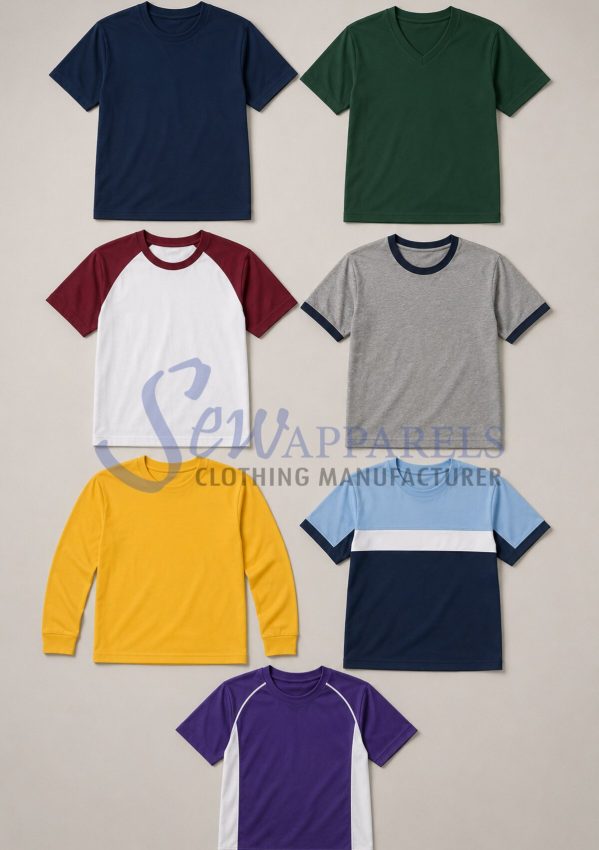
This guide uses five critical checks and an original house-by-size reconciliation matrix. It organizes ordered quantities, counted packed quantities, carton references, differences and their resolutions. It uses anonymous group codes rather than pupil identities. The method supports a clear packing decision; it does not promise zero errors or replace the programme’s actual inspection and release requirements.
Keep school house t shirt bulk packing reconciliation separate from emblem placement approval. Correct artwork placement does not show that each delivery group has received its required size allocation. The approved garment reference and the packing master need to stay connected, while their checks answer different questions.
1. Freeze the house-colour and size order master
Start with one approved order version. Identify the garment style, colour references, artwork variants, size names and requested quantities. Record who approved the version and when it became the packing basis. If there are later changes, issue a controlled revision instead of circulating several spreadsheets that appear equally current.
A house-size packing matrix for school house T-shirts should contain a distinct row or cell for every relevant combination. Use the buyer’s actual size designations and an agreed house code. Record the corresponding garment-colour reference so a colour description cannot be mistaken for a different approved shade. Reconcile row and column totals to the order total.
School house colour tee size packing needs a shared definition of each identifier. A colour, a school house and an artwork version may be related, but they are not automatically interchangeable. Where several houses use the same garment colour, retain the distinction required by the actual order. Where a house has more than one artwork version, make that variable visible.
The event tee packing master should identify its scope, including any separately approved reserve quantity, replacement allocation or delivery split. Do not add an assumed extra quantity to reconcile a mismatch. An unexplained count should remain unresolved until the responsible buyer confirms its source and treatment.
School house t shirt bulk packing reconciliation should begin only against an identifiable master. Record the version on the working packing sheet and any associated carton list. A count taken against an obsolete quantity request cannot prove that the final order has been fulfilled.
2. Define delivery groups using anonymous codes
Use anonymous class delivery codes or other agreed group codes to specify where each allocation belongs. The code should distinguish the actual groups without including student names or other personal identifiers. Keep any necessary school-held assignment information within the school’s own controlled process, rather than publish or insert it into a public development example.
School t shirt class allocation cartons need an agreed relationship between group, house, size and quantity. Define whether a carton contains one group or a recorded mix. If mixed packing is approved, identify the internal packs and their quantities so the receiving team does not have to reconstruct the intended allocation from loose garments.
Delivery-group carton identity should remain distinct from garment product identity. A group code describes allocation; it does not necessarily identify the style, size or manufacturing reference. Maintain the mappings required by the buyer’s distribution and traceability process rather than asking one ambiguous code to stand for every purpose.
For school house t shirt bulk packing reconciliation, confirm the current delivery instructions before final packing. If a group assignment changes, document the affected order cells and cartons. An allocation change may require a corrected carton list even when the total garment quantity remains unchanged.
3. Map garments to carton and pack identifiers
Garment identifier verification for school house T-shirts should compare the actual garment reference, size indication, house or artwork variant and approved master. Use the agreed labels and other identifiers available on the product. Do not rely only on a carton caption when the garments inside have not been checked against it.
A school house shirt bulk packing matrix should connect each counted quantity with its carton or internal pack reference. Use unique references within the defined dispatch. When the same order cell is spread across multiple cartons, list each contribution separately before calculating the cell total. This makes a discrepancy easier to locate than a single unexplained aggregate count.
Carton–garment quantity reconciliation should distinguish intended contents from inspected contents. The packing instruction is a plan; the recorded count describes what was verified. State the inspection or counting approach actually used and who recorded it. This guide does not prescribe a universal inspection frequency or claim that a document alone confirms every garment.
If a carton is reopened or an internal pack is moved, update the affected references and quantities through the controlled process. A carton number carried forward after its contents change can make an earlier correct count misleading. Record the revision and retain the relationship between the previous and current packing record.
The GS1 GTIN Management Standard provides a framework for consistent trade-item identification decisions. Where the buyer’s channel uses GS1 identifiers, confirm the relevant product and pack requirements with the responsible team. An internal house or delivery code is not automatically a GTIN, and the identification framework is not a guarantee of accurate packing.
4. Reconcile packed quantities against every order cell
A house-colour packed count should be recorded against the same house, size, artwork and delivery-group combination used in the master. Compare the ordered quantity with the actual verified packed quantity. Do this at the cell level before relying on the complete order total. An overage in one size cannot cancel a shortage in another without an approved change.
For school event tee order reconciliation, calculate the difference consistently. A useful convention is packed quantity minus ordered quantity, with its sign explained in the worksheet. A negative difference identifies a shortage under that convention; a positive difference identifies an overage. Retain the original figures so another reviewer can reproduce the calculation.
School house t shirt bulk packing reconciliation should check more than arithmetic. Confirm that each quantity is associated with the correct carton reference and group assignment. Look for an entry counted twice, a pack recorded under the wrong cell or an identifier that does not match the actual garment. Correct a record only after the underlying evidence supports the change.
A size-allocation dispatch check should also identify incomplete or unverified entries. Blank, zero ordered and zero packed are different states. Label a missing count as awaiting verification instead of treating an empty cell as proof of no requirement or no discrepancy. Preserve the distinction between a documented zero and missing information.
For bulk house-order distribution, reconcile delivery-group totals and the overall dispatch total after the cell review. Confirm that the carton list covers the same release scope. Matching those totals is useful evidence, but it does not override an unresolved garment identity or allocation issue within a cell.
5. Record shortages and approved corrections before dispatch
A school tee shortage log should identify the affected order cell, observed difference, carton references and evidence used to investigate it. Record whether the issue involves a physical shortage, an incorrect allocation or a recording problem. Avoid describing the cause as confirmed until the team has checked the relevant garments and records.
House tee rework approval should specify the proposed correction and the person authorized to accept it. Repacking, replacing an incorrect item or changing an allocation needs a defined decision for the programme. Do not substitute another size, colour or house variant because it makes the spreadsheet total agree.
After an approved correction, recount or verify the affected scope according to the actual control plan. Update the packed quantities and carton references, and retain a record of what changed. The original discrepancy and its resolution should remain connected. A corrected document without evidence that the affected pack was checked is insufficient.
School house t shirt bulk packing reconciliation should end with a release decision against the current record. Identify unresolved discrepancies, any approved partial dispatch and the conditions of that approval where applicable. Do not mark the entire order complete simply because unaffected cartons are ready. The responsible team must determine whether the documented scope can be released.
Keep the final packing master, reconciled carton list, inspection evidence and correction approvals together. This makes the receiving team’s allocation review more straightforward and supports investigation if a discrepancy is reported after dispatch. It does not remove the need to check actual receipt and distribution.
School house t shirt bulk packing reconciliation: the working matrix
Use this original matrix structure with actual approved quantities. The example provides fields rather than fictional pupil records or fabricated order counts. Keep a separate record for each relevant house, size, artwork and delivery-group combination.
| Checkpoint and information required | Order combination A: pending verification | Order combination B: pending verification | Order combination C: pending verification |
|---|---|---|---|
| Order cell: identify the master version, anonymous group code, house, size and garment variant. | — | — | — |
| Ordered quantity: record the approved requirement and its source. | — | — | — |
| Packed quantity: record the verified count and associated carton or pack references. | — | — | — |
| Difference: calculate packed minus ordered quantity using the stated convention. | — | — | — |
| Resolution: link the investigation, authorized correction, verification and release decision. | — | — | — |
| Carton / internal pack references | — | — | — |
| Entry owner / date | — | — | — |
A school house t shirt bulk packing reconciliation worksheet should show who entered each update and which evidence supports it. Keep rejected or superseded versions identifiable so they are not reused. When an order changes, reassess the relevant cells and cartons rather than overwrite the original requirement without a change record.
Keep allocation codes separate from required traceability
For applicable US children’s products, CPSC tracking-label guidance describes permanent distinguishing marks on products and packaging to the extent practicable, with identifying production information. Confirm the relevant requirements with the responsible team. A temporary school allocation code does not by itself replace required product traceability or prove compliance with other applicable rules.
Review how the garment’s traceability information remains connected to the bulk packing record. If a delivery contains more than one manufacturing reference, preserve the distinctions needed for the actual programme. Do not erase production identity to simplify a house allocation list. Packing accuracy and production traceability address related but separate questions.
School house t shirt bulk packing reconciliation in a buyer brief
For custom school t shirt manufacturing, send an anonymized house-size matrix, garment references, delivery groups and required packing scope. Confirm feasible pack arrangements and current quotation inputs directly. Keep pupil identities out of shared examples and provide only the operational information needed for the review.
Private label school t shirt production can use a defined first programme to establish controlled order, pack and correction records. Startup buyers should confirm how changes are approved and how counted quantities are reported. Extend the process using actual requirements, rather than assume one arrangement suits every school or channel.
Use the school T-shirt buying guides to connect the packing decision with related development checks. Complete school house t shirt bulk packing reconciliation through the approved master, verified cell counts, identifiable cartons and documented resolution before the actual release decision.