
School trouser directional fabric cutting needs a clear reference when a fabric changes appearance with its orientation. A brushed surface, pile, directional print or other visible effect can make adjacent panels look different even when they come from the same material. Buyers should agree the permitted direction before approving a cutting layout, rather than describing the issue only as a shade mismatch after sewing.
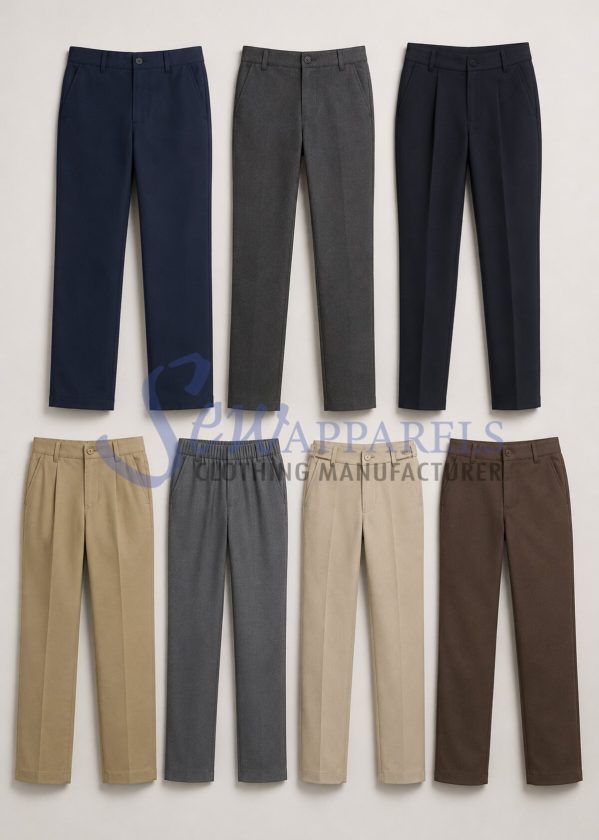
This guide provides five critical checks and a panel-direction map for school-uniform sourcing teams. It distinguishes surface orientation from grain alignment and colour-fastness evidence. Not every trouser fabric needs one-way cutting, and an orientation rule cannot remove differences between dye lots. Decisions should follow the actual fabric, the complete sample and the cutting team’s assessment.
What school trouser directional fabric cutting controls
The objective of school trouser directional fabric cutting is consistent, approved panel appearance. Grain direction concerns the relationship between a pattern piece and the fabric structure. Face identification distinguishes the intended outside from the reverse. Nap or surface direction describes an appearance that may change when a piece is turned end for end. These instructions belong together in a specification, but they are not interchangeable.
A school trouser fabric nap direction review starts with the material that will actually be used. Do not infer direction from a fibre name alone. Two fabrics with similar composition can have different finishes and surface effects. Conversely, a fabric without a visible directional effect may permit a less restrictive layout, subject to its construction, print and approved pattern requirements.
School trouser one way cutting is a possible layout instruction, not an automatic requirement for every order. The supplier should establish whether visible pieces must face a common direction and whether any exceptions are acceptable. Ask for the proposed rule in writing before comparing fabric-consumption quotations or approving bulk cutting.
1. Identify the actual surface before choosing an orientation
Use a labelled material reference with supplier fabric code, colour, finish, face and roll identification where available. Examine the sample in both orientations under the agreed viewing conditions. Turning a loose swatch can reveal a difference, but it does not establish how a finished leg will appear when worn or folded. Include a sewn sample when the effect is relevant to acceptance.
For school trouser surface pile direction, record an arrow on the reference alongside a plain-language explanation of what it means. An arrow without a defined garment direction can be misread. For example, explain whether it points towards the finished hem or waist in the approved sample. This is a project-specific convention; the buyer and cutting team must agree it.
School trouser fabric face marking should identify the intended exterior without damaging saleable fabric. Ask the supplier how the distinction will be maintained through spreading, cutting and sewing. A photograph may support the record, but retain a physical reference where photographs do not adequately capture the surface. Do not rely on colour names or an unlabelled swatch as the only instruction.
Material identity remains a separate responsibility. The FTC’s textile and wool labeling guidance explains U.S. fibre-content and other labeling requirements. It does not prescribe cutting orientation. Keep composition evidence and destination-market labeling review separate from the appearance approval.
2. Define every visible panel in the direction map
School trouser directional fabric cutting becomes useful when the rule reaches individual components. List front legs, back legs, exposed waist sections, pocket openings and any other externally visible pieces. Include small components that may otherwise be omitted from the cutting instruction. State which pieces must share the same orientation and which require further sample review.
A school trouser directional surface layout should show the fabric face, garment top and permitted end-for-end rotation. Avoid an ambiguous note such as “keep shade matching” without explaining the layout requirement. Shade matching may involve dye-lot management or other controls; the direction map addresses the particular orientation effect demonstrated by the sample.
For school trouser left right panel direction, compare the two legs as a pair rather than approving isolated pattern pieces. A layout that treats each piece individually can still create an unacceptable contrast across the garment. Show how mirrored pieces retain the intended surface direction while following their approved grain requirements.
The school trouser visible panel map should also identify exceptions. A concealed pocket bag may use a different material and need its own instruction. An exposed pocket facing may need to match the leg surface. Do not impose a rule on every hidden component without considering its material and purpose, and do not assume a small visible piece is exempt.
3. Compare front, back and adjacent panels on a complete garment
Review school trouser directional fabric cutting on a complete sample made with the proposed material and layout. Lay the garment flat, inspect it hanging and assess the agreed wearing presentation. Keep viewing conditions consistent when comparing alternatives. Record the observations and the specific panel relationships that matter to the school uniform’s appearance.
A school trouser front back shade appearance review should distinguish a repeatable orientation effect from unexplained variation. If a contrast changes when the garment is rotated, document that observation without treating it as a complete diagnosis. If it persists, the supplier may need to investigate fabric variation, finishing or other causes before proposing a correction.
School trouser panel shade orientation is therefore one part of appearance control. It does not guarantee identical colour between fabric lots or replacement garments. Keep lot identification and shade approval in the material records. Where several colours or finishes are proposed, avoid transferring an orientation approval from one material to another without checking the actual effect.
Retain the accepted school trouser directional fabric sample with its version and date. If a revision changes a pocket facing, waistband or panel arrangement, identify which appearance comparisons must be repeated. An approved swatch and an approved garment should refer to the same material and direction convention so the production team has a coherent reference.
4. Confirm cutting feasibility before accepting the quotation
The cutting team should evaluate school trouser directional fabric cutting against the real pattern, size assortment, usable fabric width and agreed component rules. A proposed one-way layout may affect material use, but the amount depends on the actual layout. Do not apply a universal waste percentage or assume that a less restrictive layout will always be acceptable.
Document school trouser fabric layout constraints alongside the quotation assumptions. Useful details include the material version, permitted rotation, visible-panel exceptions, assortment used for the layout and any unresolved restrictions. Ask whether the quote reflects the approved direction rule or an earlier assumption. A price comparison is unreliable when suppliers cost different layout requirements.
A school trouser nap cutting specification should reach the people who spread, cut, bundle and assemble the pieces. Ask the supplier to explain how orientation identity will be retained during those handovers. The buyer need not prescribe unfamiliar factory methods, but should receive confirmation that the proposed process can follow the accepted reference.
If a supplier proposes an alternative direction to improve layout feasibility, review a new complete sample before accepting it. A verbal promise that the difference is minor does not replace buyer approval. Record any resulting changes to material consumption, sampling scope or quotation assumptions as supplier-specific information rather than guaranteed project outcomes.
5. Approve the reference and define when it must be reopened
School trouser directional fabric cutting approval should identify the fabric, garment sample, direction map and responsible approver. State whether the acceptance covers a specific colour and finish or a broader confirmed scope. Keep unresolved appearance questions open until the parties agree an outcome; an approval note should not hide an exception that production cannot follow.
The school trouser cutting orientation approval should include triggers for renewed review. A changed fabric source, finish, visible component, pattern layout or orientation convention may invalidate the earlier reference. The required checks depend on the change. Reuse unaffected records where appropriate, but document why the revised garment remains within the accepted scope.
Colour durability is a separate question. ISO 105-C06:2010 describes methods for testing textile colour fastness to domestic and commercial laundering. It is not a cutting-direction standard and does not prove panel-orientation consistency. Where laundering colour performance matters, agree suitable testing and acceptance criteria with the supplier or laboratory instead of inferring performance from appearance alone.
A practical panel-direction map for the buying brief
Use the following record as a development aid, adapting the fields to the actual garment. It supports school trouser directional fabric cutting decisions without replacing pattern engineering, supplier process controls or any required laboratory assessment. Leave unknown fields clearly pending rather than filling them with assumptions.
| Map field | What to record | Actual panel / material | Accepted reference | Evidence / review status |
|---|---|---|---|---|
| Material identity: | fabric code, colour, finish, face reference and relevant lot identification. | — | — | — |
| Direction convention: | explain what the reference arrow means relative to the garment waist and hem. | — | — | — |
| Visible panel: | name each component and its relationship to adjacent pieces. | — | — | — |
| Permitted orientation: | record the accepted direction and any rotation restriction. | — | — | — |
| Sample observation: | note front/back and left/right appearance under agreed viewing conditions. | — | — | — |
| Approved cutting note: | identify the layout version, exceptions, approver and review triggers. | — | — | — |
For school trouser directional fabric cutting, keep the school trouser cutting direction reference attached to the technical brief and the accepted sample. During a school trouser directional material review, compare the supplied evidence with these fields. This makes an unexplained change easier to identify and gives the supplier a specific question to resolve rather than a vague instruction to improve quality.
Frequently asked buyer questions
Does every school trouser fabric need one-way cutting?
No. Evaluate the actual fabric’s surface, print, structure and approved pattern requirements. A restrictive rule should have a documented reason. Where end-for-end rotation is acceptable, record that permission clearly rather than leaving the cutting team to infer it.
Can correct direction eliminate all shade differences?
No. Direction control addresses an orientation effect demonstrated by the material and garment sample. Dye-lot variation and other sources of colour difference need separate investigation and approval. Do not use a direction map as a substitute for material traceability.
Can a quotation be confirmed before the direction rule is agreed?
A supplier may provide a provisional quotation, but its assumptions should be explicit. Confirm whether the costing uses a directional restriction and what requires revision after sample approval. Ask the supplier to substantiate any consumption or price adjustment using the actual layout.
Turn the accepted direction rule into a sourcing brief
For custom school trousers manufacturing, send the material reference, visible-panel map, complete sample observations and proposed order assortment together. Buyers considering private label school trousers production should also distinguish confirmed requirements from optional development ideas. Any proposed configuration remains subject to supplier feasibility and a product-specific quotation.
Discuss the approved brief through Sew Apparels’ school trousers manufacturing page. Use the related school trousers buying guides to coordinate the other product decisions. School trouser directional fabric cutting is ready for approval when the material, panel instructions, complete sample and cutting assumptions all describe the same accepted garment.