
A scrub separates bulk order size matrix gives uniform buyers independent quantities for tops and trousers. It is useful when employees need different upper- and lower-body sizes, when components wear out at different rates, or when replacement stock is issued separately. Ordering the same quantity in every matching size can leave one component unavailable while another remains on the shelf.
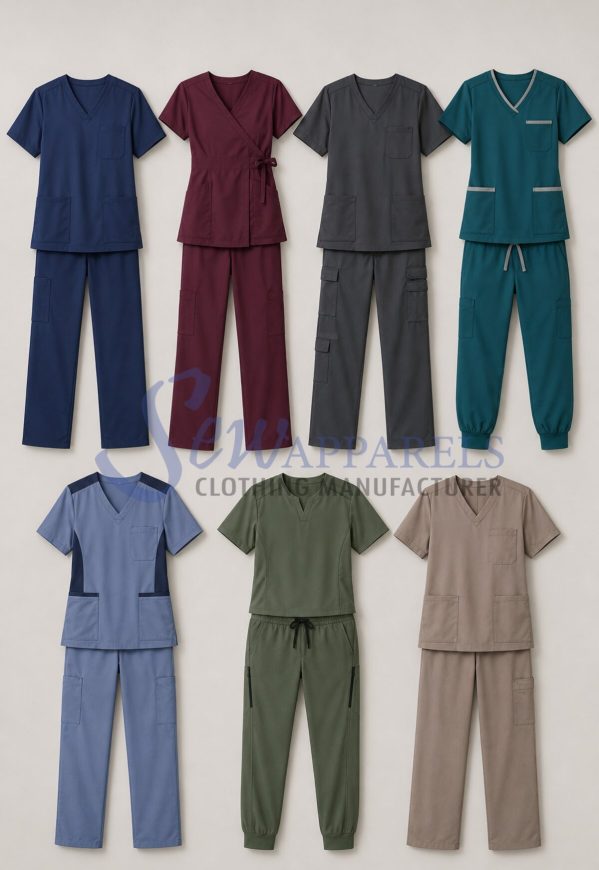
This guide explains six critical checks for preparing an institutional order. It includes a separate-garment matrix, reconciliation rules and a quotation handover checklist. Actual staff demand, reserve quantities, laundry policy and supplier order terms must come from the buyer’s evidence and the supplier’s confirmation. The worksheet is a planning aid; it does not prescribe a universal stock buffer or establish clinical suitability.
What a scrub separates bulk order size matrix should contain
For a scrub separates bulk order size matrix, start with the distinction between a complete set and an independently stocked garment. A set might contain one top and one trouser in matching labelled sizes. Separates can allow a different size combination or component-only replacement, if the supplier accepts the requested arrangement. State that requirement before comparing quotations, because the commercial and packing assumptions may differ.
A hospital scrub top bottom size allocation should record each component’s demand against its approved fit range. A medium top does not prove that the same wearer needs medium trousers. Use fit-sample results and the organisation’s issue rules to establish the required quantities. Keep the article focused on allocation and replenishment; fabric-blend selection needs a separate material approval.
The scrub separates uniform order sheet should identify style, component, colour, size code, confirmed issue demand, usable existing stock, buyer-approved reserve and proposed purchase quantity. Add a version, approval date and named organisational role responsible for the totals. The supplier normally needs aggregated garment requirements rather than a list of individual employees.
1. Decide how the organisation will issue garments
The scrub uniform issue format decision comes before quantity calculations. Determine whether staff receive fixed sets, individually sized components, access to pooled stock, or a combination of initial issue and later replacement. Record the policy owner and the period covered by the order. Different policies can produce different quantities even with the same staff headcount.
For scrub sets mixed size purchasing, explain whether a top and trouser are paired for delivery or stocked independently after receipt. Pairing mixed sizes for named wearers requires a different packing instruction from delivering separate cartons by component. Confirm how the supplier will identify the combination without receiving unnecessary personal information.
Scrub uniform issue stock planning also needs a clear boundary between garments already issued and stock available for future allocation. Do not count worn garments as available warehouse stock merely because they remain in the organisation. Agree the condition, location and release status of existing inventory before deducting it from a proposed order.
The organisation’s laundering arrangements can affect circulation planning. The CDC’s healthcare laundry guidance discusses facility responsibilities and laundering policies for uniforms and scrub suits. It does not give a universal purchase quantity. Have the relevant facility team confirm the local policy and operational assumptions; a stock matrix cannot replace those decisions.
2. Collect sizing totals without unnecessary personal data
Build a scrub separates bulk order size matrix from confirmed sizing requirements rather than estimating both components from headcount. Arrange an appropriate fit assessment using approved samples and the intended size range. Record which measurement chart and sample revision were used. If the garment changes after the assessment, review whether the collected size choices still apply.
Scrub separates staff size totals can be aggregated by component and size. Use an internal reference only where the buyer needs it for issue reconciliation. Keep employee names, medical details and other sensitive information outside the supplier-facing worksheet. Sourcing teams should follow their organisation’s data-handling rules when collecting or retaining staff information.
Record pending assessments separately from confirmed demand. A blank size should not silently become the most common size in the order. Identify who must resolve the missing allocation, when the purchasing decision requires it and whether the quotation is provisional. The goal is a traceable total, not an apparently complete spreadsheet containing unsupported assumptions.
Where several departments use different styles or colours, create distinct demand lines. A size total across all departments can obscure requirements that are not interchangeable. Verify that employees have not been counted twice across surveys, transfers and temporary assignments. Apply the buyer’s approved scope to determine which requests belong in the current order.
3. Calculate tops and trousers independently
A scrub top independent stock quantity should follow confirmed top demand, not a matching trouser total. Likewise, the scrub trouser independent stock quantity should follow the lower-garment requirement. Retain separate subtotals for each style, colour and size. Combined reporting can still show the overall order, but it must not remove component-level visibility.
A practical scrub separates bulk order size matrix uses this calculation for each component line: confirmed issue demand, plus an explicitly approved reserve, less usable stock allocated to that line, gives the proposed purchase requirement. Check the result for negative balances and unresolved stock claims. An apparent surplus should prompt review rather than a negative purchase order.
Reserve amounts and usable stock must have the same units as the demand. For example, a carton count cannot be deducted directly from a garment count without the confirmed carton quantity. Similarly, distinguish pairs, sets and individual garments in every column. A total of “uniforms” is ambiguous when the supplier is being asked to manufacture separates.
Unequal medium-top and medium-trouser demand can reflect independently confirmed fit choices. Reconcile each component against approved demand; equal quantities are not an acceptance rule.
4. Make replacement and reserve assumptions explicit
Scrub replacement garment order quantities should be supported by the buyer’s own records or approved planning assumptions. Separate routine replacement, new issue, exchange stock and contingency reserves where they serve different purposes. Do not multiply staff totals by an invented replacement percentage simply to create a complete-looking procurement forecast.
Scrub uniform reserve stock assumptions should state the period, rationale and approving role. The organisation may consider its replenishment arrangements, stock availability and issue process when setting a reserve. These are buyer-specific decisions. If the supplier has not confirmed a delivery schedule, do not build the forecast around an assumed rapid replenishment promise.
Keep forecast demand separate from firm order demand in the scrub separates bulk order size matrix. A budget estimate for potential recruitment is not the same as an approved purchase quantity. Label provisional lines and explain whether they are included in the quotation, excluded from the order, or awaiting approval.
Review component imbalance using actual evidence. If trousers are requested more often than tops, investigate the recorded reasons rather than assuming a fabric failure. Size exchanges, loss, issue policy and other factors can affect replacement demand. The worksheet should expose the allocation question while leaving unsupported performance conclusions out of the purchasing brief.
5. Agree component identification and packing
Scrub separate garment SKU codes should distinguish the top from the trouser even when they share a collection name. Include the relevant style, colour and size identifiers consistently in the quotation, order, label artwork and packing instructions. Ask the supplier to confirm that the requested coding and separately stocked components can be supported.
Scrub replacement component packing should identify individual garment quantities clearly. If cartons contain mixed sizes, request a packing breakdown that allows the receiving team to reconcile each line. If a mixed-size top-and-trouser combination is paired, define both sizes on the applicable packing record rather than describing it as one size of set.
Keep packaging requirements distinct from labeling and clinical-use decisions. A component code helps inventory control, but it does not establish that a scrub garment is protective apparel or suitable for a particular procedure. Confirm intended use and relevant facility requirements through the appropriate organisational team before treating a stock decision as a product approval.
Match the supplier-facing scrub separates bulk order size matrix to the approved identification system. A descriptive colour name in one file and an unexplained code in another can create an avoidable receiving problem. Include a code legend, identify the current artwork version and resolve inconsistent identifiers before the order is released.
6. Reconcile the order before requesting firm terms
Scrub component order reconciliation should compare the demand table, reserve approval, usable-stock record, quotation and proposed purchase order. Verify every component subtotal and the overall garment count. Check that provisional lines have been handled according to the buyer’s decision and that no stock deduction has been used twice.
Scrub top bottom supplier order terms need direct confirmation. Ask whether the supplier accepts independently sized components, whether quantities are counted by garment or set, and whether the requested size and colour assortment affects the quotation. Confirm minimums, charges, packing and delivery terms for the actual brief; do not infer them from another product or previous order.
For scrub separates quotation allocation, give suppliers the same component matrix and issue format so their responses can be compared. Cotton Incorporated’s CottonWorks sourcing and manufacturing resources cover garment manufacturing and quality-assurance topics. They provide broader technical background, not confirmation of a supplier’s commercial terms or a facility’s stock requirement.
A separate-garment matrix buyers can adapt
Use the following fields for each line of the scrub separates bulk order size matrix. Keep top and trouser tables independent, then add a reconciliation summary. The structure is an original buying aid: quantities must be completed from confirmed records and approved assumptions.
| Field | Requirement | Tops | Trousers |
|---|---|---|---|
| Component identity: | approved style, top or trouser, colour code and size code. | — | — |
| Confirmed demand: | aggregate required garment quantity and source-record version. | — | — |
| Usable stock: | quantity assigned to this exact line, with condition and availability confirmed. | — | — |
| Approved reserve: | buyer-defined quantity, purpose, period and authorising role. | — | — |
| Purchase requirement: | demand plus reserve minus allocated usable stock, reviewed before release. | — | — |
| Order check: | supplier acceptance, garment unit, labeling code, packing route and unresolved terms. | — | — |
In the scrub separates bulk order size matrix, a useful final control is to reconcile size-line totals with component totals, then component totals with the purchase order. Record adjustments as explicit revisions. This prevents a late packing or size change from becoming an undocumented alteration to the quantities the supplier has priced.
Frequently asked procurement questions
Must tops and trousers have equal quantities in every size?
Not when the approved requirement is for independently sized or stocked garments. Quantities should follow confirmed component demand. Verify the supplier accepts that arrangement and make the unit of purchase clear before treating an unequal allocation as a firm order.
What reserve percentage should a buyer use?
There is no universal percentage in this worksheet. Use the organisation’s evidence and approved assumptions, documenting the period and purpose. Keep uncertainty visible and review the reserve through the buyer’s own authorisation process.
Should the supplier receive employee names?
Aggregated size totals are generally sufficient for a component quotation. Where individual issue tracking is needed, manage it internally under organisational rules. Avoid adding personal or sensitive information to an illustrative sourcing worksheet.
Prepare a clear scrub-separates quotation brief
For custom scrub set manufacturing, provide approved top and trouser specifications, anonymised size totals, issue policy and separately identified reserve assumptions. Buyers considering private label scrub set production should also confirm component labeling, packing and supplier acceptance. Optional arrangements remain development requests until the supplier agrees feasibility and commercial scope.
Send the confirmed allocation through Sew Apparels’ scrub sets manufacturing page, and coordinate related decisions through the scrub buying guides. A scrub separates bulk order size matrix is ready for quotation when independent demand, reserves, usable stock, garment codes and the supplier-facing order all reconcile.