
A scrub pants fabric opacity movement test helps buyers review coverage on an identified garment under agreed viewing conditions. A relaxed swatch can look satisfactory while a finished trouser looks different at the seat, thigh or pocket during movement. Use a repeatable buyer review to document those differences before approval. Do not describe an informal visual check as an official opacity certification or promise identical coverage in every lighting and stretch condition.
Start with an approved leg-shape fit sample and keep the coverage decision connected to its fabric, colour and construction. The scrub pants buying guides cover related waistband and leg-shape decisions. This article addresses coverage under movement through six critical checks and a practical review sheet, rather than repeating leg silhouette or abrasion-testing guidance.
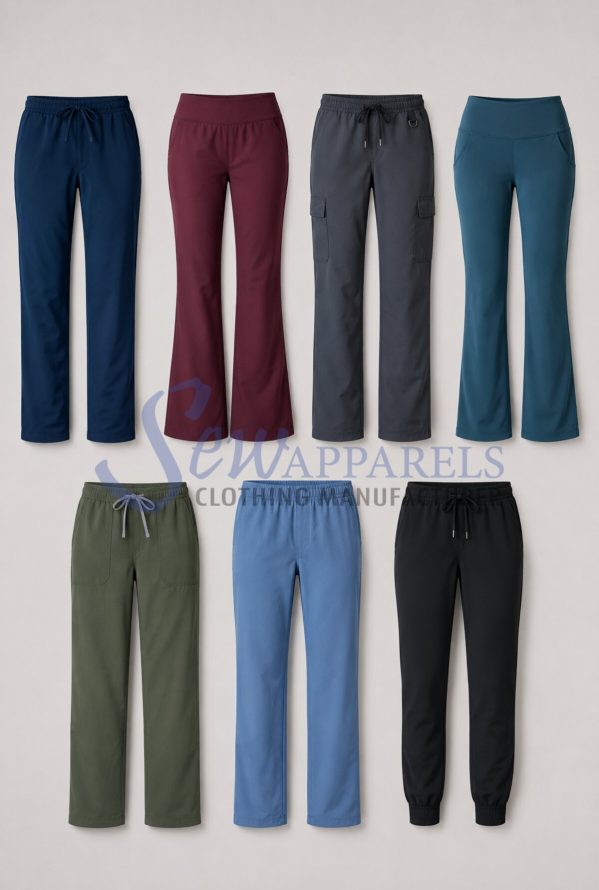
1. Set the scrub pants fabric opacity movement test conditions
Before comparing samples, agree the viewing setup. Record the light source, room arrangement, viewing distance, background and sample condition. A light scrub trouser opacity review is difficult to repeat when one person examines a garment near a bright window and another checks it in a different room without recording the change.
Scrub trousers viewing light conditions should be consistent across the comparison. Use a neutral, documented setup for the main review, then record any additional relevant viewing arrangement separately. Do not change the light or background only for the sample you prefer. If the buyer wants a different use scenario assessed, label it as an additional condition.
A scrub trousers background contrast trial can use agreed representative backing materials or a suitable covered form. Identify the backing and keep it unchanged between fabric options. Avoid implying that one selected contrast represents every wearer or every layer worn underneath. The review establishes findings for the documented setup, with its limitations stated.
2. Identify the garment zones and sample identity
Record scrub pants opacity specimen identity before the review begins. Include the garment reference, size, fabric code, colour, lot information where available, finish, construction revision and care history. Confirm that the sample represents the proposed order. A result for a different colour or fabric reference should not quietly become approval for the whole range.
For a scrub pants seat coverage sample, identify the exact area being reviewed and the approved position in which it is observed. Include thigh areas, seams, pocket regions and any location the buyer has identified as a concern. Distinguish coverage through the main fabric from a visible internal component, seam allowance or pocket outline.
Scrub pants pocket bag show through needs a separate observation. Record the pocket bag material, colour, shape and placement, then compare the intended finished arrangement. A visible outline may lead to a component or construction revision rather than a change to the whole shell fabric. Keep the diagnosis specific so the sample team can act on it.
The scrub pants fabric opacity movement test should preserve the same zone map for every option. This prevents a favourable observation at one area from hiding an unresolved issue elsewhere. Note whether the garment was assessed complete, on a covered form or through another agreed arrangement, and explain any zone that could not be reviewed.
3. Compare relaxed and approved movement positions
Use a scrub pants movement opacity protocol based on normal intended use and the approved fit. Establish a relaxed reference position, then review agreed positions such as sitting, stepping or bending within the garment’s intended movement range. Keep the sequence repeatable and record the position used for each observation.
A scrub trousers stretch transparency check should not rely on pulling a loose swatch until it becomes visibly open. That demonstration may bear little relation to the approved garment. Inspect extension in the relevant finished area and record whether the sample fits as intended. If excessive tightness creates the concern, send it back for fit review rather than hiding it in a material score.
During scrub trousers garment stretch appearance assessment, distinguish a change seen during movement from one present in the relaxed position. Record the garment size and fit revision, backing, viewing condition and zone. Compare like conditions across options. If those conditions differ, explain the difference before using the observations to select material.
Scrub pants fabric opacity movement test results should describe what was visible, where and under which position. Use concise, factual notes agreed by the reviewers. Avoid labels such as “completely safe” or “guaranteed opaque,” which extend beyond the evidence and can confuse ordinary apparel coverage with protective performance.
4. Separate shell changes from lining decisions
A scrub pants lining coverage decision considers the complete garment arrangement. Record whether the proposal changes the shell material, adds a lining or modifies an internal component. Each route may affect the finished sample differently, so do not treat them as interchangeable fixes without reviewing the revised garment.
If a lining is proposed, identify its material, colour, extent and attachment. Review the covered zones, movement, comfort feedback and care compatibility through the relevant sample process. A lining that solves one viewing concern may create a visible edge or affect the feel of the garment. Record those observations rather than assuming an extra layer is automatically better.
CottonWorks’ quality testing guidance explains the importance of material construction, care-related appearance, sampling and conditioning. Use that context to keep coverage observations tied to identified samples and their preparation. It does not certify the buyer’s movement protocol or supply a universal acceptance level for light-coloured scrub pants.
A scrub pants fabric opacity movement test on a revised sample should use the original agreed conditions wherever relevant. Label the changed construction clearly, retain the earlier evidence and compare the affected areas. Do not replace the entire approval record with an isolated photograph that omits why the revision was made.
5. Record dry and relevant damp-sample observations
A scrub trouser dry damp appearance comparison should only be included when the buyer has a relevant reason and a defined preparation. Record the sample condition, preparation method and viewing arrangement. A vague description such as “wet test” is insufficient because samples prepared differently cannot be assumed to support the same comparison.
Use an appropriate specimen or covered form for this review rather than asking someone to wear a deliberately damp garment. Keep preparation consistent between options and state which zones were observed. If the intended damp condition cannot be defined reliably, record the question as unresolved instead of claiming that a convenient demonstration proves performance.
Keep scrub pants sample privacy coverage arrangements clear throughout any wearer trial. Use voluntary, appropriately covered participation and written observations wherever possible. Avoid identifiable wearer photographs or images that expose personal details. Product evidence should document the garment and conditions while respecting the participant’s privacy.
The scrub pants fabric opacity movement test remains a buyer visual protocol. AATCC’s published TM203 light-blocking method scope describes a spectrophotometric method intended for window-covering textiles. That is a useful reminder to check a method’s actual scope: its name alone does not make a scrub-pants movement review an AATCC-certified test. Ask a competent laboratory about an applicable measurement if instrumental evidence is required.
6. Approve a repeatable coverage review sheet
The following scrub trouser coverage feedback form separates identity, conditions and observations from the final buyer decision. Complete it for each material and colour option. The fields are a practical procurement record, not an official testing standard or a supplied laboratory result.
| Review field | Information to record | Comparison control |
|---|---|---|
| Sample identity | Garment reference, size, fabric, colour and construction revision | Use the actual proposed sample |
| Viewing setup | Light source, distance, background and arrangement | Keep the main setup consistent |
| Garment zone | Seat, thigh, pocket or another agreed area | Inspect the same area for each option |
| Position | Relaxed reference and agreed movement position | Record the actual fit and sequence |
| Condition | Dry, care-prepared or defined relevant damp condition | Separate findings from different preparations |
| Observation | Visible background, internal component or appearance change | Describe findings without universal claims |
| Buyer decision | Approved, conditional or revision needed, with reason | Identify the reviewer and unresolved requirements |
Scrub pants light colour fabric approval should identify which colours, sizes, constructions and conditions the review covers. Agree the acceptance description before deciding between options. If a new colour, fabric or component arrangement is introduced, determine whether it needs another review instead of extending the earlier decision automatically.
A scrub trouser opacity release record links the selected sample to the completed review sheet and revision history. Include the owner of any required correction and the evidence needed to close it. Scrub pants fabric opacity movement test approval is more useful when the final order specification preserves the actual material and construction that were reviewed.
Prepare a focused sample and quotation brief
For custom scrub pants manufacturing, send the intended colour, fabric options, approved fit sample and relevant coverage concerns. Ask which sample arrangements and material information can be reviewed for your order. Confirm feasibility, quantities, price and lead time separately; this guide does not promise a particular material inventory or minimum order.
A private label scrub pants production brief can include the coverage sheet alongside the fit and construction approvals. Startup brands benefit from asking focused questions before committing to a material. Preserve the boundaries of the scrub pants fabric opacity movement test so sampling comments remain specific and the next revision has a clear purpose.
Frequently asked questions
Is a buyer visual review an official opacity certification?
No. It records observations under agreed conditions. If a laboratory measurement or formal requirement is needed, confirm an applicable method, scope and reporting arrangement with the laboratory.
Can one light-coloured sample approve all colours?
Do not assume that. Identify the range covered by the decision and review additional options where necessary. Fabric, colour, construction and sample condition must remain traceable.
What should be changed when coverage is unsatisfactory?
First identify the zone and cause: shell appearance, fit extension, pocket components or lining arrangement. Request a controlled revision and repeat the relevant scrub pants fabric opacity movement test conditions before approval.