
A scrub pants abrasion test specification gives buyers a controlled way to review fabric wear evidence before approving a uniform order. It should identify the material, expected contact conditions, applicable test method and reported endpoint. A large cycle count without those details is difficult to interpret. Laboratory results support a defined comparison; they do not automatically predict how many months a pair of trousers will last.
Keep surface durability separate from leg fit and movement allowance. The broader scrub pants buying guides organize waistband, leg shape, construction and sampling decisions. This article focuses on six critical checks for abrasion evidence, including a practical review form that preserves appearance observations without turning them into an unsupported service-life promise.
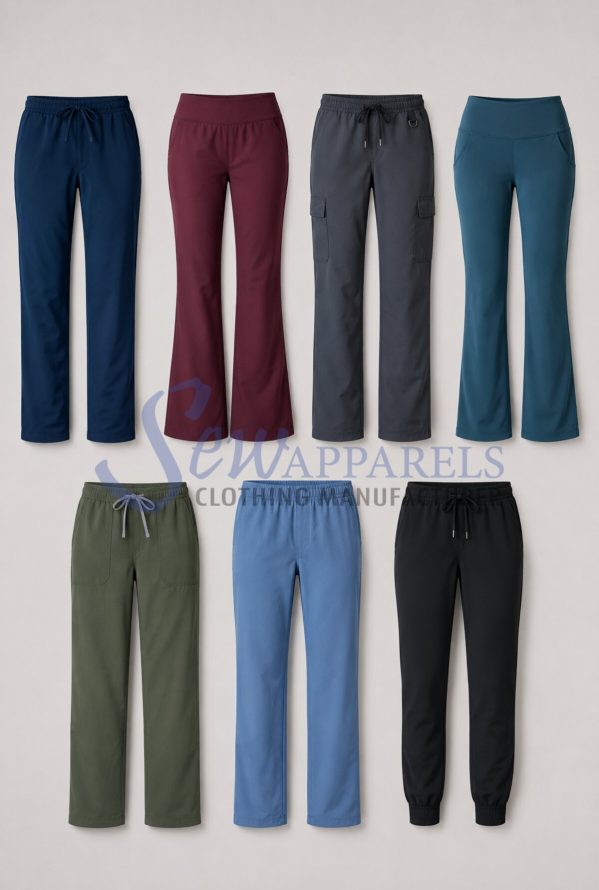
1. Define the scrub pants abrasion test specification for contact wear
Begin the scrub pants abrasion test specification with the intended wearer and contact conditions. Define the scrub pants contact wear scenario by recording which areas meet chairs, equipment, adjacent garment surfaces or repeated movement. Describe the activity and location without assuming a particular laboratory setup reproduces every workplace exposure. A seated contact scenario may require different observations from fabric rubbing between the legs.
Record scrub pant seat abrasion evidence separately from evidence concerning knees, thigh surfaces or pocket edges. A flat fabric specimen cannot establish whether a finished pocket corner or a strained seam will survive use. Include the garment construction reference when the concern involves a local feature, then ask the laboratory which material or assembly assessment is appropriate.
Do not solve a fit problem by choosing a fabric with a larger reported abrasion result. Excessive tension, restricted movement or a misplaced seam needs its own construction review. Maintain a clear distinction between surface wear, garment ease and seam performance so each finding reaches the correct development owner.
2. Separate abrasion, pilling and colour loss
A useful scrub pants abrasion test specification names the damage being investigated. Fabric breakdown, pills, fuzz, colour change and dye transfer are different observations. A single description such as “worn appearance” does not explain which property failed or which evidence should guide a revision.
During a scrub trousers abrasion versus pilling review, record surface damage and pill formation in separate fields. A material can show a visible surface change without reaching the failure endpoint used by a particular abrasion method. Conversely, a specimen can meet an agreed appearance requirement while another property still needs investigation. Ask for the applicable assessment rather than assigning one result to every durability question.
CottonWorks’ quality testing guidance distinguishes care and appearance observations and emphasizes sampling and conditioning in reliable testing. It also discusses changes such as fuzzing, pilling and colour change during laundering. Use that framework to request clearly identified evidence; it does not provide a universal acceptance threshold for scrub trousers.
For scrub trousers rubbing colour change, identify whether the concern is a change on the garment, transfer to another material or both. A scrub pants colour loss assessment should preserve the original reference, assessment conditions and observations. Do not treat a colourfastness result as proof of resistance to fabric breakdown, or an abrasion result as proof that the colour will remain unchanged.
3. Ask the laboratory to confirm the applicable method
Send a scrub pants durability test request with the material identity, construction, intended use and buyer concern. Ask a competent laboratory to recommend an applicable method and explain the endpoint it reports. Confirm the method reference and edition, apparatus conditions, loading, abrasive or contacting material, specimen preparation and reporting requirements before accepting a quotation.
A scrub trouser fabric abrasion report should state what was actually done. Results generated with different methods, loads, abrasive materials or endpoints may not form a direct ranking. Avoid selecting the biggest number from several supplier documents until the laboratory has explained whether the conditions support the proposed comparison.
The scrub pants abrasion test specification should also clarify how results and photographs will be supplied. Ask for specimen identities, individual observations where appropriate, any departures from the method and the basis of a reported summary. If the laboratory cannot establish a meaningful comparison from existing reports, arrange comparable testing rather than treating missing details as minor administrative issues.
4. Review specimen identity and conditioning
Trace every result to an identified fabric option and lot. Record the supplier reference, fibre composition as supplied, construction, weight specification, colour, finish and sample source. A report for a similarly named fabric is not automatically evidence for the current production material. Confirm whether the submitted specimen represents the proposed order.
A scrub trouser abrasion conditioning record should identify the preparation used by the laboratory and any agreed care treatment before assessment. Ask whether samples were tested as received, after a defined laundry history or in more than one condition. Keep those conditions visible; laundering may introduce changes that should not be confused with the abrasion exposure itself.
Scrub pant lab report comparability also requires attention to specimen selection and result presentation. Ask how many specimens were assessed, which orientation or surface was relevant and whether the result contains meaningful variation. Do not silently replace individual findings with a convenient average when the report or buyer decision needs the underlying observations.
For a scrub pants surface wear sample, retain an untested reference where practical and label the tested material clearly. Photographs should show the relevant surface under consistent viewing conditions, with the specimen identity and test stage recorded. A well-organized evidence file makes later supplier discussions more useful than an isolated photograph forwarded without context.
5. Connect care and wearer evidence carefully
Scrub pants worn sample evidence can reveal concerns that a flat specimen does not capture, including local contact, pocket-edge wear or construction distortion. Document the actual garment, use observations and care history. Keep wearer feedback separate from laboratory measurements and avoid presenting an informal wear trial as a standardized test.
The CDC’s healthcare laundry and bedding guidance addresses facility laundry practice and material compatibility. For a healthcare uniform order, obtain the institution’s permitted care requirements and use them when arranging garment trials. This article does not prescribe a disinfection process, and abrasion resistance does not establish infection protection.
A scrub pants abrasion test specification can include an agreed review of laundered appearance alongside material testing. Record the actual care conditions and whether the laboratory method applies to the prepared specimens. Do not assume a household wash demonstration represents a facility process, or that every institution follows the same uniform-care arrangement.
Review specimen and garment findings together without collapsing them into one score. If a fabric report is satisfactory but the finished garment shows unacceptable local wear, investigate construction, fit, contact and care conditions. If a report is incomplete, an attractive sample cannot fill the missing method details. Each evidence source should answer its own question.
6. Build the abrasion evidence review form
The scrub pants abrasion endpoint must be stated in the report and understood by the buyer. It may describe a defined failure or assessment condition within the selected method. Do not rename it as “overall durability” unless the evidence genuinely supports that broader meaning. The review form below keeps the endpoint separate from appearance and order approval.
| Review field | Evidence to record | Decision question |
|---|---|---|
| Contact scenario | Wearer activity, garment area and observed concern | Does the proposed assessment address the identified concern? |
| Material identity | Fabric reference, lot, colour, finish and sample source | Does this evidence represent the proposed material? |
| Method and conditions | Reference, edition, loading, contacting material and preparation | Are the reports suitable for the intended comparison? |
| Endpoint | Laboratory-reported criterion and results | What does the result establish within the method? |
| Separate appearance | Surface change, pills, colour observations and photographs | Which appearance requirement needs its own approval? |
| Care and garment evidence | Documented care history and finished-sample observations | Are local use or construction concerns unresolved? |
| Release or retest | Buyer decision, reason, owner and revision reference | Can this identified material proceed under the agreed conditions? |
Scrub pant fabric abrasion acceptance should be agreed by the buyer using the intended use, applicable method and relevant evidence. Request technical advice where necessary. Do not insert an arbitrary cycle requirement simply because another product uses it. The requirement should be established before the result is used to approve material.
Scrub pants material retest rules should identify changes that trigger review, such as a different fabric construction, finish, source or relevant care condition. Define how a failed or uncertain result will be handled and who authorizes the next step. Preserve the previous report as a historical record while linking the replacement evidence to the revised material.
Complete the order approval record
A scrub pants abrasion release record should name the approved material, report reference, buyer criteria, separate appearance decision and any conditions of approval. Include the responsible reviewer and the revision date. Scrub pants abrasion test specification records become valuable when the same identity can be followed from the testing brief to the order confirmation.
For custom scrub pants manufacturing, send the fabric options, intended use and institution care requirements when requesting an abrasion-testing brief. Ask which material documents and sample arrangements can be reviewed for your proposed order. Confirm commercial quantities, feasibility, pricing and lead time separately through the quotation process.
A private label scrub pants production project should keep the material evidence linked to the approved garment specification. Startup brands can use the same form to organize supplier questions before committing to a sample or bulk order. Scrub pants abrasion test specification approval supports a disciplined material decision; it is not a substitute for fit, construction or final garment inspection.
Frequently asked questions
Can abrasion cycles be converted into months of use?
No reliable conversion is established by this guide. Actual use combines contact, movement, care and construction conditions that a single laboratory result does not fully represent. Report the result within its method instead of promising a garment lifespan.
What makes two supplier reports comparable?
Ask the laboratory to review material identity, method, conditions, preparation and endpoint. Similar-looking numbers are insufficient. The scrub pants abrasion test specification should retain those details and any limits on comparison.
Does abrasion resistance mean a scrub pant is protective?
No. This is an ordinary apparel surface-wear review. Protective or clinical performance requires its own applicable evidence and requirements, which are outside this article.