
Slub cotton is selected for visible yarn variation, yet not every thick place, line or lump belongs within the intended character. Slub cotton dad hat appearance approval establishes visual boundaries so buyers can preserve natural-looking texture while rejecting unintended yarn and fabric faults.
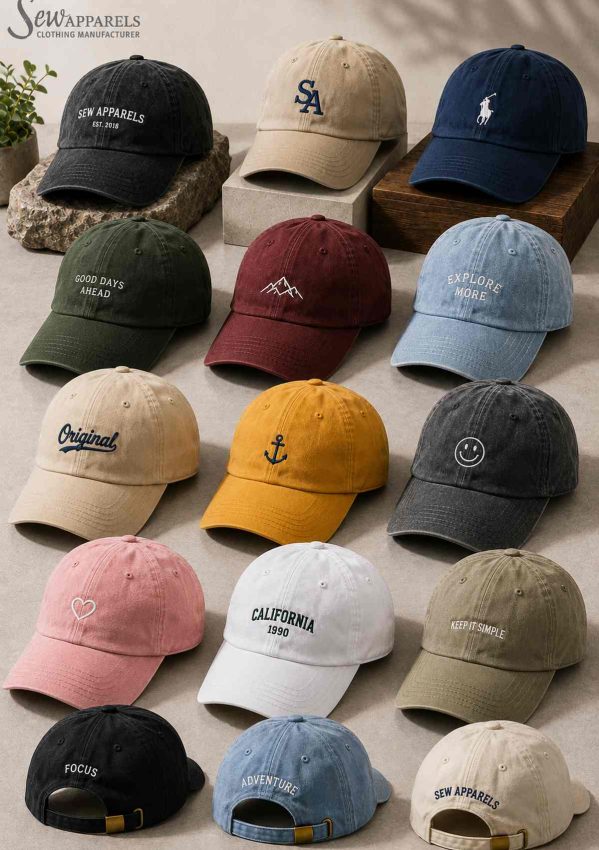
This framework uses actual material and finished-cap references. It does not classify every irregularity as either a defect or an acceptable natural feature without evidence from the approved construction.
1. Slub Cotton Dad Hat Appearance Approval: Define the Range
Begin with the fabric specification: fibre content, yarn route, weave, weight, colour, finish, width, supplier article and lot. Describe whether the slub effect is engineered, random or supplied as a general textured quality.
A dad hats slub yarn appearance standard should record typical slub length, thickness, direction, frequency and contrast. Use a physical swatch large enough to show distribution; one close-up cannot represent a full cap.
Define the dad hats slub cotton cap visual range with minimum, golden and maximum examples. Photograph each under controlled lighting at close inspection and normal presentation distance. Include front, side, back and visor views.
Prepare dad hats natural texture approval terms that explain permissible variation without using “natural” as permission for every fault. State measurable or illustrated limits and name the features that require review.
Slub cotton dad hat appearance approval must connect roll appearance to the finished panel layout. Cutting position, seam direction, curved shaping and washing can change how slubs cluster or align on the cap.
2. Separate Intentional Yarn Effects from Defects
Create a decision table for dad hats intentional texture versus yarn fault. Approved texture matches the specified slub family and reference range. A possible fault may have a different shape, density, colour, direction, surface damage or repeated pattern.
Cotton Incorporated’s Textile Yarns technical resource describes slub yarns as special-effect yarns with variations in length and thickness that can be formed randomly to avoid patterning. Use this as technical context; the buyer still needs product-specific boundaries.
A dad hats thick yarn spot acceptance rule should identify maximum size, prominence, frequency and location. Inspect the reverse to distinguish a planned thick segment from caught waste, knot, float or contamination.
Use dad hats cotton yarn irregularity review categories for slub, knot, thick place, thin place, foreign fibre, missing yarn, float, hole, stain and finish mark. Keep uncertain observations open until the mill or competent specialist provides evidence.
Build a dad hats cotton slub cap defect classification that states accept, conditional review, re-cut or reject. Do not copy a generic point system without adapting it to panel visibility and the buyer’s approved appearance.
3. Review Appearance Across Whole Caps
Inspect complete hats in the presentation condition. Compare slub concentration across the front, left, right, back and visor. A fabric may meet a roll reference while a single cut panel creates an unintended stripe or heavy cluster.
Run a dad hats slub distribution cap approval using defined viewing distance, light, orientation and head form. Record whether the texture remains balanced from the main retail angles and whether panel seams create obvious discontinuity.
A dad hats slub cap sample comparison should include multiple caps cut from different roll positions. Show individual variation, not only the most attractive sample. Keep fabric lot and cutting information with every cap.
Evaluate dad hats slub cap bulk consistency against the approved range rather than expecting identical placement. Define how many unusually dense, sparse or aligned panels trigger escalation and who may approve a boundary case.
Slub cotton dad hat appearance approval should also check shade, wash and surface hand. A thick yarn can absorb dye or finish differently, increasing visual contrast after processing. Record pre-finish and post-finish references when relevant.
4. Check Decorated Areas for Texture Interference
Place actual artwork over representative light, medium and heavy texture zones. A slub beneath embroidery, print, transfer or patch can affect surface level, edge contact and visual clarity.
Document dad hats slub effect on stitched branding around letter edges, fine details, satin columns and backing boundaries. Inspect face and reverse. Do not automatically remove all texture from the decoration zone unless the approved design requires it.
Use a dad hat texture reference beside the decorated sample to decide whether the artwork remains readable and the surrounding surface stays within range. Use the same approved texture range for blank and decorated caps, and record any additional restriction needed for fine artwork.
Check whether pressing, fusing, hooping or patch attachment flattens the slub unevenly. Compare decorated and blank panels after the stated care procedure. Record texture interference separately from embroidery puckering or adhesive failure.
Slub cotton dad hat appearance approval must include the final decorated cap because a flat swatch cannot represent curvature, seam tension, backing and artwork interaction.
5. Retain Acceptable and Rejected Boundary Samples
Create a dad hats fabric appearance boundary sample set with approved minimum, golden, maximum, rework and reject examples. Label style, supplier, article, lot, colour, finish, date and approval status.
Prepare a dad hats slub fabric inspection record containing:
- fabric and lot identity;
- slub range and classified fault limits;
- lighting, viewing distance and cap presentation;
- panel and decoration-zone observations;
- sample photographs and physical reference codes;
- decision, approver and change trigger.
AATCC’s LP6-2024e appearance-evaluation area summary describes controlled viewing-board, lighting and room considerations used with visual test methods. The public summary is not the complete procedure and does not establish a slub acceptance grade. Use the authorized procedure where applicable and agree product-specific limits separately.
Investigate every dad hats texture complaint root cause against retained fabric and cap references. Possible causes include a new yarn lot, cutting concentration, dye contrast, finishing, decoration pressure, storage or a true yarn fault. Do not promise “no variation” for a deliberately textured fabric.
Slub cotton dad hat appearance approval closes when sourcing, cutting, production and quality can apply the same boundaries. Reopen review when supplier, yarn program, weave, colour, finish, wash, pattern or decoration changes.
6. Apply the Boundary Through Production
At fabric receipt, verify roll identity, width, shade, finish and texture against the approved source. Inspect the beginning, middle and end of representative rolls because slub frequency or contrast may drift. Mark unusual zones before cutting and record whether they are excluded, assigned to less visible panels or escalated for buyer review. Do not silently blend a different slub article into the same order.
Give the cutting team panel-level rules. Front panels usually carry the strongest visual attention, while side or back panels may tolerate a different distribution only if the approved range says so. Explain how matching, direction and panel replacement affect consumption. A cutter should not remove every thick place, because that could eliminate the intended texture and create avoidable waste.
During sewing, check whether feed, seam tension or pressing makes yarn irregularities appear stronger along edges. Record actual construction issues separately from inherent texture. If an operator trims an exposed fibre, inspect the area for a thin place or hole and identify the action in the record. Undocumented cosmetic repair can turn an acceptable slub into damage.
After washing or finishing, condition the hats before final comparison. Review any increase in contrast, fuzz, shrinkage, skew or local stiffness. Use the same lighting and presentation as sample approval. If the finish changes the complete range, approve a new boundary set rather than asking inspectors to remember a verbal tolerance.
Final slub cotton dad hat appearance approval should include a sampling plan and an escalation path for borderline caps. Quality records must identify the inspected quantity, observed category, affected panels and decision. When complaints arise, trace the cap to fabric lot, cutting batch, decoration route and finish so corrective action addresses the real cause instead of removing the desired slub effect.
Review packaging pressure and storage as well. Folding, stacking or prolonged compression can temporarily flatten raised texture and change the way contrast appears. Let samples recover under the agreed conditioning before judging them, and record any permanent effect. Keep approved reference caps protected from dust, sunlight and handling so the comparison standard does not change faster than production.
Low MOQ Slub Cotton Dad Hat Development
For low-MOQ orders, select one verified fabric lot and approve whole-cap texture before expanding colours. In custom dad hat manufacturing, boundary samples reduce subjective disputes while preserving the intended slub character.
Startup Brand Slub Appearance Approval Brief
Startup brands can use a concise visual range instead of demanding unrealistic uniformity. During private label dad hat production, clear references help a small team distinguish product character from a genuine quality issue. Confirm fabric availability, order minima and any sample, inspection-trial or development charges in the actual written proposal before expanding the range.
Use the embroidery puckering after washing review when assessing decorated texture zones. Keep the intended slub distribution separate from backing or stitch distortion, while retaining the same fabric lot, care state and sample identity for comparison.
Connect Slub Texture with Dad Hat Development
Use the Dad Hat Buying Guides to coordinate related decisions. Review the custom dad hat manufacturing service and request a quote with your approved texture range because panel curve, wash and softness influence how slub distribution appears on the finished cap.
A reliable slub cotton dad hat appearance approval file defines the intended slub range, separates texture from faults, reviews whole-cap distribution, tests decoration interaction and retains clear acceptance boundaries.
Archive the final slub cotton dad hat appearance approval record with physical references, photographs and inspection instructions. Before repeat production, compare the proposed material and finished cap with the same controlled range.
Record any approved exception in writing, including the affected panel, quantity, reason and authorizing person. Do not allow one concession to become an informal new standard for later orders.