
Swim shorts chlorine colourfastness claim review should begin with a precise promise and identifiable evidence. A shell that keeps its shade in one laboratory exposure does not automatically establish the durability of the liner, waistband, print or complete garment. Buyers need to connect the proposed wording with the tested material, colourway and conditions before approving a pool-use label.
This guide explains how to brief the laboratory, review the report and keep colour evidence separate from strength and stretch evidence. It supports a practical purchasing decision without offering a universal pass grade, reproducing a licensed method or promising a fixed number of swims. Agree the actual testing program with a qualified laboratory and retain the approved wording with the production specification.
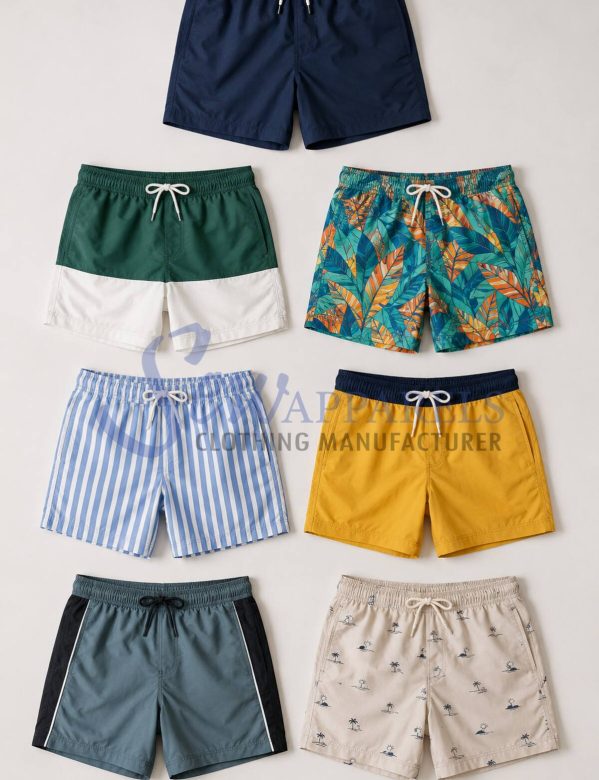
Why a swim shorts chlorine colourfastness claim needs clear boundaries
“Chlorine resistant” can suggest several different benefits. A customer might expect the colour to remain stable, the elastic to recover, the fabric to keep its strength or all three. A colourfastness report addresses its stated colour assessment; it is not proof of every property a broad marketing phrase might imply. Define chlorine claim boundaries and the intended benefit before selecting the evidence.
For example, a buyer may want evidence about shade change in the navy shell after a specified chlorinated-water assessment. That is a narrower question than whether the finished short remains unchanged throughout a season. Write the proposed claim beside the material identity and ask whether a reasonable reader would understand a wider promise. Revise wording that extends beyond the available report.
1. Brief the intended pool use and sample identity
A swim shorts chlorine colourfastness claim needs a pool use frequency brief. Record whether the short is intended for occasional holiday swimming, regular recreational pool use or a more demanding program. Include the anticipated exposure pattern and care route as development information. Frequency helps define the questions to investigate, but it does not convert a single test result into a lifetime prediction.
Identify the style, shell composition, fabric article, dye or print route, finish, supplier and production lot. Record colour codes and retain an unexposed reference from the same submission. A report for a differently finished fabric or an earlier supplier sample may be useful during development, yet it should not silently become evidence for the current production material.
Keep a component map with the sample. Name the liner, pocket bags, waistband elastic, drawcord, labels, printed areas and exposed decorative trims. Mark which items are within the requested assessment and which require separate evaluation. This prevents the phrase “swim shorts tested” from concealing that only one shell specimen was submitted.
Compare shell colourways individually
Shell colourway comparison must not assume that one shade represents every colour in the order. Different dye and print systems can create different questions, even when the fabric construction is shared. Agree a justified colourway selection with the laboratory and buyer. Keep the reason for any grouping in the approval record rather than choosing only the easiest-looking sample.
For a printed short, describe both the base colour and the printed detail. A small pale motif against a dark ground may need a different visual comparison from an all-over print. Specify the areas to inspect so that a general report description can be connected to the actual design being sold.
2. Match the test method to the colour question
For a swim shorts chlorine colourfastness claim, the method name is only the starting point. ISO 105-E03:2010 covers textile colour resistance to chlorinated swimming-pool water. Its public scope identifies alternative exposure conditions, including conditions intended for swimwear. Record the chlorine resistant swim shorts test scope, selected condition and method edition in the report.
The test condition is not a recommendation for operating a swimming pool, mixing chemicals at home or treating a garment during everyday care. Leave the controlled procedure to the laboratory using the complete method. Do not improvise an exposure with household bleach and describe it as an equivalent standard test.
Define the test method exposure scope: swim short pool water colour change, another stated observation or a separate agreed property. Washing, rubbing, perspiration and seawater evidence answer different exposure questions. A report with a familiar colourfastness heading is not automatically the correct support for a chlorinated-pool claim. Read the named exposure before accepting the result.
Make conditions and deviations visible
Request chlorinated water report conditions, specimen preparation, any prior treatment and disclosed deviations. A shortened commercial summary may omit information needed to compare two materials. Ask for clarification when the report leaves the selected condition unclear; do not fill the gap with a guess based on the method title.
If a buyer requests repeated exposures or an additional assessment after care, identify that program separately. Record its sequence and limits with the laboratory. Additional development observations should remain distinguishable from the standard result, especially when the procedure has been adapted for a particular purchasing question.
3. Review the report against a defined acceptance rule
A swim shorts chlorine colourfastness claim should be supported by a report that can be traced to the approved sample. The pool shorts colourfastness report review should check laboratory identity, report number, date, sample description, colourway, method and stated result. Compare those details with the submission form and sealed reference. Resolve conflicting names or sample codes before accepting the evidence.
Set the acceptance requirement before reviewing the outcome. The buyer and laboratory should agree the relevant evaluation, threshold and any additional appearance concern for the product. This article does not supply a universal grade because acceptance depends on the intended use and agreed specification. A number without its evaluation context is not a complete purchasing decision.
Review comments and limitations alongside the result. A satisfactory outcome for the submitted shell does not remove a note that another component was excluded. Keep the full report available to the approver rather than copying a favourable line into the technical pack and losing the qualification that explains its scope.
Use an approval worksheet
- List the exact material and colourway represented by each report.
- Record the exposure condition, evaluation and agreed acceptance requirement.
- Separate included components from untested components.
- Attach the unexposed reference and dated report identification.
- State the approved claim wording and any care qualification.
- Assign an owner to unresolved evidence and material-change review.
Keep this worksheet with the swim shorts chlorine colourfastness claim approval. It should show why a decision was made, not merely that a file was received. Where evidence remains incomplete, record a conditional decision or remove the unsupported wording rather than treating a missing result as a pass.
4. Check exposed trims, prints and garment differences
A swim shorts chlorine colourfastness claim can become misleading when a tested shell is combined with visibly different exposed components. The liner edge, drawcord, waistband or label may show colour change that customers notice before the shell. Review exposed trim colourfastness in the garment map and ask which colour-bearing parts need evidence appropriate to their material and use.
Inspect production-intent construction as well as development swatches. A changed print ink, finish or trim supplier can alter what the report represents. Identify the final approved combination and retain its revision history. Do not extend evidence to an alternative component just because its purchase description sounds similar.
For print colour change, compare the relevant printed zones with the retained reference under agreed viewing conditions. Distinguish fading from another appearance issue such as surface damage or detachment. Record unexpected changes for investigation without assigning a cause that the report has not established.
Keep the full garment decision coordinated
The existing Swim Shorts Buying Guides connect liner, drainage and drying decisions with the wider product brief. Colour evidence belongs beside those decisions, while remaining a separate assessment. A draining pocket or whole-garment drying result cannot compensate for an unsupported colour claim.
Use photographs as supplementary development records where needed, with consistent lighting and identifiable samples. Camera processing can make shade differences difficult to judge. Agree the formal evaluation route with the laboratory and use the photographs to explain the location of a concern rather than substituting them for the required assessment.
5. Separate colour retention from strength and stretch
A swim shorts chlorine colourfastness claim is not evidence of retained mechanical performance. Review colour versus strength loss separately: a material may need strength, stretch recovery or elastic assessment even when its shade remains acceptable. Define each additional property and commission evidence that answers that specific question.
SGS comfort and performance wear testing describes claim substantiation across fabrics, material systems and finished garments, including swimwear. That distinction is useful when briefing a program: specify the level of assessment and desired property. The service description does not establish that this particular short has passed any test.
For waistband and liner stretch retention, separate evidence is needed; agree measurements, reference conditions and any exposure sequence with the testing party. Keep these results separate from the colour assessment in the approval matrix. Do not describe a colourfastness grade as a strength-retention percentage or translate it into an elastic lifespan.
A useful evidence comparison
Consider an illustrative development file containing a shell colour report and a supplier statement about the elastic. The shell report may support a narrowly qualified colour decision if its sample and conditions match. The supplier statement alone does not resolve the separate question of the assembled waistband after exposure. Record that gap and decide what additional evidence is needed before widening the promise.
This example is a document-review scenario, not a reported Sew Apparels production result. Its purpose is to show how one favourable record can coexist with an unresolved property. A clear matrix makes that uncertainty visible early, when the specification or claim can still be adjusted.
6. Approve wording, care support and change control
Approve a swim shorts chlorine colourfastness claim only after the wording matches the evidence. Avoid absolute phrases such as “never fades” or an unsupported number of pool sessions. The swim shorts chlorine exposure label should identify the supported benefit without implying permanent colour, guaranteed strength or universal resistance under every pool condition.
Pool care instruction support must concern the approved garment. Agree appropriate rinsing, washing, drying and storage guidance through the product development process; do not use this article as a substitute for verified label instructions. Care wording cannot repair an unsupported performance promise or make an untested component part of a tested result.
For custom swim shorts manufacturing, supply the component map, colourway list, report references, proposed claim, care requirements and open evidence questions with the quotation brief. Private label swim shorts production benefits from resolving these details before artwork and labels are finalized. Confirm commercial terms separately with the manufacturer.
Final release checklist
Before pool exposure approval, confirm that the swim shorts chlorine colourfastness claim refers to the approved revision, the laboratory condition is clear, all relevant colourways and components have a documented decision, and separate mechanical promises have separate support. Retain the claim approval and define when a supplier, finish, print or material change triggers review. This creates a defensible evidence trail without overstating what one colour test can prove.