
Tracksuit replacement separates order control helps a buyer reorder one jacket or one trouser without accidentally ordering a complete set or an incompatible seasonal version. The original set may have one commercial identity, while its replacement pieces need their own order records, quantities and compatibility evidence. Clear component mapping prevents a familiar style name from hiding a different fabric, shade, size or branding revision.
Teamwear programmes often need additional trousers, replacement jackets or a different top-and-bottom size combination. A request for twenty replacements is incomplete unless it identifies the component, approved version and unit. The supplier and warehouse must know whether twenty means garments, sets, retail packs or cartons before they confirm a quote or prepare a pick list.
This guide explains six checks for brands, clubs and sourcing managers. It covers jacket order codes, trouser SKU mapping, set versus component barcodes and the final reconciliation. Replacement availability and minimum quantities depend on the actual material, stock and production conditions. An old set order does not automatically establish a separate-piece supply commitment.
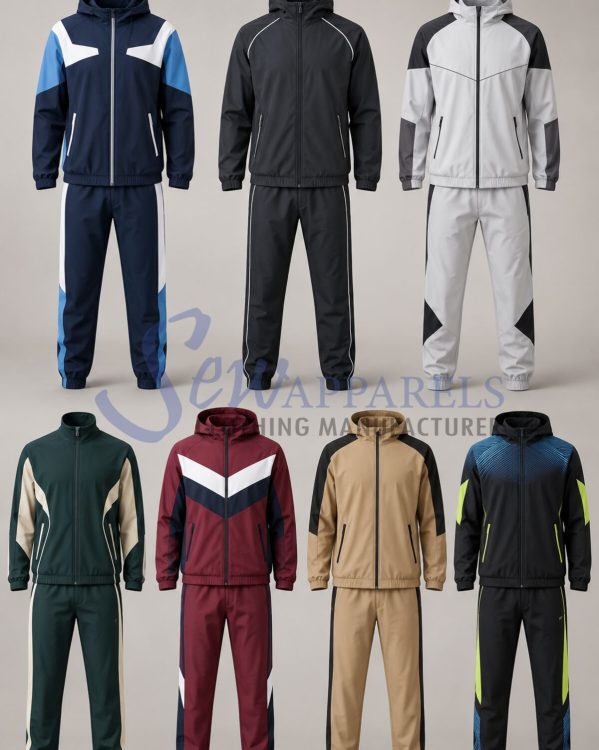
1. Build tracksuit replacement separates order control around a component master
Create an approved master that identifies the set and each component. Record the set style code, jacket style code, trouser style code, fabric references, colour standard, pattern revision, decoration file and label version. Record the seasonal component version where it helps distinguish the collection. Keep these fields explicit even when the jacket and trouser share the same customer-facing product name.
The tracksuit replacement jacket order code should identify a jacket. Tracksuit separate trouser SKU mapping should identify a trouser. Keep a jacket individual order code and a trouser individual order code in separate fields. Do not rely on a comment such as bottom only to correct a code that otherwise represents a complete set. That comment can disappear when an order is imported into another system or printed for the warehouse.
For tracksuit replacement separates order control, define tracksuit replacement piece compatibility and which components may be paired. Some sets use different jacket and trouser fabrics while retaining a coordinated appearance. Others change trims or artwork between seasons. A compatibility record should state the approved combination, rather than assuming that matching a brand name or nominal colour is enough.
Retain the physical approved pair or its traceable references. Include measured specifications and clear photographs of both pieces. When a replacement request refers to an earlier order, use its version and component records to identify the intended garment. A photograph alone may not reveal a changed fabric finish or grading revision.
Distinguish internal codes from external identifiers
An internal SKU can help the brand manage its own stock. A GTIN identifies a trade item within the GS1 system. Keep the relationship documented when both are used, but do not present an invented internal code as a registered GTIN. The responsible brand and trading partners should confirm identifier allocation.
2. Separate set, piece and retail item records
GS1’s GTIN Management Standard describes a predefined assortment as a fixed combination of trade items sold together as one physical trade item. Its assortment rule distinguishes component identities from the assortment identity and addresses changes to the combination. Where a tracksuit offer fits that model, review the set and individual trade items with the responsible identifier owner. Do not assume the complete-set barcode automatically represents a separately sold jacket.
In tracksuit replacement separates order control, confirm the tracksuit set versus component barcode before recording the selling unit on every order line. Record set versus piece quantity: complete set, individual jacket or individual trouser. If a retail pack contains more than one garment, identify its composition and pack quantity. A warehouse record should not have to infer the contents from the price.
GS1’s guidance on size and colour variations explains that each product variation needs its own GS1 GTIN. This supports careful mapping of the variants sold through a GS1-based supply chain. It does not prove that a particular brand’s current identifiers are correct. Compare the approved item data with the actual label and retailer record.
Keep a separate retail item record and verify set barcode allocation when a jacket or trouser is sold independently. Include its description, size, colour, version, packaging and applicable identifier. An independently sold trouser should not display a product description that promises a jacket in the same pack. Review online information and physical labels together before offering the replacement.
3. Confirm size-pair and colour compatibility
A complete tracksuit may pair a medium jacket with a medium trouser, but some buyers require different sizes for the two pieces. Record size pair identity in the set configuration and preserve it when only one component is replaced. Do not convert a replacement request to a standard pair without the buyer’s agreement.
For tracksuit replacement separates order control, verify the size system and pattern version. The same printed size name can refer to different measurements after a fit revision. Compare the requested replacement with the approved specification and, where necessary, a physical sample. Check jacket length, sleeve, trouser rise and inseam as relevant to the intended pair.
Replacement colour compatibility also needs a defined reference. A new component can differ from an older worn garment because of lot variation, surface finish or the existing garment’s care history. Request the original order details and agree whether the replacement must match an approved new standard or an actual retained garment. Explain the comparison basis before the buyer accepts the order.
Assess paired appearance in consistent viewing conditions. Include the shell, panels, rib, stripes and visible branding. A single colour name is not a measurable approval. Record which combinations are accepted, which need another sample and which are unavailable. Do not promise an invisible match to every previously worn set.
Use an explicit compatibility decision
The record can identify a jacket revision and the trouser revisions approved to pair with it. Include the approval date and reference sample. If the buyer accepts a visible difference for a replacement programme, document that decision rather than hiding it behind the word matching.
4. Request a quote for the actual replacement quantity
Give the supplier a line-by-line replacement quote specification. Include component code, size, colour, version, decoration, label, packaging, quantity and unit. Identify the original set order and the required compatibility reference. State whether the request concerns available finished stock, an additional production run or a reserved future replacement allowance.
During tracksuit replacement separates order control, confirm commercial conditions separately for each component. A minimum for coordinated sets does not automatically apply to jackets alone or trousers alone. Material availability, dye quantities, trim setup and decoration can affect feasibility. Ask for the actual minimums, sample requirements and lead time in the replacement quotation.
For custom tracksuit manufacturing, submit the replacement matrix with the original development references. Startup teamwear brands can plan which pieces they may need separately before approving the first range. Private label tracksuit production should specify any agreed replacement arrangement in writing. Confirm options for the actual order rather than treating a website’s set offering as a standing guarantee of individual-piece stock.
Compare quotes on the same scope. A price for an undecorated trouser is different from one including the approved logo, labels and retail bag. State whether samples, setup, freight and other relevant charges are included. Keep any substitution or changed delivery condition visible for approval before the order is released.
5. Reconcile quantities before warehouse picking
Use separate columns for sets, jackets and trousers. If the system converts sets into component requirements, show that conversion clearly and check it once. Avoid treating a set count as a garment count in one document and then doubling it again in another. The purchase order, production plan, packing list and invoice should describe compatible units.
A fictional tracksuit replacement separates order control example starts with forty complete sets, plus six replacement jackets and nine replacement trousers. Each set contains one jacket and one trouser. The required totals are therefore forty-six jackets and forty-nine trousers, or ninety-five garments. The commercial lines remain forty sets and fifteen individual replacement pieces. These figures illustrate reconciliation, not Sew Apparels stock or order terms.
Break those totals down by the exact component variants. A correct overall garment count can still conceal the wrong trouser size or jacket season. Use warehouse pick list reconciliation to compare requested quantities with physically packed items. Record shortages, approved changes and any items held back, rather than silently supplying a nearby version.
For tracksuit replacement separates order control, test the warehouse workflow using the real item records and labels. Confirm that a scan or code lookup returns the intended component, size and colour. Readable packaging should let the picker distinguish a complete set from a separate garment before opening it. Keep carton-level quantities reconciled with the line items inside.
Prevent substitution during picking
Give the warehouse a clear escalation route when the requested variant is unavailable. A similar navy jacket from another season should not be selected automatically. The buyer must approve the specific alternative and its compatibility before it enters the shipment.
6. Release the component master and preserve the order history
Close tracksuit replacement separates order control with set component master approval, a variant matrix and reconciliation. Record who approved the codes, pairings, label data, quotation and packed quantities. Preserve the final version sent to the supplier and warehouse so later questions refer to the same information.
Link the delivered replacement to its order and component revision. If a customer later reports an incompatible piece, the team should be able to compare the request, approved substitution if any, pick record and physical label. A traceable history makes the investigation more useful than arguing over a generic style description.
When a season changes, review which earlier pieces can still be supplied or paired. Keep discontinued variants identifiable and distinguish them from current offerings. A stock reservation, replacement service period or planned replenishment programme needs an agreed commercial record. Do not infer these commitments simply because both parties retained the old artwork.
Questions buyers should settle before placing the order
Can the set code be used for a replacement trouser?
Only if the order system explicitly distinguishes the requested component and the trading partners have approved that mapping. A dedicated trouser record is clearer when the item is ordered or sold separately. Keep component identification precise enough that a picker does not need to interpret a free-text note.
Does the same colour name ensure a matching replacement?
No. Confirm the version, material, lot and comparison reference. Compare the proposed component with the intended pair under agreed conditions. Record any accepted difference, especially when the original garment has been worn and cared for.
Should extra components be planned with the initial set order?
That can make the requirement clearer, but the buyer and supplier still need to agree quantities, minimums, storage and availability. Forecast replacements by component and size, then confirm which arrangement is feasible rather than assuming all future needs are covered.
Turn the replacement request into a clear order
Tracksuit replacement separates order control brings component identity, compatibility and quantities into one approved brief. Keep jacket and trouser records separate while linking them to the original set. The Tracksuits Buying Guides connect this order decision with paired fabric selection and zip-front construction so the replacement programme remains tied to the approved product.