
Track pants knee bagging recovery is the ability of a knee area to return towards its starting appearance after sitting, bending or other sustained wear. Buyers often notice a bulge when a wearer stands up, but that immediate appearance does not show how much deformation will remain after a defined rest. A useful approval records the starting shape, wear conditions and recovery observations before deciding whether the pant suits its intended use.
Training pants wear shape retention needs review even when a fabric stretches comfortably. Fabric growth, pattern ease, knee position, side seams and the way the garment sits on a wearer all matter to the investigation. Comparing two fabric swatches alone cannot explain every difference between two finished pants.
This guide gives six checks for a track pant knee deformation trial for sourcing teams, clubs and sportswear brands. It covers controlled sitting conditions, immediate and delayed observations, after-care assessment and a documented release decision. The aim is a repeatable buyer review with clear limits, rather than a claim that one fibre blend will never bag at the knee.
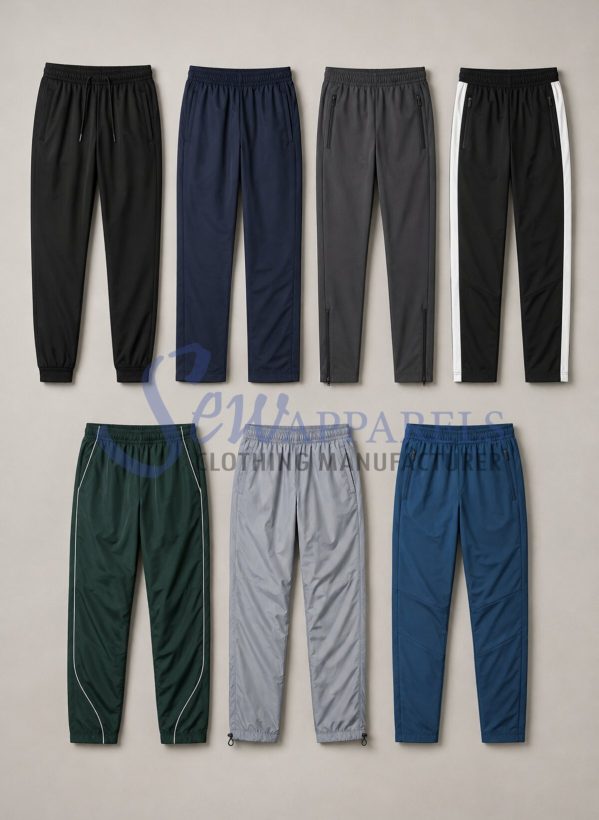
1. Define track pants knee bagging recovery against a starting shape
Identify the style revision, fabric code, colour lot, size, finishing history and intended fit. Record whether the sample is new, previously worn or already laundered. A washed sample may have a different starting geometry from a new one. Comparing those states without noting the difference can lead to a misleading conclusion about shape retention.
Observe the pant on the intended wearer before the trial. Note knee location, leg taper, waist position and the distribution of ease when standing. Record starting knee appearance in front and side views using consistent lighting, distance and posture. Also inspect the garment laid out without manually pulling the knee into a preferred shape. Keep these views as the baseline for later comparison.
For track pants knee bagging recovery, define what the team will observe and how. A side-profile photograph can show a local bulge, while selected garment measurements can show broader dimensional changes. Name the landmarks and the garment placement used for measurements. Neither an unscaled photograph nor an isolated circumference should be presented as a complete description of knee deformation.
Agree the intended wearer profile and activity. A warm-up pant worn over shorts may load the knee differently from a close-fitting retail trouser worn alone. Record underlying layers and footwear when they affect fit or movement. Choose comfortable, representative tasks rather than forcing an unusually deep bend to create an extreme result.
Control the sample identity
Knee trial sample controls should identify each garment and retain the component list. If the trial compares two constructions, distinguish the fabric lot and pattern revision. Recheck the sample labels before every observation so photographs and measurements cannot be assigned to the wrong option.
2. Understand fabric evidence and its limits
The public scope for ISO 20932-1:2018 concerns fabric elasticity and related properties using strip or loop arrangements, excluding narrow fabrics. ISO lists the edition as confirmed in 2024 and identifies a 2021 amendment. Ask the laboratory to identify the edition, applicable amendment, specimen direction and selected procedure in its report. A fabric result is supporting evidence, rather than proof of a finished garment’s knee appearance.
When planning track pants knee bagging recovery, distinguish stretch under load from residual growth after the load is removed. A fabric that extends easily is not automatically the one that returns most closely to its starting shape. Compare results from compatible test conditions and make sure the selected method suits the material and intended application.
ASTM D2594/D2594M-21 addresses low-power stretch properties of knitted fabrics and includes fabric growth after extension is removed. Its public guidance also warns against using the method for commercial shipment acceptance because between-laboratory precision is poor. Have the technical team choose a suitable evidence plan instead of treating an arbitrary result from different laboratories as an interchangeable pass certificate.
Keep laboratory evidence connected to the actual production-intent fabric. A development swatch with another finishing route or elastane specification may not represent the sample being worn. Record the fabric state and direction. Do not copy a licensed test procedure from a short online description or label a buyer’s sitting trial as an ISO or ASTM test.
3. Keep sitting and movement conditions repeatable
Define repeat sitting conditions in a comfortable wear sequence representative of the product brief. Specify the chair or seating arrangement, sitting posture, duration, movements between sitting periods and whether the garment is removed for recovery observation. A short desk-sitting check and a longer travel-use trial answer different questions. The team should choose and record the sequence before seeing which sample performs better.
During track pants knee bagging recovery review, keep the comparison conditions consistent. Changing the wearer, size, chair height or activity can change the strain placed on the knee area. When several wearers are included, record their relevant fit measurements and evaluate results within that context. Do not combine all observations into one unexplained score.
Keep a wear duration record including interruptions. If the wearer stands or adjusts the pant, note it. Avoid smoothing, pressing or stretching the knee between observations unless that handling is an explicitly defined part of the comparison. An unnoticed adjustment can make a fabric appear to recover more than it did without intervention.
Use enough representative samples and repeated trials to understand whether the result is consistent. The appropriate number depends on the development decision and expected variability. Agree it with the buyer rather than declaring a universal minimum. Keep left- and right-knee observations separate when one side behaves differently, and investigate fit or activity differences before averaging away the issue.
Separate trial stages
A shape retention comparison record can list starting condition, end of sitting, removal of load, each rest observation and final inspection. Timestamp the stages. This avoids descriptions such as later or after a while that cannot be compared reliably on a repeat sample.
4. Observe immediate and delayed recovery separately
Make the immediate recovery observation as soon as the defined wear stage ends. Record the timing and whether the pant is still on the wearer. Take the agreed photographs before the wearer or technician changes its shape. Capture both visible bagging and related details such as seam displacement, stripe distortion or a shifted knee position.
Assess track pants recovery after sitting through agreed unloaded rest intervals, retaining the track pants knee bagging recovery record. Place the garment in the stated condition and keep handling consistent. Photograph and measure at the same landmarks. Delayed deformation recovery under those conditions may reduce the bulge, but it does not establish how the garment will perform after every possible duration of wear.
Use precise descriptions for residual deformation. If a bulge remains at the last observation, report that it remained after the stated interval. Do not call it permanent merely because the first photograph looked pronounced. A track pant permanent knee bulge claim needs evidence; permanent knee bulge limits in a buyer brief need a defined observation point and measurement or appearance rule.
For example, a fictional comparison might show one sample improving during rest while another retains a visible knee projection. The record should preserve the images, timing and baseline rather than reducing the observation to better recovery without context. This is an illustration of reporting, not Sew Apparels test data or a recommended pass threshold.
Keep different measurements distinct
A local knee projection, fabric growth percentage and change in leg circumference describe different quantities. Do not convert them into one percentage without a validated relationship. Report the selected measurements in their own units and explain which appearance decision each supports.
5. Review after-care behaviour and fit interaction
Use an after care knee assessment after the buyer-approved care route when after-care performance matters. Record washing and drying conditions, number of cycles, conditioning before measurement and any previous wear. Compare the cared garment with its own appropriate starting state. Care can change dimensions or surface appearance, so a flatter knee alone does not prove better recovery.
In track pants knee bagging recovery assessment, distinguish a reduced bulge from a tighter overall fit caused by dimensional change. Recheck waist, rise, inseam and length-range knee position alongside the local appearance. A garment that now pulls across the thigh or restricts movement has not necessarily improved simply because the knee looks less loose.
Review fabric and fit interaction before choosing a correction. A knee placed too high or low, limited bending allowance or an unsuitable taper may change where strain accumulates. Fabric selection and pattern changes should be investigated separately where possible. If both are changed together, report that the trial evaluates the combined revision and cannot isolate one cause.
For custom track pants manufacturing, include the intended wearer, activity, base fit and care expectations in the sample brief. Private label track pants production benefits from a documented approval sample that represents the actual material and finish. Startup brands can focus the first range while still reviewing knee shape and movement properly. Confirm quantities and development options for the specific enquiry.
6. Release the pant against an agreed recovery decision
Complete the bagging approval decision for track pants knee bagging recovery using criteria agreed before the comparison. State the wear sequence, sample state, observation times, appearance reference and any measured limits. Record whether the garment meets the intended-use brief, requires another sample or needs a targeted investigation. Avoid using a general statement such as good elasticity as the entire acceptance decision.
Keep the starting and recovery photographs, measurement sheets, laboratory report references and pattern revision together. Identify which sizes and colourways the evidence represents. If the approved result relies on a particular fabric finish, record that dependency so a later substitution triggers review.
Ask the production team to confirm the material and pattern controls needed to repeat the approved garment. A new fabric lot, finishing change or altered knee shaping should be assessed according to the risk it introduces. Repeat the affected checks rather than assuming that an old sample approval covers every future version.
Questions buyers should settle before sampling
Does more elastane guarantee better knee recovery?
No. Fibre percentage alone does not describe the whole fabric, construction or fit. Evaluate the actual fabric and assembled pant under the chosen conditions. Use composition as a specification input, not as a substitute for performance evidence in track pants knee bagging recovery.
Should a pant be rejected immediately after sitting?
The answer depends on the intended-use criteria. Immediate appearance may matter for a travel or retail product, while delayed recovery provides another useful observation. Agree both decision points before testing so the team does not select whichever timing produces the preferred result.
Can a laboratory report replace the wear trial?
It can inform the material decision, but it does not automatically capture the finished pant’s pattern, seams and wearer fit. Keep laboratory and garment findings connected while describing their separate scope.
Build recovery into the sample brief
Track pants knee bagging recovery becomes a clearer sourcing decision when the baseline, wear sequence, rest timing and after-care state are recorded. Use the Track Pants Buying Guides to connect this review with ankle access, stripe alignment, length ranges and care information. Release the garment with a traceable decision that the next sample and production order can reproduce.