
Work cargo trousers knee pad evidence should be reviewed before a buyer describes a pocket-and-pad arrangement as a protective system. A pad that physically enters a knee pocket is not automatically an approved combination for a particular task. The trouser model, pad model, instructions and supporting documentation need to be connected to the same configuration.
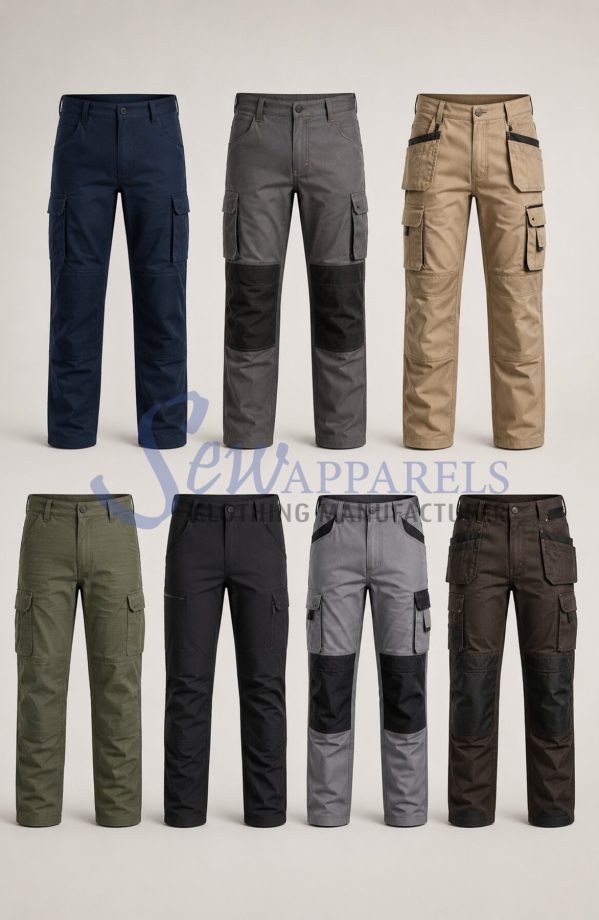
This guide explains the questions purchasing and development teams should ask about identity, compatibility, fit observations, replacement and approval scope. It does not claim that an unspecified Sew Apparels trouser or knee pad is certified. Where protection is required, the employer’s responsible safety team and relevant supplier must confirm suitability for the actual work and applicable requirements.
Work Cargo Trousers Knee Pad Evidence: 6 Easy Checks
Use these checks to separate physical fit, user observations and protective evidence. Start with the task requirement, identify the exact components and review the instructions before approving a sample. Keep missing information visible. A comfortable kneeling demonstration cannot replace the evidence needed for a protection claim.
1. Confirm the employer’s actual requirement
A knee pad trouser employer requirement should describe the intended task and the responsible decision owner. Ask which risks are being addressed and what product information is required for selection. Do not assume the same arrangement is suitable for every surface, work position or duration.
For work cargo trousers knee pad evidence, HSE guidance on PPE selection and use is a relevant process reference. It emphasizes exposure, wearer suitability, compatibility and information about use and limitations. The guidance applies to Great Britain; buyers in other locations should confirm their applicable requirements. It does not approve a particular knee pad or trouser combination.
Keep a protective requirement distinct from a preference for additional cushioning. If the site requires protective equipment, refer selection questions to the responsible safety team. Do not resolve an incomplete brief by changing the description to “comfort pad” while still implying that the arrangement provides the required protection.
2. Identify the trouser and pad models
Cargo trouser pad model matching starts with exact references. Record the trouser style and revision, pad model and relevant size information. Preserve the supplier or manufacturer identity and the document references used for the review. A generic entry such as “standard knee insert” is not enough to identify the assessed arrangement.
Cargo trouser knee pad compatibility should be supported by the relevant documentation, not inferred from approximate dimensions alone. Ask whether the instructions identify specific garments, pocket arrangements or other conditions. If the answer is unclear, request clarification before the configuration is released for the intended use.
A knee pad garment combination review should also distinguish the submitted sample from the proposed bulk product. If the sample uses another pad or a different pocket revision, record that difference. Do not carry forward an approval without confirming that it covers the actual components being supplied.
3. Review the scope of protective evidence
In work cargo trousers knee pad evidence reviews, ask what configuration the documents describe. A certificate, report or product statement must be connected to the relevant model and claim. Retain the full document and its limitations rather than copying an isolated standard number into a quotation.
BSI lists BS EN 14404-3:2024 as addressing requirements for an individual combination of knee pads and garments, type 2. This published title illustrates why a combination can matter. The listing alone does not establish that an unspecified product conforms, identify its performance level or authorize another garment-and-pad pairing.
Work trouser knee pad system evidence should therefore identify the assessed scope and the actual supporting records. Ask the relevant supplier or specialist which requirements apply to the proposed system and market. Avoid reproducing unverified technical limits or claiming compliance merely because a standard is mentioned.
4. Read the instructions before reviewing fit
Kneepad pocket instruction scope should be retained with the component references. Review the stated insertion, orientation, adjustment and care information that applies to the actual product. Do not invent a universal direction for inserting pads or assume a pad can be trimmed to fit an unfamiliar pocket.
For work cargo trousers knee pad evidence, distinguish a fit observation from permission to modify the system. A pad or pocket alteration may change the configuration described by the manufacturer. Refer any proposed change to the responsible supplier and safety reviewer instead of treating a convenient adjustment as automatically acceptable.
Cargo trouser pad supplier instructions should remain accessible to the people evaluating and using the arrangement. Record unresolved instructions or inconsistencies between documents. If the pad and garment information conflict, obtain clarification rather than choosing the instruction that is easiest to implement.
5. Observe position in an appropriate trial
Work cargo trousers pad position review should use the intended size and the identified pad according to the relevant instructions. The responsible team should define suitable, safe observations. Do not expose a wearer to an actual hazard merely to investigate pocket position.
Knee pad fit trial questions may include whether the garment size is appropriate, whether the pad is oriented as instructed and whether the arrangement stays in the intended position during the agreed activity. Record the wearer and size context sufficiently for the review while keeping personal information limited to what is needed.
A work cargo trouser protective system should not be approved solely from a short trial. Physical fit and user feedback are useful selection inputs, but they cannot demonstrate every protective property. Keep the trial record separate from laboratory or conformity evidence and state what it did and did not assess.
6. Confirm replacement and change restrictions
Work trouser pad replacement restrictions should be checked in the relevant product information. A replacement that resembles the original may have another identity or fall outside the documented combination. Confirm the permitted replacement rather than substituting an available insert without review.
Work cargo trousers knee pad evidence should be revisited if the garment model, pocket, pad or other relevant part of the arrangement changes. A knee pad pocket modification review needs the same attention to configuration identity. Do not assume that making the pocket larger, adding an opening or changing its position preserves an existing approval.
A kneepad system approval record should state the accepted configuration, evidence references, instructions and decision owner. Record any open question and the release status. Keep the record specific enough that purchasing and inspection teams can distinguish the accepted model from an unreviewed alternative.
Build a Work Cargo Trousers Knee Pad Evidence File
Cargo trousers kneepad documentation should be organized around the configuration being purchased. Start with the employer’s requirement, then add the model references and the corresponding manufacturer information. Include the evidence used for selection and the defined fit observation record where relevant.
- Use context: intended task, site requirement and responsible reviewer.
- Components: trouser style and revision, pad model and size references.
- Evidence: identifiable records, stated claim and documented scope.
- Instructions: use, adjustment, care and replacement information.
- Observation: sample configuration, safe trial scope and findings.
- Decision: accepted combination, unresolved items and review triggers.
These fields make work cargo trousers knee pad evidence easier to review across teams. They also reduce confusion between a development sample containing an insert and a configuration supported for a particular protective claim. Keep attachments identifiable instead of relying only on a summary marked “approved.”
Separate Protection Wording from Pocket Features
A cargo trouser kneeling protection claim should describe only what the evidence supports. A pocket feature can be described as a pocket feature without implying certification or guaranteed injury prevention. Avoid statements such as “protects every worker on any surface” when the documentation is limited to a defined product and use scope.
Likewise, do not describe an unspecified insert as meeting a particular level or requirement. Ask for the actual product information. Where the order does not include an assessed protective system, keep the commercial description clear so a buyer does not mistake ordinary cargo trousers for confirmed protective equipment.
If marketing, quotation and technical documents use different wording, resolve the mismatch before release. The purchasing record should not describe a protective combination while the sample record identifies only a proposed pocket. Clear wording supports an informed decision and preserves the limits of the evidence.
Include Compatibility Questions in the Supplier Brief
When discussing work cargo trousers manufacturing requirements, provide the actual knee pad requirement and the references available for review. For custom work cargo trousers manufacturing, distinguish an ordinary design request from an order requiring a confirmed protective combination.
Private label work cargo trousers production should keep the accepted component references and claim wording consistent in the sample, bill of materials and purchase specification. Confirm what is included in the order and what documentation is available. This guide promises no particular certification, pad supply arrangement, minimum quantity or test result.
Ask the supplier to flag any proposed change before it is used. A different pocket revision or pad may need another review even when the overall trouser appearance remains similar. Record the response and approval boundary rather than accepting an informal statement that the change is minor.
Example: Two Inserts That Fit the Same Pocket
Consider fictional pads A and B, both of which can be placed inside a development pocket. The records identify A in the reviewed product information, while B has no confirmed connection to that combination. Physical insertion does not resolve the evidence gap for B.
Work cargo trousers knee pad evidence review therefore asks the supplier and responsible safety team to clarify B before use. It does not approve B from appearance or comfort alone. This example contains no actual Sew Apparels certification or protective performance result.
Questions Before Approving the Configuration
Does fitting inside the pocket establish compatibility?
No. Confirm the product information and its scope, then review the intended arrangement. Dimensions alone cannot establish a protective claim.
Can a trial replace the protective evidence?
No. Record fit observations as observations. Use the relevant documentation and responsible assessment for the protection requirement.
What if a component is changed?
Pause release of the changed arrangement until its coverage is confirmed. Keep the new reference and decision traceable rather than silently reusing the original approval.
Keep the Accepted Combination Identifiable
Use the Work Cargo Trousers Buying Guides alongside fit and pocket development decisions. Preserve the accepted component identities, instructions and evidence references, then review them when the arrangement changes. A work cargo trousers knee pad evidence review keeps development features and protective claims connected to the actual configuration approved for the order.
Use the work cargo trousers crouching fit development review to document the garment size and movement context alongside the identified pad. Keep these wearer observations separate from protective evidence. If the fabric, pattern or pocket is revised, ask the responsible reviewer whether the documented combination remains applicable.