
Work cargo trousers removable holster pockets should be developed as a coordinated garment-and-component arrangement. A detachable pouch changes more than storage capacity: it introduces an attachment interface, a second configuration when removed and a replacement part that must remain identifiable. Buyers need to approve all three before treating the design as ready for an order.
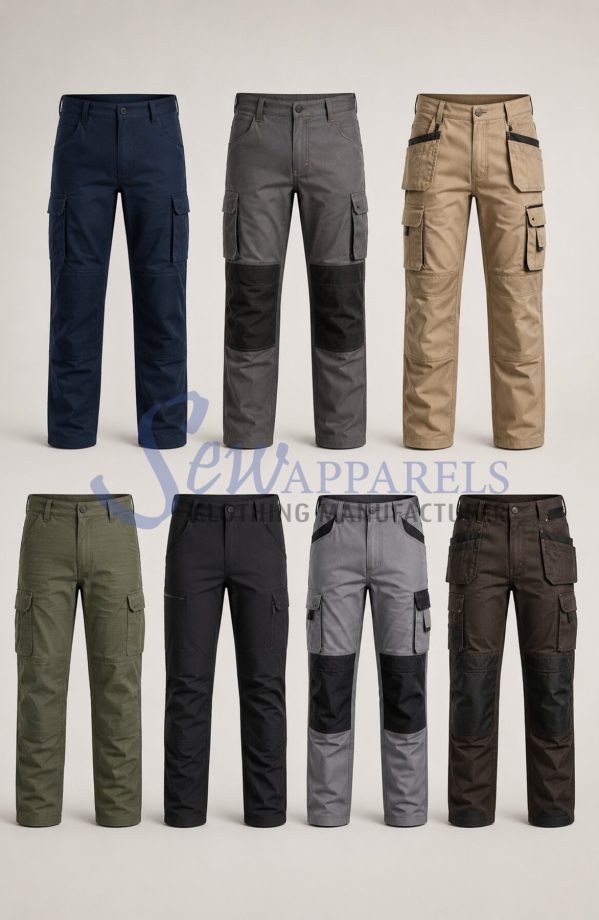
This guide helps brands compare fixed and removable options, prepare samples and document the accepted configuration. It does not claim that any untested arrangement carries a particular tool weight or meets a protective equipment requirement. Specify the intended contents and working conditions, then agree suitable checks with the development team rather than treating a photograph as performance evidence.
Work Cargo Trousers Removable Holster Pockets: 6 Easy Checks
Begin with the task, then follow the pocket through attachment, movement, removal, care and replacement. A useful sample review includes both the complete garment and its detachable parts. Keep observations tied to the actual fabric, trims, size and sample revision.
1. Define why the pocket needs to come off
For work cargo trousers removable holster pockets, the first question is what removal achieves for the wearer. Does the pouch come off between tasks, before sitting, for a different tool set or during an agreed care process? These purposes can require different openings, attachment positions and instructions. Avoid adding detachability only because it looks like a premium feature.
A cargo trouser tool workflow brief should describe representative contents, their dimensions, which hand reaches them and when the wearer needs the storage. Record whether the empty pouch stays attached, whether two pouches are used together and where removed components are kept. Discuss workplace restrictions with the buyer; a convenient storage feature does not override the site’s rules.
Use a fixed removable holster comparison to make the choice visible. A fixed pocket avoids a separate component to manage, while a removable design offers a configuration change that must be controlled. Compare actual samples for reach, bulk, attachment handling and appearance. Do not promise universal comfort or productivity gains from either option.
2. Specify the attachment as part of the garment
A holster pocket attachment review should identify every part between the pouch and trouser body. Show attachment location, mating components, orientation, seam route and reinforcement area on the technical drawing. State which dimensions are finished measurements and which include allowances. The interface should be visible in the sample approval file, not hidden behind a general note saying “detachable pocket.”
For work cargo trousers removable holster pockets, examine the surrounding fabric and construction as well as the fastener. A closure can remain shut while its attachment seam or supporting area becomes distorted. Review the assembly with the intended contents and agree what observations or tests are needed for the use case. A trim’s individual specification does not establish the performance of the finished garment.
Coats’ garment design guidance discusses assessing seams during development against strength or elongation requirements. That is relevant technical context for asking how an attachment seam is specified. It does not supply a universal holster-pocket limit or certify a Sew Apparels sample.
When a zipper is proposed, identify its type and operating instructions. YKK explains how locking sliders work, including how puller movement can release a lock. This illustrates why the exact slider matters; it does not mean every zipper has identical behavior or that Sew Apparels uses that component. Obtain the selected trim’s information and assess it in the actual assembly.
3. Review the pocket-on and pocket-off samples
A work cargo trouser detachable pocket sample should be complete enough to assess the intended arrangement. Use the proposed shell, pouch material and attachment parts where possible. If substitutes are used for an early mock-up, list them and keep the approval provisional. Changes in stiffness, thickness or trim dimensions can affect the interface and wearer observations.
In a work cargo trousers removable holster pockets review, compare standing, walking, sitting and other relevant movements in a safe sample setting. Record whether the wearer can reach the opening, operate the attachment and identify incomplete engagement. Use representative contents agreed for the trial; do not improvise a hazardous load test or expose the wearer to a risk to prove a feature.
The work cargo trouser pocket off sample deserves its own review. Check the remaining garment for exposed attachment parts, loose tabs, contact points and changes in appearance. Ask whether the base pocket remains accessible and whether the interface interferes with nearby seams or other clothing. Removal should not leave an undocumented configuration that is absent from the approved sample set.
Capture removable pocket wearer observations by task and configuration. Separate “difficult to reach while seated” from “attachment did not fully engage”; they lead to different revisions. Record the sample size, wearer context and contents alongside the comment. A single favorable trial is an observation, not proof that the same arrangement suits every wearer or workplace.
4. Keep component identities and replacements controlled
Cargo trousers removable component identity should distinguish the garment, left and right pouches, attachment parts and revision. Give the pouch a reference that can be connected to the approved drawing and bill of materials. Where components differ by size or orientation, make that distinction clear enough for ordering and use.
For work cargo trousers removable holster pockets, visual similarity is not enough to authorize a replacement. A cargo trouser detachable tool pouch may appear to fit while differing in opening, fastener length, support material or seam position. Compare the actual proposed component with the approved reference before accepting it. Keep compatibility decisions tied to named parts rather than a generic description.
Discuss work trouser holster replacement parts during quotation. Confirm whether spare pouches are included, supplied separately or subject to a later availability check. Do not assume that a component will remain stocked indefinitely. A cargo trouser spare holster register can record reference, side, applicable sizes, revision and the order or sample it belongs to.
Define a work trouser pouch change process for future substitutions. Ask who reviews a changed part, what sample must be checked and which instructions require revision. A replacement that changes capacity or attachment construction needs review; it should not silently inherit the original approval.
5. Agree care, handling and configuration instructions
For removable holster work trouser pockets, confirm whether care is carried out attached or separately for the specified materials and trims. Follow the actual approved instructions and evaluate relevant samples in that condition. Do not assume that detachment automatically makes laundering easier or that two components with different materials share one care route.
A holster pocket garment interface should remain usable after the agreed care and handling checks. Examine visible distortion, attachment alignment and access, then record the conditions used. Define acceptance criteria with the buyer before evaluating results. Avoid turning a small development exercise into an unsupported lifetime durability claim.
In work cargo trousers removable holster pockets development, instructions should explain how to identify the correct pouch, attach it fully and remove it according to the selected mechanism. Describe any limits that belong to the agreed design. If the operation is unclear in a sample trial, revise the interface or instructions and review the change before release.
Keep ordinary tool storage separate from protective claims. If the garment has a separately specified protective function, changes require review by the responsible team against its applicable requirements. An added pouch should not be described as improving protection without supporting evidence. Likewise, storage capacity is not a certified load rating unless an appropriate, documented basis exists.
6. Approve the complete order scope
A removable pocket construction decision should close with an identifiable sample set, drawing revision and component list. For work cargo trousers removable holster pockets, approve the garment with the intended components attached and the accepted pocket-off configuration. Name unresolved matters and keep them out of the released specification until resolved.
When discussing custom work cargo trousers manufacturing, send the quantity, sizes, fabric proposal and pocket configuration together. Clarify whether every garment receives the same pouch set, whether replacements are separate line items and what development or testing is included in the quotation. These details affect the scope being priced.
For private label work cargo trousers production, connect label and packaging references to the accepted component identities. If pouches are packed separately, state how the correct set is matched to the garment. Confirm the relevant minimums, sample steps, costs and delivery assumptions for the actual order; this guide does not promise a fixed MOQ or replacement service.
Work Cargo Trousers Removable Holster Pockets Approval Checklist
- Define the task, representative contents and reason for removal.
- Identify attachment parts, seam construction and supporting material.
- Review complete and pocket-off samples with recorded observations.
- Confirm component references, orientation and compatibility decisions.
- Agree care conditions, handling instructions and acceptance criteria.
- Record the approved revision, quotation scope and change authority.
A Practical Configuration Comparison
Consider a fictional buyer comparing Sample A and Sample B. Both carry the same proposed pouch, but A leaves a loose attachment tab when the pouch is removed. B holds the tab differently and allows easier access to the base pocket in the safe trial. The team records the difference and requests a revised sample for the preferred configuration. This is an illustration of decision-making, not a Sew Apparels test result or a claim that B is suitable for every task.
Keep this work cargo pocket configuration choice separate from other approvals. Selecting the pocket-off appearance does not confirm attachment durability, care performance or replacement compatibility. Each decision needs its own reference and closure record.
Frequently Asked Questions
Can one removable pouch fit every trouser size?
Only approve the combinations actually reviewed. Check position, reach and attachment geometry across the agreed size range instead of assuming that one physical connection establishes suitability everywhere.
Does a detachable pocket require a separate spare-parts plan?
It requires a clear component record and an agreed replacement scope. Availability, cost and compatibility should be confirmed rather than inferred from the fact that the pouch can be removed.
Can a sample photograph close the review?
A photograph records appearance. Keep it with the relevant drawings, component identities, observations and approvals; it does not replace the required checks.
Connect the Pocket Decision to the Trouser Brief
Use the Work Cargo Trousers Buying Guides to connect this component review with fit and pocket-load planning. For work cargo trousers removable holster pockets, keep the final garment, detachable parts and written instructions in one controlled approval set. This makes the accepted arrangement easier to reproduce and future changes easier to assess.
Connect the representative contents to the work cargo trousers tool pocket load distribution review. Record which tools belong in each pouch and how their positions affect the garment during the agreed observations. Keep that use context separate from an independently specified attachment test or load rating.