
Yoga pants seam grin under stretch is a visible opening along a stitched join when the garment is extended. The sewing thread may remain intact while the seam looks noticeably spread. That appearance can concern a buyer even when the pant has not torn. A useful review therefore separates visible opening, recovery after release, thread damage and fabric damage instead of treating every gap as the same defect.
Start with the approved fit and the actual seam construction. A photograph of a heavily stretched sample does not establish the cause or a universal failure limit. Record where the opening occurs, what movement or extension produced it and whether it remains afterwards. The six checks below connect the appearance decision with appropriate construction evidence, while avoiding a promise that any seam will stay invisible under unlimited strain.
1. Identify the opening before choosing a correction
When investigating yoga pants seam grin under stretch, inspect the unloaded seam first. Record the garment size, fabric lot, seam location, stitch construction, thread, seam allowance and sample revision. Note existing holes, skipped stitches, uneven feeding or damage before applying extension. An initial defect should not be attributed to a later movement trial.
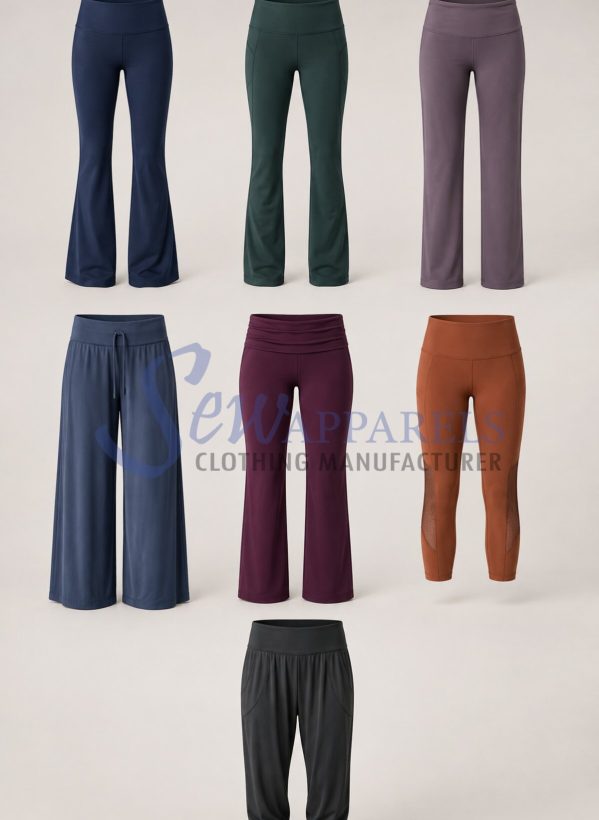
Yoga pants seam grin appearance may involve visible thread or the background showing between joined fabric edges. An intact thread visible seam gap differs from broken stitches. Fabric yarn movement, needle damage, a cut edge pulling away or local fabric rupture also require different explanations. Close inspection should establish what actually moved or failed; a general “weak seam” description is too vague for a reliable correction.
Yoga pant fabric yarn slippage should not be assumed from a gap alone. Identify whether the fabric is woven, knitted or another construction, and ask a qualified technical team to distinguish yarn displacement from stitch extension or fabric damage. A laboratory method for woven seam slippage is not automatically applicable to every knitted yoga pant.
Use yoga pants seam grin under stretch as an observation that needs classification. Keep a record of the seam before loading, during the agreed extension and after release. That sequence can reveal whether an opening was temporary, whether recovery was incomplete or whether damage occurred. It does not replace a suitable strength evaluation when structural integrity is in question.
2. Control fit, movement and background contrast
A yoga garment movement seam review should use the intended fit and agreed movements. Record the wearer or form measurements, garment size and relevant ease. Obtain appropriate consent for any wearer photographs and keep the assessment focused on the garment. Never force a person into an unsafe position or an obviously unsuitable sample to produce an extreme image.
For yoga pants seam grin under stretch, distinguish normal movement from an overload demonstration. A squat, bend or seated position may place different demands on the seat, inseam and side seam. Use waist contour development to review fit alongside the actual seam orientation. Do not assume that a hand-pulled flat swatch recreates the loading distribution of a finished pant.
Yoga seat seam spread deserves attention alongside rise, hip ease and crotch shaping. Excessive local strain can make an otherwise workable seam appear poor. Conversely, changing the pattern does not excuse a construction that fails under the agreed use conditions. Keep the yoga fit strain seam effect visible in the record so fit and sewing decisions can be reviewed together.
During stretch pose seam inspection, use consistent lighting, viewing distance and garment positioning. Yoga seam background contrast can alter how a gap looks: a pale background behind a dark seam may make opening more obvious. A low-contrast photograph can hide it. Choose and document a fair viewing setup, and do not change the background to improve an approval result.
3. Record extension and recovery as separate stages
Reliable yoga pants seam grin under stretch evidence needs an explicit loading condition. For a controlled sample comparison, agree specimen dimensions, orientation, gauge marks, extension or load, duration and repetitions with the technical team. Use the same preparation for each candidate. Do not combine one seam photographed at a known extension with another stretched by an unspecified hand force.
Yoga seam opening under extension should be recorded at the agreed stage, followed by a recovery observation after release. A seam that closes afterwards may still have unacceptable appearance during the intended movement. A seam that remains open needs investigation even if it looked acceptable at a lower extension. Both observations matter, and neither alone establishes maximum seam strength.
For illustration only, a marked 100 mm specimen length extended to 120 mm has 20% extension relative to its starting length. That calculation does not mean 20% is the correct requirement for a yoga pant, or that the fabric and seam share identical local strain. It also does not describe the opening width across the seam. Keep extension, load and visible gap as distinct recorded quantities.
Within yoga pants seam grin under stretch, yoga seam extension evidence should include the actual procedure and specimen identity. If photographs are used, include a suitable scale without concealing the seam. Repeated specimens can help reveal variation. An isolated best-looking seam should not become the evidence for a whole lot when other samples behave differently.
4. Choose laboratory evidence that answers the right question
Yoga stitch versus fabric failure is a structural question that may need laboratory evaluation in addition to the visual review. Ask the laboratory to identify the relevant method, applicability and failure mode. A report should state the sample construction and seam preparation, not merely a standard number and a pass label without context.
For yoga pants seam grin under stretch, ISO 13935-2:2026 seam maximum force testing addresses the grab method with loading perpendicular to the seam. Its scope includes straight seams, and applicability depends on the textile construction. This is maximum-force evidence; it does not directly define acceptable visible opening during a yoga pose or certify a curved seat seam’s appearance.
Separately, ISO 13936-2:2004 woven seam slippage testing addresses resistance to yarn slippage using a fixed-load approach for woven fabrics, including stretch woven fabrics. Do not apply that title indiscriminately to a knitted pant. Confirm suitability with the laboratory and distinguish yarn slippage from sewing-thread rupture or a visual seam-grin assessment.
Neither reference supplies a universal buyer acceptance limit for this garment. Keep the laboratory result, visual movement assessment and fit review as complementary evidence. A high rupture force does not automatically make an opening visually acceptable. Equally, an attractive low-load photograph does not show that the construction has adequate strength for the intended requirement.
5. Compare construction alternatives after care
A yoga seam alternative sample should change a defined variable or a documented set of variables. Possible review areas include stitch construction, thread suitability, machine adjustment, allowance, fabric direction and pattern ease. Have the factory’s technical team evaluate them together. Increasing stitch density or tightening tension without checking the result can create a different problem rather than a reliable improvement.
In yoga pants seam grin under stretch, compare the alternatives under the same agreed conditions and inspect hand feel, bulk, recovery and visible damage as well as the gap. A seam that looks more closed may be uncomfortable or restrict garment extension. A softer alternative may need further structural evidence. Avoid choosing a winner from appearance alone.
Yoga seam appearance after care should be checked on samples with a known washing and drying history consistent with the intended product instructions. Keep the care route and completed cycles in the record, preserve an as-received reference and repeat the agreed observation. Fabric and seam behaviour after care cannot be inferred reliably from an unwashed sample.
The comparison below is a decision checklist, not test results or a standard grading scale. It keeps appearance, integrity and fit separate so an adjustment does not quietly transfer the problem elsewhere.
| Review stage | Record | Question to resolve |
|---|---|---|
| Before extension | Construction and initial condition | Was damage already present? |
| During extension | Loading condition and visible gap | Is appearance acceptable in the agreed use? |
| After release | Recovery and failure mode | Did the seam recover without damage? |
| After care | Care history and repeated observations | Does the approved behaviour remain? |
Do not remove an unfavourable observation from the record because a replacement sample improved. Retain the revision history and explain what changed. If several variables were altered together, say so; the result may support that revised construction without proving which individual change caused the improvement.
6. Approve appearance with a traceable specification
Set yoga pant seam gap acceptance before releasing production. Identify the seam locations, intended fit, agreed movement or extension, viewing setup, recovery check and response to thread or fabric damage. Use an approved physical reference and documented observations where appropriate. The buyer’s requirement must be clear enough for the factory and inspector to apply consistently.
Use yoga pants seam grin under stretch in the custom yoga pants manufacturing brief alongside fabric identity, graded measurements and approved construction details. For private label yoga pants production, include the sample revision, care requirement, applicable laboratory evidence and visual acceptance record. Confirm the testing scope and quotation rather than assuming every inspection or report is already included.
Yoga seam appearance approval should cover the relevant size range and colourways according to the project’s risk and agreement. Do not assume a seam approved in one size or low-contrast shade will look identical everywhere. Define what must be rechecked when fabric, thread, construction, fit or supplier inputs change.
A startup brand can keep the process manageable by comparing focused alternatives and resolving one clear requirement at a time. Keep the records concise but complete. An agreed review is more useful than absolute wording such as “never opens,” particularly when the evaluated movement and loading conditions have limits.
Common buyer questions
Does visible opening mean the thread broke? No. Inspect the thread and fabric separately. A temporary visible opening with intact thread is a different observation from rupture, yarn displacement or permanent damage.
Can a strength report replace the fit review? No. Strength, visible appearance and local strain answer different questions. Use a suitable report alongside the agreed garment movement and recovery assessment.
Explore the yoga pants buying guides for the connected fit and construction decisions. Take the approved specification to the custom yoga pants manufacturing page when discussing a project. The purpose of yoga pants seam grin under stretch review is a clear, evidenced approval that keeps appearance, recovery and structural integrity distinct.