
Yoga pants pet hair lint pickup comparison helps a brand answer two separate questions: how much visible material stays on a fabric after controlled contact, and how easily that material can be removed. A smooth-looking sample may still collect hair. A brushed surface may feel attractive yet require more cleaning. Neither fibre content nor a photograph alone proves that a finished pant will remain clear of pet hair in everyday use.
The useful output is a repeatable comparison of approved fabric candidates, with the contaminant, contact conditions, cleaning method and appearance assessment recorded. Keep the trial limited to what it actually measures. Pet species, hair characteristics, fabric shade, finishing and the home environment vary. The six checks below help buyers build evidence without turning a small development exercise into an unsupported lint-proof claim.
1. Define the surface and the material being compared
Begin yoga pants pet hair lint pickup comparison by identifying the finished fabric face that customers will see. Record composition, construction, weight, finish, colourway, lot and intended care instructions. Compare actual production-representative candidates rather than treating an unfinished mill sample as equivalent to the approved garment. Keep each specimen’s face and orientation clearly marked.
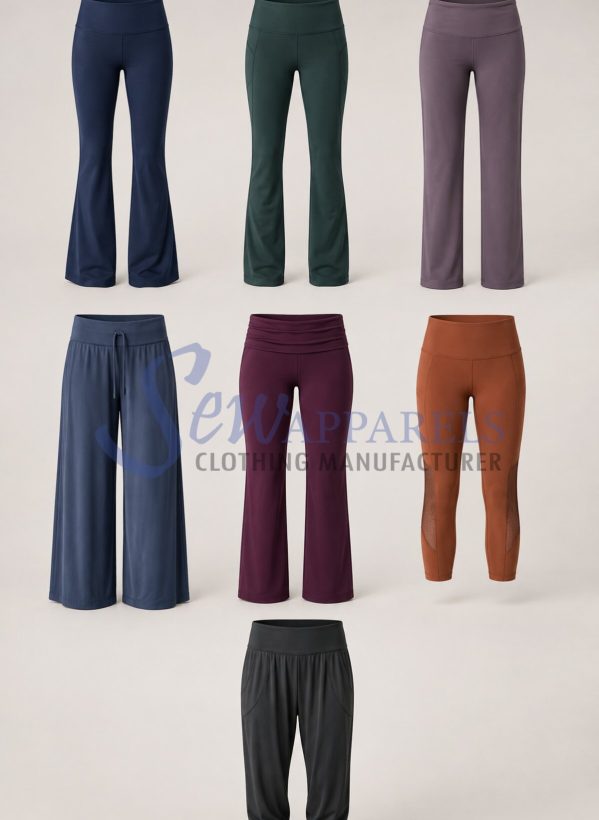
Yoga pant surface lint attraction is not the same as lint generated by the garment itself. External hair and textile fragments can adhere to the surface, while loose fibres or pills may originate from the pant. Note which concern the buyer wants to investigate. A cleaning result cannot diagnose fibre shedding unless the trial separately identifies the material being removed.
Choose a representative hair sample for the intended comparison and describe its source, colour, approximate length range and preparation. Do not assume one dog’s coarse hair represents all pets, or that cotton lint behaves like animal hair. Keep different contaminant types in separate trials. Obtain and handle the material appropriately, using a laboratory or trained team where needed rather than collecting questionable samples.
When planning yoga pants pet hair lint pickup comparison, define the contact area and starting quantity before viewing the result. A dark pant exposed to pale hair may look more affected than a pale pant with the same retained quantity. That is a visibility difference worth recording, but it should not be mistaken for evidence that the dark fabric picked up more material.
2. Control contact, environment and observation
Controlled contaminant contact means every candidate receives the same documented exposure. Agree specimen dimensions, contact surface, application sequence, pressure or loading arrangement, duration and any movement. Use clean equipment and fresh equivalent contaminant portions to avoid carrying material from one candidate to another. An improvised hand rub with changing force is a weak basis for comparing finishes.
For yoga pants pet hair lint pickup comparison, record the environment and specimen preparation. ISO 139 on textile conditioning and testing atmospheres provides a recognised reference for atmospheric conditioning in textile testing. It is not a pet-hair pickup method and does not supply a lint acceptance threshold. Ask the laboratory to select and document the relevant conditioning approach.
A humidity controlled trial should identify the temperature and relative humidity used, how specimens were conditioned and whether conditions stayed stable. This improves the interpretation of the particular comparison; it does not prove performance in every room, season or climate. If a buyer needs low-humidity behaviour evaluated, define that additional condition explicitly instead of inferring it from a single trial.
For a black yoga pants surface cleaning test, use consistent lighting, camera distance, exposure and viewing angle. Photograph a clean baseline, the surface after contact and the surface after the agreed cleaning stage. Include a specimen identifier and scale where useful. Changes in camera brightness can make residual lint appear to disappear even when the surface has not improved.
3. Separate pickup from removal effort
A meaningful yoga pants pet hair lint pickup comparison distinguishes initial retention from cleaning performance. One fabric may retain fewer hairs but hold them more firmly. Another may collect more visible material yet release it with a light cleaning step. Report both stages rather than compressing them into an unexplained overall impression.
Define the observation measure before the trial. Options may include a count of identifiable retained hairs within a marked area, a documented visual assessment or image-based coverage under a validated procedure. Each has limitations. Overlapping fine hairs may be difficult to count, and coverage can change with hair length. Do not mix counts from one candidate with visual grades from another.
Pickup versus removal effort needs a fixed cleaning protocol: the same suitable tool, contact direction, number of passes, pressure arrangement and tool condition. If an adhesive roller is used, document how fresh adhesive is controlled. Reusing a loaded roller on the next specimen can unfairly reduce its cleaning performance. Follow tool and garment precautions, and do not use a method that damages the fabric.
A brushed yoga pants hair removal trial should inspect the raised surface after cleaning, not just the quantity removed. Look for visible flattening, disturbed fibres, local shine, pulled loops or changes in hand feel. Brushed surface cleaning may require a different approved tool from a smooth face; if methods differ, report separate use-case results rather than claiming a directly equivalent laboratory comparison.
Within yoga pants pet hair lint pickup comparison, a hypothetical candidate A retaining 20 countable hairs and leaving five after cleaning differs from candidate B retaining 30 and leaving three. A had less initial pickup; B had less residue under that cleaning protocol. Those invented figures illustrate interpretation only. They do not establish a fabric winner or represent Sew Apparels test results.
4. Repeat the comparison after appropriate care
Yoga pants lint release after care should be assessed on specimens whose washing and drying history is known. A change could relate to surface condition, finishing, contamination or the cleaning process. Preserve an unwashed reference and avoid comparing a newly washed candidate with a competitor tested only as received. Record each care stage separately.
For yoga pants pet hair lint pickup comparison, ISO 6330:2021 domestic washing and drying procedures provides a reference framework for textile test preparation. The chosen washing and drying procedures and their parameters matter. This standard does not itself measure pet-hair retention or certify an easy-clean claim; the subsequent surface trial still needs its own documented method.
Agree a care sequence consistent with the garment’s intended instructions and the project’s evidence need. Identify detergent, load conditions, drying route and completed cycles. Keep the after-care exposure comparable with the initial exposure. A clean-looking garment straight from washing does not show how it will respond to fresh hair contact afterwards.
After care lint release and repeated cleaning surface change are different observations. Review residual material after a controlled cleaning stage, then inspect whether repeated cleaning has changed the textile. Do not assume a finish remains effective indefinitely because the first specimen performed well. If durability wording is intended, the number and relevance of the assessed care and cleaning cycles must support it.
5. Set a transparent score and acceptance decision
A finish comparison score is useful only when the buyer understands what it represents. Keep pickup, residual material, removal effort and visible surface change as separate fields. If the team uses a combined score, agree and disclose the weighting before assessing candidates. Otherwise, a preferred fabric can appear to win simply because the scoring priorities changed afterwards.
In yoga pants pet hair lint pickup comparison, a development record can use the following structure. This is a reporting checklist, not a standardised rating scale or a universal pass level.
| Stage | Record | Decision it supports |
|---|---|---|
| Before contact | Fabric identity, clean baseline and condition | Are candidates comparable? |
| After contact | Retained material and appearance | What pickup was observed? |
| After cleaning | Residue, tool procedure and surface change | How did removal perform? |
| After care | Care history and repeated trial result | Did performance change? |
Lint trial acceptance should reflect the actual product requirement. Agree repeat specimens, assessors, comparison rules and the response to inconsistent results. Several observations help reveal variation that a single attractive photograph hides. Where results are close or variable, obtain further evidence rather than claiming a precise ranking that the trial cannot support.
Dark fabric lint visibility may remain commercially important even when measured pickup is similar. Record that appearance concern separately and discuss the shade, surface design and realistic cleaning expectations. Do not choose a misleading camera setting to improve a score. Keep the reference samples and original observations available so the approval decision can be reviewed.
6. Match buyer-facing wording to the evidence
Easy care wording evidence should be as specific as the evaluation. A statement about comparative cleaning under a defined procedure is narrower than “pet-hair proof,” “never attracts lint” or “self-cleaning.” Avoid those absolute claims without appropriate substantiation. A useful technical report describes tested candidates, conditions and limits rather than promising every wearer the same result.
Use yoga pants pet hair lint pickup comparison when discussing custom yoga pants manufacturing with a clear surface requirement. For private label yoga pants production, provide the approved fabric identity, shade, care route, trial method and acceptance record. Confirm what testing can be arranged and what the quotation covers. Do not assume that a fabric description includes a verified anti-lint treatment.
Startup brands can begin with a focused comparison between a small number of relevant candidates, then expand only when the evidence requires it. Keep waist contour development, stretch recovery, opacity and seam performance in the wider approval. A surface that is easy to clean is not automatically the best yoga pant fabric if other essential product requirements are unmet.
Questions buyers should resolve before approval
Does a smooth surface guarantee less hair pickup? No. Treat the actual finished surface as a candidate for comparison. Texture, the contaminant and trial conditions need to be considered together; appearance alone is not a result.
Is lint pickup the same as pilling? No. External material retained on a surface differs from balls of entangled fibres associated with pilling. Identify the problem and choose a relevant evaluation rather than using a lint-cleaning trial as a pilling certificate.
Use the yoga pants buying guides to connect surface evidence with fit and construction. Take the approved brief to the custom yoga pants manufacturing page for a project discussion. The purpose of yoga pants pet hair lint pickup comparison is an honest, traceable fabric decision that distinguishes visible pickup, cleaning effort and performance after care.