
6 panel cap material metamerism approval is needed when twill, thread, eyelets, closure, embroidery and trims look coordinated under one light but separate under another. This change is called a metameric mismatch: materials with different spectral responses can appear alike in one viewing condition and unlike in daylight, retail lighting or another agreed source.
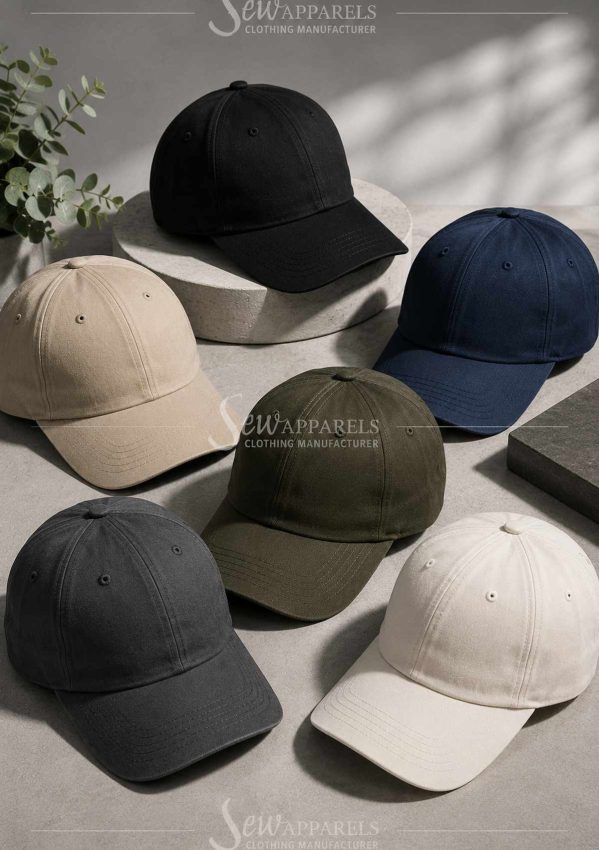
For a tonal cap, the buyer should approve the assembled product across relevant lights rather than rely on a screen, one swatch or one factory room. This guide provides six evidence steps for physical masters, multilight review, texture interpretation, substitutions and signed colour records.
1. List Every Material That Must Read as One Colour
Start with a component map. Identify crown twill, mesh if used, sewing thread, embroidery thread, eyelets, visor covering, sweatband, closure, buckle, seam tape, labels and applied decoration. Mark which parts must be visually identical, intentionally tonal or deliberately contrasting. A six panel cap metamerism checklist should state the relationship, not simply repeat one colour name.
Review components in their visible positions. Thread may look darker in a dense seam than on a loose card; embroidery changes with stitch direction; curved panels reflect light differently from flat swatches. Use the 6-panel cap centre-seam embroidery guide for decoration placement, then assess its colour on the assembled cap. 6 panel cap assembly colour assessment therefore needs a finished, production-intent cap alongside component references.
Define the decision zones: centre-front seam, visor-to-crown join, top button, eyelets, rear closure and logo. A cap thread fabric shade mismatch can be most visible beside a seam even when loose thread appeared acceptable. Record critical zones on a simple cap diagram.
Use the component list as the scope of the 6 panel cap material metamerism approval. Items outside the tonal requirement should still be documented so later teams do not try to “correct” an intentional contrast.
2. Identify the Physical Master for Each Component
Select a traceable cap component colour master for the shell and each important trim. A master can be an approved fabric cutting, thread card, trim sample or signed cap, but it must represent the actual target material and finish. A digital value, website image or phone photograph cannot replace a physical colour standard.
The 6 panel cap component physical colour standard record should include supplier, article or colour code, lot when relevant, approval date, approver and acceptable relationship to the shell master. When the buyer supplies a Pantone or other design reference, confirm how it was translated into each textile and trim material.
Protect standards from light, moisture, dust, handling and dye transfer. Define 6 panel cap colour master storage with opaque packaging, clean separators and controlled access. Replace or revalidate a master when its history or condition is uncertain.
Prepare working duplicates where production teams need daily access, while keeping one protected master for dispute resolution. Label duplicates clearly and schedule comparison with the protected master. The physical hierarchy avoids multiple “approved” shades circulating without control.
3. Review the Assembly Under Agreed Light Sources
Choose light sources based on where the cap will be approved, sold and worn. Daylight simulation, store lighting and another market-relevant condition may all matter. Specify the source, booth or viewing setup, background, geometry and adaptation time with a colour specialist or laboratory.
Cap multilight colour approval should compare the finished cap and physical masters under each agreed source in a consistent sequence. Rotate the cap so curved surfaces and stitch directions are seen fairly, but do not chase every angle until a difference disappears. Record which light reveals the strongest mismatch.
Use a defined 6 panel cap daylight shade approval rather than informal window viewing, where weather, glass, time and surrounding colours vary. For retail exposure, document any 6 panel cap store light colour mismatch with the relevant lamp type or simulated condition. A cap that matches only under one factory light is not a complete tonal approval.
The 6 panel cap trim multilight evaluation should cover thread, eyelets, closure, buckle, labels and decoration as they appear on the cap. Evaluate loose trims only as supporting evidence. The assembled relationship owns the buyer-facing decision.
The official AATCC EP9-2025 visual colour-difference summary describes comparison of textile specimens with a standard. Agree the applicable procedure, viewing lights, assessor conditions and product suitability with a qualified colour specialist or laboratory before approval.
4. Separate Texture Effects from Colour Mismatch
Different surfaces can appear lighter or darker even when their base colour is close. Twill ribs, matte thread, glossy hardware, dense embroidery and curved panels redirect light differently. 6 panel cap texture related shade differences should be observed and documented rather than automatically described as dye mismatch.
Compare materials at their intended orientation. Turn an embroidery sample, view thread in the seam direction and compare twill on the same grain direction used in the cap. If the difference reverses with angle but not light source, texture and gloss may be the main visible factor. If it changes strongly between agreed lights, metamerism needs attention.
The 6 panel cap twill and thread tonal match decision should state whether the target is indistinguishable colour, acceptable tonal depth or a deliberate darker seam. These outcomes require different acceptance language. “Same colour” is too vague for materials with very different surfaces.
Instrumental colour data can support development when a suitable measurement method and specimen geometry exist, but it does not replace finished-cap visual review. Open, small, curved or lustrous components may be difficult to measure reliably. The X-Rite overview of standard illuminants distinguishes calculated illuminants from physical lamps. A D65 calculation and an actual booth lamp are not interchangeable records: identify both the measurement illuminant and the viewing source used for approval.
5. Resolve Component Substitutions Before Production
A supplier change, new lot, unavailable trim or revised finish can alter the multilight relationship even when the commercial colour name remains unchanged. Require a 6 panel cap trim substitution colour review before the alternative enters production.
Compare the proposed substitute with the component master and finished approved cap under every agreed light. Include a production-intent assembly when seam density, embroidery or surface curvature affects appearance. Do not approve from a single emailed image.
Record supplier, article, lot, finish and reason for substitution. If the replacement becomes the new standard, withdraw or archive the previous working reference and update the bill of materials. The 6 panel cap material metamerism approval must always point to one current set of physical masters.
For a recurring mismatch, prepare a 6 panel cap metamerism lab brief with the target relationship, physical standards, component identities, problem light sources, cap orientation and required decision. Ask the laboratory or colour specialist to recommend suitable visual and instrumental work instead of promising exact digital-to-fabric matching.
6. Maintain the Signed Shade Evidence Pack
Assemble photographs, component standards, multilight observations, booth or source details, approved cap, substitutions and decision notes. A 6 panel cap colour approval sign off should identify the style, colourway, version, date, approvers, accepted differences and reapproval triggers.
Photographs are evidence of setup and location, not the final colour standard. Camera processing and screens change colour. Keep the signed physical cap and component masters as the primary references, stored under the controls already defined.
The completed 6 panel cap material metamerism approval should state which lights were used and what relationship was accepted in each. If one component is allowed to appear slightly darker under store light, record that limit rather than leaving production and inspection teams to interpret it.
Trigger review after material, supplier, finish, thread, trim, decoration, light requirement or colour-master changes. Apply the same multilight sequence to the revised assembly and keep the new evidence beside the superseded record.
6 Panel Cap Material Metamerism Approval Sheet
Assign one colour owner before the 6 panel cap material metamerism approval review. That person should control master issue, light-source records and sign-off so parallel teams do not approve conflicting references.
- Product identity: style, colourway, cap version, shell lot, trim and decoration references.
- Tonal map: components required to match, read tonally or contrast.
- Physical masters: owner, supplier code, lot, approval date, condition and storage.
- Viewing setup: agreed lights, booth, background, orientation and assessor conditions.
- Observations: each component, critical zone, light source, texture effect and mismatch.
- Substitutions: proposed change, reason, comparison evidence and approval status.
- Sign-off: approved cap, accepted limits, approvers and reapproval triggers.
Use this sheet for every 6 panel cap material metamerism approval. Consistent evidence keeps one-light matches from becoming costly retail surprises and prevents an unreviewed component substitution from inheriting an old approval.
Low MOQ 6-Panel Cap Development
For a low-MOQ program, reduce colour variables: approve one shell lot, one thread route, one closure and one decoration set before expanding options. Focused custom 6 panel cap manufacturing makes physical masters and multilight review practical without weakening the approval standard.
Startup Brand Multilight Approval Brief
Startup brands can define where the cap will be sold, which components must read as one colour and which physical reference owns the target. For private label 6 panel cap production, this early clarity reduces repeated sample rounds and protects the intended tonal identity. Sew Apparels can discuss feasibility subject to confirmed materials, sample scope, development charges and order conditions.
Move the Colour Decision into the Product Brief
Attach the 6 panel cap material metamerism approval pack to the bill of materials and approved sample. Purchasing, production and inspection teams should all be able to identify the same current physical references.
Use the related 6-Panel Cap Buying Guides to connect colour approval with crown construction and other development decisions. When the multilight sheet and physical references are ready, review the custom 6-panel cap manufacturing service and request a quote with your multilight approval brief to discuss sample feasibility.
Before production, confirm that the 6 panel cap material metamerism approval refers to the current cap, materials and lights. Do not assume capability, MOQ, price, lead time, certification, measured result or exact digital colour match.