
6 panel cap top button attachment review should evaluate the complete covered-button system rather than judging only whether the fabric cover looks centred. The top button may include a covered cap, internal shell, post, washer or backing component, crown opening and surrounding seam structure. A loose part, exposed edge or inconsistent assembly can become a cosmetic, durability or safety concern.
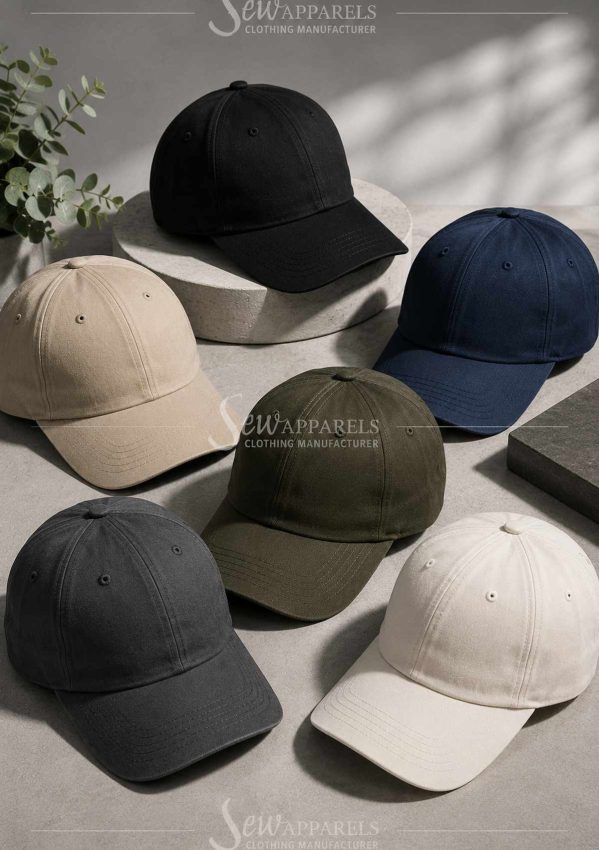
This guide gives sourcing, product-development and quality teams six checks for defining the assembly, inspecting concealed parts, comparing samples, agreeing suitable evaluations and controlling repairs. The intended wearer, market and product use determine which safety requirements apply. A qualified laboratory or compliance adviser should confirm the actual test scope.
1. Identify the Complete Button and Attachment System
Begin the 6 panel cap top button attachment review with a component map. Record the covered top, post or shank, washer or backing, shell fabric, reinforcement, panel intersection and any adhesive or secondary fixing. Give every component a material code and supplier reference so an apparently similar substitute cannot enter production without review.
6 panel caps top hardware component identity should appear in the bill of materials and approved sample record. Note the outside diameter, visible profile, cover fabric, internal material, finish, post length and backing arrangement. If the construction differs between adult, youth and children’s versions, keep separate records.
Assess 6 panel caps covered button attachment integrity at the point where all crown panels meet. Check whether seam bulk, reinforcement or an uneven crown opening prevents the button from seating evenly. Photograph the outside, underside and surrounding seams before destructive examination.
Use the 6-panel cap crown geometry guide to identify the panel intersection; keep attachment integrity as a separate approval. A correctly positioned button can still have a weak attachment, and a secure assembly can still appear tilted because the panel intersection is uneven. Record those causes separately before requesting correction.
2. Inspect Concealed and Potentially Exposed Components
Inspect the top button from outside and inside under good light. Look for sharp edges, burrs, cracked plastic, incomplete covering, exposed backing, loose fabric folds or a post that can be felt through the crown. The inspection should use the intended production assembly, not a display sample with a different internal part.
6 panel caps cap button concealed component inspection should state which components are inaccessible during normal wear and which can become exposed if the cover loosens. Do not assume a hidden part is harmless. Its material, shape and method of retention remain relevant to risk assessment.
Log 6 panel caps button backing exposure with the sample code, location, photographs and handling condition that revealed it. Separate an exposed edge caused by incorrect assembly from damage caused by an unrealistic disassembly attempt. If the backing contacts the wearer, include comfort and abrasion observations.
For children’s products, consult the U.S. Consumer Product Safety Commission small-parts guidance and obtain product-specific advice. CPSC lists children’s clothing and accessories, including buttons, among exclusions from the small-parts ban. Do not label a cap button as automatically subject to toy small-parts rules. That exclusion does not establish that detachment or sharp components are safe, or remove other applicable children’s-product obligations; document classification and the separate risk assessment.
3. Review Assembly Consistency Across Samples
Compare the first sample, corrected sample, pre-production sample and retained production reference using the same inspection sequence. 6 panel caps button attachment sample variation may show as different seating height, cover tension, post engagement, backing position or crown distortion.
Create a small comparison table with sample identity, component lots, operator or line when available, visible alignment, internal condition and attachment result. Randomly selected samples reveal variation more effectively than repeatedly checking the best-looking cap.
Use a 6 panel caps button assembly defect record for tilted buttons, loose covers, incomplete engagement, exposed internal parts, damaged crown fabric and repeated looseness. Give each defect a clear photograph and disposition. Avoid one broad “button issue” category because different causes need different corrections.
6 panel caps button cover fabric security depends on the covering method and material behaviour. Check folds, edge capture and tension around the full circumference. A cover that is secure when new may loosen after handling if the fabric stretches, frays or is cut inconsistently.
The 6 panel cap top button attachment review should also compare colour, texture and orientation with the approved shell. A secure button using the wrong cover fabric remains a product mismatch and should not pass solely because the attachment is strong.
4. Agree Retention and Handling Evaluations
Write a 6 panel caps button retention lab brief before testing. Identify the cap, wearer age, market, complete assembly, suspected failure mode, proposed evaluation, conditioning, number of specimens and required reporting. Ask the laboratory to confirm the method and apparatus rather than inventing a pull force from an unrelated product.
A 6 panel caps covered button handling trial can supplement formal testing by checking ordinary actions such as grasping the cap, packing, unpacking and repeated wear handling. Define the sequence and observations. Informal handling does not replace a required laboratory method or compliance decision.
When a retention evaluation is appropriate, record how the load is applied, where the cap is supported, the rate or duration, the endpoint and the condition after testing. A result without those details cannot support comparison between revisions.
Review current market obligations through an authoritative source such as the CPSC clothing FAQ for U.S.-market products. The FAQ excludes hats that do not cover the neck, face or shoulders from the general clothing-textile flammability standard. This is a scope distinction, not an attachment-retention test or blanket safety approval. The buyer, manufacturer and laboratory should confirm the actual cap classification, intended user and other applicable requirements.
5. Separate Cosmetic Looseness from Functional Failure
6 panel caps top button loosening assessment should define what moved. The fabric cover may rotate while the internal attachment remains retained; the complete button may rock because the post is not fully engaged; or the backing may detach from the crown. These are different failure modes.
Check whether movement creates a sharp or accessible component, damages the crown, changes appearance beyond the buyer’s limit or makes future detachment more likely. Record the starting condition and the change after handling or testing. Do not tighten a loose sample before documenting it.
6 panel caps button cover detachment refers to loss of the outer covering and should be recorded separately from detachment of the complete button. If only the cover fabric releases, inspect the exposed shell and the loose textile piece. If the whole assembly releases, retain every part and document the opening left in the crown.
A 6 panel caps cap top hardware review should link appearance and functional evidence. The buyer can set cosmetic limits for tilt, wrinkles and visible backing, while the responsible technical team determines whether retention, sharpness or small-part concerns require additional action.
Use consistent defect language across sampling and inspection. “Loose” should not mean one thing in the sample room and another in the final inspection report. Define observable conditions and include photographs of acceptable and unacceptable examples.
6. Document Repairs, Substitutions and Release
A failed 6 panel cap top button attachment review should lead to a controlled correction. Possible causes include incorrect post length, unsuitable backing, excessive crown thickness, inconsistent hole preparation, cover material variation or incomplete assembly. Change the relevant variable, identify the revision and submit a new representative sample.
6 panel caps top button rework approval should explain whether rework is permitted, who performs it, how the repaired crown is inspected and whether the attachment must be reevaluated. Do not hide repeated rework inside a general finishing record.
Any 6 panel caps button attachment substitution requires comparison with the approved component. Record supplier, material, dimensions, finish, post and backing geometry, covering method and evidence needed before use. Visual similarity alone does not establish equivalent performance.
Complete 6 panel caps button assembly release only when the component identity, representative samples, agreed evaluations, defects, corrective actions and buyer decision are attached to the approved product record. Purchasing and inspection teams should receive the same released reference.
6 Panel Cap Top Button Attachment Review Worksheet
Use one controlled worksheet for every 6 panel cap top button attachment review. The worksheet should make the assembly and evidence traceable from development to bulk inspection.
- Product identity: style, colourway, intended wearer, market and sample stage.
- Assembly map: cover fabric, shell, post, backing, reinforcement and component codes.
- Initial inspection: alignment, seating, wrinkles, exposed edges and inside condition.
- Evaluation: agreed handling or laboratory method, conditioning, samples and endpoints.
- Failure description: movement, cover release, complete detachment, crown damage or exposure.
- Correction: changed component or process, rework limits and resubmission identity.
- Release: accepted reference, supporting report, approvers and substitution triggers.
Assign an owner to maintain the file and stop uncontrolled changes. The owner should verify that the sample, bill of materials, test evidence and production instruction describe the same button system.
Keep negative outcomes. A failed or borderline result can identify the precise component or assembly step that needs correction. Removing failed evidence makes later substitutions and repeat orders harder to control.
Use the same inspection order for each 6 panel cap top button attachment review so sampling, pre-production and bulk evidence remain comparable.
The final 6 panel cap top button attachment review should state what was accepted, what remains excluded and which changes trigger another review. It should not claim certification, guaranteed performance or market conformity beyond the evidence supplied.
Low MOQ 6-Panel Cap Development
For low-MOQ orders, keep one approved button system and cover material across the selected colourways where practical. Focused custom 6 panel cap manufacturing can reduce avoidable component variation while keeping the attachment evidence linked to the actual sample.
Startup Brand Button-System Approval Brief
Startup brands should share wearer age, target market, cap reference and desired top-button appearance at the first sample stage. In private label 6 panel cap production, an early covered-button failure review helps the brand resolve component and safety questions before packaging and launch dates are fixed. Sew Apparels can discuss feasibility subject to confirmed materials, sample scope, development charges and order conditions.
Connect the Review with the Product Brief
Use the related 6-Panel Cap Buying Guides to connect the button decision with crown geometry, materials and decoration. When the component map and review evidence are ready, review the custom 6-panel cap manufacturing service and request a quote with your button-system brief to discuss sample feasibility.
Before bulk release, confirm that the 6 panel cap top button attachment review covers the current component, cover fabric, crown construction and intended product. Reopen it when any relevant part, supplier or assembly method changes.