
6 panel cap sweat colour transfer testing should cover the actual dark-and-light component combinations in the cap, not only one loose shell fabric. Perspiration can move colour from crown panels, sweatband, seam tape, thread, labels or decoration into adjacent pale materials and, in some use conditions, onto clothing or skin-contact items.
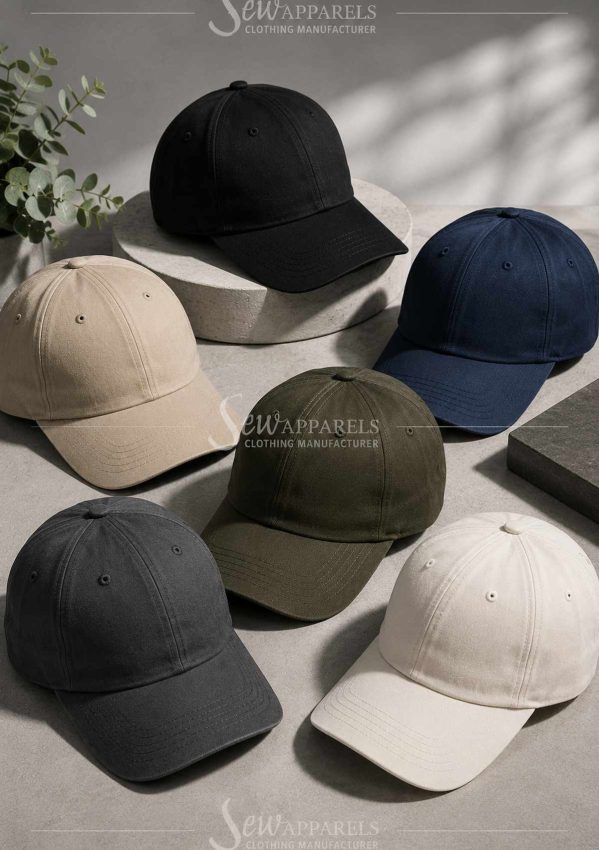
This guide gives sourcing, quality and product teams six checks for mapping transfer risks, separating perspiration from rubbing, choosing laboratory specimens, reviewing colourway coverage and writing buyer-defined appearance limits. Test methods and ratings must be agreed with a qualified laboratory for the actual materials and target market.
1. Map Dark Panels Against Pale Thread and Tape
Create a colour-contact map for every cap colourway. Mark dark crown panels beside light thread, eyelets, seam tape, labels, sweatband, visor covering, closure and embroidery. Include indirect contact that can occur when a wet cap is folded, stacked or packed. Use the 6-panel cap multilight colour approval guide for visual matching; colour agreement does not establish transfer resistance.
6 panel cap dark to light panel staining is most likely to be visible where contrasting materials touch under moisture and pressure. Photograph the inside and outside of the approved sample and number each risk zone. A seam that appears low risk when dry may transfer into pale tape or thread after perspiration exposure.
Record 6 panel cap thread staining after sweat separately from thread colour change caused by its own dye or finish. Note whether colour came from adjacent shell fabric, another thread or an internal component. Also map 6 panel cap interior tape staining risk along centre seams, side seams and visor attachment.
The map defines the scope of 6 panel cap sweat colour transfer testing. If a colourway reverses dark and light panels, treat it as a new contact arrangement rather than assuming the first test covers it.
2. Distinguish Perspiration Staining from Dry Rubbing
Perspiration colourfastness, wet contact and dry rubbing address different mechanisms. A cap can resist dry crocking but transfer colour under the agreed perspiration condition. It can also show acceptable perspiration ratings while rubbing deposits colour under another use condition.
Record the complaint or product concern before selecting tests. 6 panel cap wet contact colour transfer may occur during wear, after rain, in a gym bag or during damp stacking. Dark cap colour transfer to clothing should identify the contacted textile, moisture state, pressure, duration and location instead of using a general “bleeding” label.
A six panel cap sweat staining assessment should keep colour change of the source material separate from staining of adjacent materials. Both can matter to the buyer, but they need distinct observations and acceptance criteria.
Do not recreate perspiration exposure by applying uncontrolled household liquids. Use the laboratory method and specified solutions, conditioning, temperature, pressure, time and rating scales agreed for the product. Informal wear trials can provide context but cannot replace a defined test.
3. Identify Material Pairs for Laboratory Submission
List each dark donor material and pale receptor it can contact. A 6 panel cap perspiration test component pairs matrix may include shell-to-sweatband, shell-to-seam-tape, shell-to-thread, sweatband-to-label, embroidery-to-shell and closure-to-panel combinations. Use production-intent materials, finishes and lots.
A 6 panel cap contrasting fabric test submission should include loose materials and, when construction affects contact, assembled seam or panel specimens. Give the laboratory a finished cap, bill of materials, contact map, intended care and the decision the buyer needs.
Prepare a cap contrasting panels perspiration test brief with specimen orientation, face-to-face contact, dark and pale sides, test method requested for review and rating requirements. The laboratory should confirm whether standard adjacent fabrics, actual product components or both are appropriate.
Use the AATCC TM15 public method summary to discuss acid-perspiration colour change and transfer with the laboratory. Its published scope concerns acid perspiration; do not describe an alkaline exposure as part of that method. Confirm the current full method, specimen preparation, rating scale and product-component arrangement with the laboratory. The public summary is not the complete test procedure.
4. Review Tested Colourways and Component Coverage
Select colourways by transfer risk, not only sales volume. Deep navy, black, red or saturated colours beside white, cream or pale trims often deserve attention, but actual dye and finish evidence owns the decision. Similar-looking colours from different suppliers or processes may behave differently.
A 6 panel cap sweat test colourway selection table should show shell, trim, thread, sweatband, decoration and packaging contacts for every proposed combination. Group colourways only when materials, suppliers, finishes and risk relationships are genuinely represented by the tested sample.
Create a cap sweat exposure sample matrix with sample codes, donor/receptor pairs, new or washed state, method, laboratory report and result. This prevents one dark sample from being presented as evidence for an entire collection.
Compare 6 panel cap washed versus new sweat fastness only when the intended care and use make that decision relevant. Washing can remove unfixed colour or change finishes, but it can also alter the cap structure. Record the care sequence and do not use a washed result to excuse poor performance in the new product unless the customer instructions explicitly require prewashing.
The 6 panel cap perspiration report coverage review should confirm tested colourways, component lots, specimen form, conditioning, method, ratings and exclusions. A report is evidence only for the scope it actually covers.
5. Set Buyer-Defined Appearance Acceptance Criteria
Before results arrive, define what the buyer will accept for source colour change, adjacent staining and visible assembled-cap marks. Use the relevant method’s rating language with laboratory advice. Avoid changing the limit after seeing a weak result.
6 panel cap colour transfer buyer limits should reflect product use, contrast and brand expectation while remaining measurable. A pale tape hidden inside the crown may have a different visual importance from white embroidery or a sweatband that contacts the wearer, but compliance and safety requirements still apply where relevant.
Include an assembled-cap review after the laboratory component work. Check actual seam lines, pale trims and internal contacts under consistent light. The buyer may reject a concentrated visible mark even when an average or isolated component rating appears acceptable.
For the separate rubbing question, the AATCC TM8 public method summary describes controlled rubbing against white test cloth in dry and wet conditions. Keep those ratings separate from perspiration results. The summary cautions that small printed areas may not suit the method, so the laboratory should review embroidery or narrow trim specimens before testing. Chemical safety and market obligations require their own assessment; neither colourfastness method establishes general product safety.
6. Attach Evidence to the Approved Colourway
Build a 6 panel cap sweat staining approval record containing the colour-contact map, material and lot references, submitted pairs, laboratory report, ratings, assembled-cap observations, buyer limits and approvers. Link the record to the exact colourway and bill of materials.
The final 6 panel cap sweat colour transfer testing decision should state which combinations passed, which need correction and which were not tested. A change in dye lot, supplier, finish, sweatband, tape, thread, decoration or colour blocking should trigger a documented coverage review.
Retain physical donor and receptor materials plus an approved cap when practical. Store them away from light, moisture and contamination. Photographs help show the location of staining, but screens cannot replace physical shade and rating references. For repeat orders, 6 panel cap sweat colour transfer testing should identify whether the retained control remains comparable to the current production lot.
When a correction is required, change one relevant variable where possible and resubmit the affected pair. Recheck the finished cap after approval. Do not release a new colourway based only on a supplier statement that it is “similar” to a tested colour.
6 Panel Cap Sweat Colour Transfer Testing Risk Matrix
Assign one owner to the 6 panel cap sweat colour transfer testing program. The owner should control material codes, submission versions, buyer limits and report coverage so the approval is not separated from the colourway that generated it.
- Colourway identity: style, shell colours, lots, sweatband, tape, thread, trims and decoration.
- Contact map: dark donors, pale receptors, direct seams, wet folding and wearer contact.
- Exposure type: perspiration, wet contact, dry rubbing or care-related condition.
- Submission: component pair, assembled specimen, new or washed state and lab method review.
- Evidence: report number, method, ratings, observations, photographs and limitations.
- Buyer limits: source colour change, adjacent staining and visible finished-cap acceptance.
- Decision: approved colourways, corrections, exclusions, approvers and retest triggers.
Use the same matrix for every 6 panel cap sweat colour transfer testing decision. It makes colourway coverage visible and stops one passing sample from becoming an unsupported claim for other material pairs.
Record negative and borderline outcomes in the 6 panel cap sweat colour transfer testing file. A failed pair can identify the exact material relationship that needs correction, while a borderline rating may require finished-cap review or a repeat test agreed with the laboratory.
Communicate approved coverage to purchasing and inspection teams in plain language. They should know which lots and combinations are represented, which pale contacts need attention and when a substitution requires re-submission. This prevents a sound laboratory result from being applied outside its evidence scope.
Low MOQ 6-Panel Cap Development
For a low-MOQ collection, prioritise the highest-risk dark-and-light combination and keep material suppliers and finishes consistent. Focused custom 6 panel cap manufacturing reduces duplicate submissions while preserving a defensible colour-transfer decision.
Startup Brand Colour-Transfer Approval Brief
Startup brands can share the planned colour blocking, pale logos, sweatband colour and target market during sampling. For private label 6 panel cap production, an early risk matrix helps protect the launch colourways before artwork and packaging are finalised. Sew Apparels can discuss feasibility subject to confirmed materials, sample scope, development charges and order conditions.
Move the Colourfastness Evidence into the Product Brief
Use the related 6-Panel Cap Buying Guides to connect colour-transfer evidence with crown construction and embroidery decisions. When the matrix and laboratory scope are ready, review the custom 6-panel cap manufacturing service and request a quote with your colour-transfer brief to discuss sample feasibility.
Before production release, confirm that the 6 panel cap sweat colour transfer testing record covers the current colourway and components. Do not assume capability, MOQ, price, lead time, certification or an unmeasured result.