
Corporate uniform bulk order size allocation turns a staff fitting decision into a purchase quantity for each garment, size and department. It should begin with the approved uniform specification and actual issue requirements, not a copied retail size ratio. A workforce of 100 people does not automatically need 100 identical sets, and a medium polo does not automatically imply a medium trouser.
The practical aim is a confirmed order that can be produced, packed and issued without avoidable size exchanges. Keep employee selections, unresolved exceptions and spare-stock assumptions visible. The six checks below help procurement teams connect fitting evidence with a controlled quantity breakdown. They do not prescribe a universal size distribution or guarantee that one garment block will suit every member of staff.
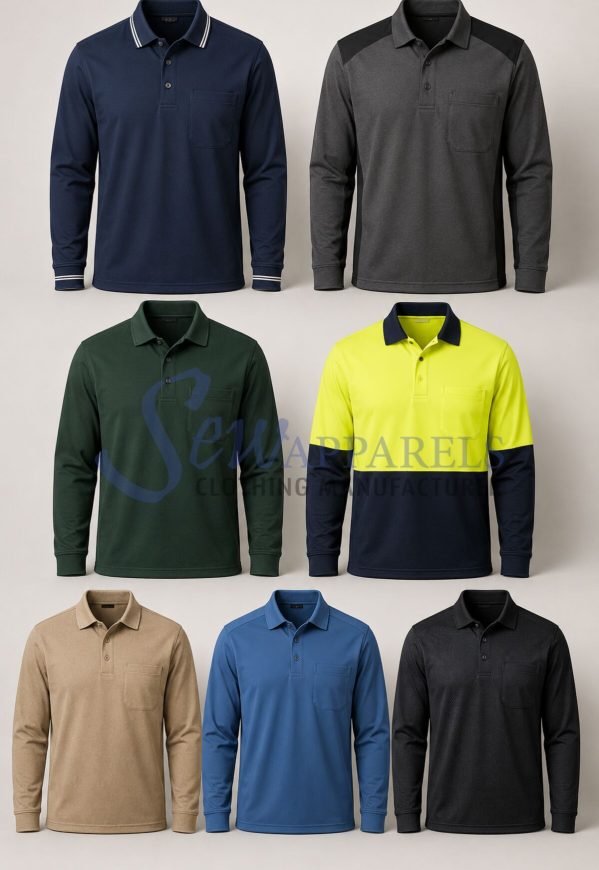
1. Define the garment programme and issue entitlement
Start corporate uniform bulk order size allocation by listing the garments each role receives. Separate polos, shirts, trousers, jackets and any role-specific items. Record style, colour, approved block, size range and issue quantity per person. Include different entitlements for departments only when the programme actually requires them; do not multiply every garment by the entire headcount.
Corporate uniform department issue quantities should identify the staff roster date and which employees are included. Distinguish confirmed current staff, planned recruits, replacements and spare stock. If those categories are combined without explanation, the buyer cannot tell whether a high quantity represents extra entitlement or a speculative reserve.
Corporate uniform garment block selection is part of the fitting decision. Two garments carrying the same size label may have different proportions, ease and length. Confirm which block and specification the sample represents before staff choose sizes. A sample from an older programme should not silently stand in for a revised supplier or construction.
Use corporate uniform bulk order size allocation to create one item-level structure for the order. Each line should resolve to a defined style, colour, block, size and quantity. Do not describe a mixed programme only as “uniform sets” unless the component quantities and pairings are also documented.
2. Separate body measurements from garment dimensions
An employee uniform size survey can collect confirmed size selections or the measurements needed for a defined fitting process. Avoid asking staff to guess from their usual retail size alone. Explain which chart and garment they are choosing from, and provide a way to flag uncertainty. A supplier’s size labels are not a universal body-measurement system.
For corporate uniform bulk order size allocation, corporate uniform wearer measurement versus garment size must remain clear. Body measurements describe the wearer. A uniform garment measurement chart describes the finished item at specified measuring points and includes the intended fit. Comparing a body circumference directly with an unrelated flat garment width creates an allocation error.
ISO 8559-1:2017 body-measurement definitions provides a reference for anthropometric measurement used in clothing development. It does not establish a manufacturer’s finished garment chart, supply a workforce size ratio or guarantee fit. Use qualified measurement practice and the approved product specification together rather than treating the standard number as a size-selection answer.
Identify units, measuring landmarks and chart revision. Confirm whether a dimension is a circumference, a flat width or a garment length. Keep ease, movement, intended layering and length requirements in the fit review. The technical team should explain the mapping where needed; procurement should not invent conversion rules to make an incomplete survey look finished.
3. Use representative samples and resolve fitting exceptions
A corporate uniform fit trial sample should match the intended fabric, construction and approved block closely enough for the decision. Record any known differences, including care history or unfinished details. A sample whose fit changes after an unresolved alteration is not a stable reference for bulk size selection.
During corporate uniform bulk order size allocation, create a corporate uniform fit trial size roster. Identify which sample sizes are available, which staff selections have been checked and where evidence is missing. Uniform fit sample coverage should address the relevant size range and role requirements. A few representative fittings can guide development, but they do not confirm every employee’s issue size.
Corporate uniform between size allocation needs a documented decision. Review the actual garments and intended movement rather than automatically choosing the larger or smaller label. A person may require a different block, length or separately approved adjustment. Keep special requirements in the exception process without changing a standard size specification for everyone.
Corporate uniform polo shirt trouser size mapping should allow independent selections. Record each component separately, including trouser length or other relevant variants. Do not let a combined set selector overwrite an employee’s confirmed lower-body requirement with their top size. If packing uses staff sets, the pack record still needs the individual garment identities.
For corporate uniform bulk order size allocation, a size order exception log should identify the unresolved item, responsible reviewer and decision deadline. Missing responses, unavailable trial sizes and approved alterations are different exceptions. Keep them visible until resolved. Do not allocate an arbitrary medium simply because a purchasing deadline is approaching.
4. Protect fitting records while preserving accountability
Corporate uniform anonymous staff fitting records can help summarise the programme without placing employee names in a supplier’s size breakdown. However, a coded roster that can be linked back to an individual is not automatically anonymous. The organisation should control that link and decide which information is actually needed for fitting, packing and issue.
In corporate uniform bulk order size allocation, use aggregated quantities for production wherever practical. A named list may be needed internally for issue confirmation, but the factory may only need style, size and quantity totals. If individual pack identifiers are required, define the minimum necessary fields and access rather than circulating the entire survey.
The ICO data-minimisation guidance explains the UK principle of keeping personal data sufficient, relevant and limited to its purpose. Apply the appropriate privacy requirements for the organisation and jurisdiction. This reference does not determine a universal lawful basis or mean that replacing names with codes removes all privacy obligations.
Keep sensitive explanations out of the production worksheet when a garment requirement is enough. A confirmed length adjustment or alternative block can usually be expressed as a product instruction without adding unrelated personal history. Set responsibilities for access, correction and retention through the organisation’s normal process.
Corporate uniform employee issue size confirmation should connect the final garment selection to the internal issue record. Give staff an appropriate opportunity to correct an accidental selection before the order is frozen. Use the repeat-order specification to preserve the approved revision and distinguish later changes from dispatch errors.
5. Reconcile the allocation worksheet to purchase quantities
A uniform size allocation worksheet should calculate quantities from confirmed selections and entitlements, then add separately identified reserves. Reconcile garment totals against the eligible roster. Check each style and colour independently. A correct overall total can conceal the wrong size distribution or an item allocated to the wrong department.
For corporate uniform bulk order size allocation, consider this fictional example: 40 reception staff receive two polos each, while 30 warehouse staff receive three. The base requirement is 80 plus 90, or 170 polos. If the buyer separately approves ten reserve polos, the order total is 180. The reserve’s size distribution still needs its own decision; ten unspecified extras are not a usable size breakdown.
Suppose the confirmed base selections are 30 small, 80 medium, 45 large and 15 extra-large units. Those total 170. An illustrative reserve of two small, four medium, three large and one extra-large totals ten, producing final quantities of 32, 84, 48 and 16. These invented figures explain reconciliation only; they are not a recommended workforce ratio or Sew Apparels order data.
| Size | Confirmed issue | Approved reserve | Order total |
|---|---|---|---|
| Small | 30 | 2 | 32 |
| Medium | 80 | 4 | 84 |
| Large | 45 | 3 | 48 |
| Extra-large | 15 | 1 | 16 |
| Total | 170 | 10 | 180 |
Corporate uniform size breakdown approval should check both arithmetic and meaning. Confirm that the quantities represent garments rather than people, and that entitlement multiplication has happened once. Review duplicates, department transfers, leavers and late additions. Any correction should flow through the approved worksheet revision rather than an informal message that conflicts with the purchase order.
Within the allocation worksheet, do not use the polo distribution to order trousers or jackets automatically. Each item’s confirmed selections, entitlement and reserve may differ. Keep order summaries concise while retaining the calculation trail that explains the numbers.
6. Freeze the brief and control packing and later changes
The final approval should identify the roster cut-off, specification revision, size chart, confirmed quantities, reserves and resolved exceptions. Assign an owner for changes after the freeze. If production has started, a revised size request may affect fabric use, cutting or packing; confirm feasibility before treating it as an accepted change.
Use corporate uniform bulk order size allocation when discussing custom corporate uniform manufacturing with an itemised programme. For private label corporate uniform production, provide artwork, branding placements, blocks, size quantities and packing requirements together. Confirm what sampling, alterations, identification and department packing are included in the quotation.
Define whether cartons are organised by style and size, department, or individually approved staff sets. Reconcile packing quantities to the same purchase-order revision. A well-fitting programme can still fail at issue if a medium trouser is substituted for a medium top or if an approved length variant loses its identity in the carton record.
Startup companies and smaller teams can use the same principles with a simpler worksheet. The value comes from clear selections and reconciled totals, not a complicated system. Confirm project-specific minimums, lead times and repeat-order arrangements rather than promising an unverified quantity or delivery date.
Questions buyers should resolve
Can staff simply choose their usual retail size? Treat that as a starting indication, not final evidence. Use the approved garment chart and relevant fitting opportunity to confirm the actual uniform selection.
Should spare stock follow a fixed percentage? There is no universal ratio in this framework. Agree reserves from the programme’s expected needs, replenishment constraints and risk, and identify their size quantities separately.
Use the corporate uniform buying guides to connect sizing with branding and production planning. Bring the approved item-level breakdown to the corporate uniform manufacturing page for a project discussion. The purpose of corporate uniform bulk order size allocation is a traceable order that connects confirmed fit, garment quantities and accurate employee issue.