
A corporate uniform repeat order specification gives buyers a controlled reference for replenishment instead of asking a factory to reproduce a garment from memory. The previous purchase order may confirm quantities, but it rarely explains every fabric approval, trim substitution, fit decision and label revision that made the delivered uniform acceptable. Those details matter when new employees join or an older style requires replacements.
A repeat order also introduces fresh production conditions. Material availability, dye lots, equipment and staff can change, while an employee’s worn uniform may no longer represent its original measurements or shade. A clear technical brief identifies what must remain consistent, what requires renewed approval and who can authorise a difference. These six checks help procurement teams distinguish an approved repeat from an unrecorded redesign.
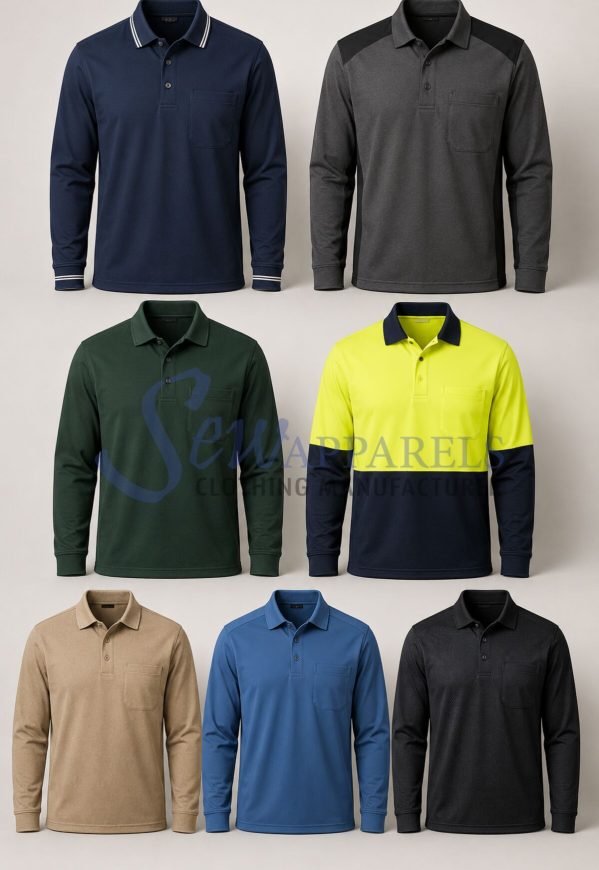
1. Freeze the corporate uniform repeat order specification baseline
Build the corporate uniform repeat order specification from the last approved production version, not the newest attachment in an email chain. Record the style code, revision identifier, approval date, garment components and intended workforce. Locate the measurement chart, construction notes, artwork, packing instructions and accepted sample references that belong to that version. If records disagree, resolve the discrepancy before requesting a price.
Uniform reorder version control should explain which document is current and which document has been superseded. A corporate uniform specification revision record can list the change, reason, author, approval and effective purchase order. Keep previous versions available for traceability, while marking them clearly to prevent accidental production against an obsolete instruction.
The general framework described in ISO’s overview of ISO 10007 configuration management covers responsibilities, planning, identification, change control, status accounting and audit. It offers a useful organisational model for managing revisions; it is not a garment performance test or evidence that a particular supplier is certified.
For practical corporate uniform garment specification continuity, give every approved file a stable identifier. A photo without a style code or a spreadsheet named “final new” is difficult to reconcile months later. Keep the purchasing brief readable enough that a replacement buyer can understand the required version without relying on a colleague’s memory.
2. Match retained samples to measurable requirements
The corporate uniform repeat order specification should identify a retained reference garment and explain what it represents. Ideally, keep an unworn approved sample with its version, size, approval date and material references. Store it appropriately and note any ageing or damage that limits comparison. The corporate uniform retained uniform sample supports visual and construction review, but does not replace numerical tolerances.
A used employee garment can help describe a complaint, yet laundering, wear and repairs may alter its dimensions and appearance. Avoid treating its faded shade or stretched waistband as the original target. Compare it with the controlled reference and approved measurements before deciding whether the replacement needs a fit change or simply needs to match the established specification.
A corporate uniform repeat order approved sample should address the relevant features: silhouette, seam construction, pocket position, collar shape, closures, artwork and finish. Specify how measurements are taken, the garment condition and the agreed tolerances. A flat chest width is different from a body circumference, and neither automatically establishes comfortable movement for every employee.
When discussing corporate uniform manufacturing in Bangladesh, supply the controlled sample references and technical documents together. Ask the supplier to identify unavailable components and unresolved instructions before confirming production. This makes the request more useful than a photograph accompanied only by “same as last time.”
3. Review materials and trims before accepting substitutions
Build a corporate uniform approved trim register that identifies each closure, button, zipper, interlining, elastic, label and decorative component. Include the relevant dimensions, colour reference, finish, placement and approved source or equivalent criteria. A corporate uniform reorder trim reference should be specific enough to distinguish two components that look similar in a photograph but behave differently in use.
Record proposed alternatives in a corporate uniform material substitution register. Explain why the original is unavailable, which properties may differ and which comparisons need approval. Fabric composition, weight, weave, finish, stretch and shade can affect fit, appearance or care. Treat a supplier’s “equivalent” description as a proposal to assess, not automatic permission to replace the original material.
A corporate uniform discontinued material decision log should document whether the buyer will reserve remaining stock, accept a validated alternative or introduce a new version. Consider whether replacements will be worn beside older uniforms. A close visual match under one light does not guarantee matching appearance in every environment or identical behaviour after repeated laundering.
Keep these decisions within the corporate uniform repeat order specification so procurement and production see the same agreed position. In custom corporate uniform manufacturing, an approved substitution may be reasonable, but its implications should be explicit. Obtain suitable sample or test evidence for the intended requirement rather than assuming identical performance from a matching colour name.
4. Separate replacement needs from redesign requests
A staff uniform replacement specification should state whether the order replenishes the existing version or introduces a deliberate update. Replacing damaged shirts is different from changing the fit for an entire department. If a new pocket, closure or fabric is requested, describe the change separately and establish whether existing stock can still be issued alongside the revised garment.
The corporate uniform replacement garment version should remain visible in the order records and, where appropriate, the identification system. Avoid using one informal style name for garments with incompatible measurements or components. A familiar name can hide differences that matter when a warehouse selects replacements or a new supplier interprets the brief.
Use a corporate uniform repeat supply exception log for approved deviations affecting a particular order. State the affected quantity, component, version and approval authority. Define whether an exception applies only to that shipment or updates the permanent baseline. A temporary label arrangement should not become the next production standard simply because nobody recorded its expiry.
A sound corporate uniform repeat order specification therefore separates unchanged requirements, approved changes and open questions. If a proposal affects fit, employee acceptance or required label information, close the relevant review before release. Lower minimum quantities and startup-friendly planning can be discussed with the supplier, but availability and commitments need confirmation for the actual materials and order.
5. Reconcile labels, identifiers and order records
Corporate uniform reorder label information should be checked against the approved garment and its current intended market. Review brand artwork, size designation, applicable composition and care information, placement and legibility. A fabric change may require reassessment of care instructions or composition statements; copying the previous label file without review can preserve an outdated claim.
For private label corporate uniform production, identify who approves the artwork and who verifies the required information. Record the final file version and its relationship to the garment specification. Do not assume that a supplier’s general label template satisfies every destination market or buyer requirement. Keep identification requirements separate from an internal revision number.
Where GS1 identifiers are used, GS1’s guidance on changed products and GTINs explains that changes affecting consumer differentiation, legal requirements or significant supply-chain handling can require a new identifier. Review the applicable rules for the actual change; a technical document revision alone should not be treated as an automatic decision about GTIN allocation.
The corporate uniform repeat order specification should connect purchase order references, garment versions and approved label files. Check that the packing list and replenishment records distinguish the goods being supplied. Internal stock codes can support this traceability, but they do not remove the need to meet any applicable external identification requirements.
6. Approve a repeat order brief with clear release conditions
Support the corporate uniform repeat order specification with a corporate uniform repeat order technical brief that lists the current baseline, retained sample, requested quantities and unresolved approvals. Assign responsibility for each open item. A corporate uniform component change approval should identify the precise alternative and evidence reviewed, rather than a general email saying that changes are acceptable.
The illustrative register below shows how a buyer could control a repeat order. It is an example of documentation structure, not Sew Apparels production data or a universal approval procedure. Adapt the references, evidence and release conditions to the actual garment and purchasing agreement.
| Item | Repeat order position | Release condition |
|---|---|---|
| Shirt measurement chart | Approved revision B retained | Reference sample and chart agree |
| Fabric alternative | Proposed source change | Buyer reviews relevant material evidence and sample |
| Button finish | Original component available | Trim reference confirmed |
| Care label artwork | Review following material proposal | Approved information linked to final garment version |
| Packing identification | Separate revised and previous stock | Warehouse instructions accepted |
Before issuing the order, confirm that commercial terms reflect the approved requirements. Material reservations, sampling charges, lead time and minimum quantities may change between orders. A familiar style does not guarantee that previous pricing or availability still applies. Ask for written clarification when a quote depends on an alternative that has not yet been approved.
Release the corporate uniform repeat order specification only when mandatory approvals are closed or a precisely bounded exception has been authorised. Record the final package supplied to production and retain the approval evidence. This reduces ambiguity when an inspection identifies a difference between the sample, purchase order and delivered goods.
Common repeat order questions
Can the factory work from the previous purchase order alone?
Only if it clearly identifies the complete approved technical package. A purchase order that lists quantities and prices may omit important construction, material and label decisions. Link it to the controlled version and resolve missing details before manufacturing.
Does a retained sample guarantee an identical replacement?
No. It supports comparison, but new material lots and production conditions can introduce differences. Use agreed measurable requirements, appropriate evidence and renewed approvals where needed. Distinguish a reasonable approved variation from an unexplained deviation.
Should every repeat order become a new style?
Not necessarily. Unchanged replenishment can remain within the existing controlled version. Significant changes need an appropriate revision and identification review. Keep the reason for the decision visible so purchasing, production and stock management follow the same interpretation.
Turn the approved version into a practical replenishment brief
Use the corporate uniform buying guides to connect replenishment decisions with broader fit, branding and order planning. Provide the last approved technical package, a usable reference sample, current size-allocation quantities and a list of proposed changes when requesting a quotation.
A corporate uniform repeat order specification works best as a controlled agreement between buyer and supplier. Clear version references, documented alternatives and specific release conditions make repeat purchasing easier to review. They also give the team a reliable starting point when the next employee replacement order arrives.