
Performance Polos Buying Guides
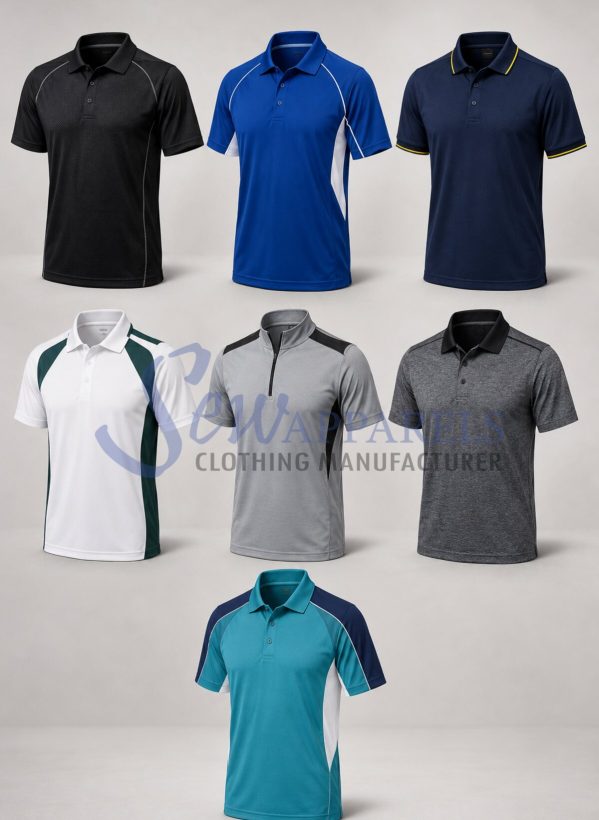
Performance Polos Buying Guides help sportswear, golf, team and corporate buyers prepare a repeatable sample. Six linked articles cover collar material, stretch-placket stabilisation, unisex versus separate fit ranges, heat-press shine, odour-finish claims and snag approval. Read the relevant article for its detailed evidence and decision record. This page coordinates the choices without repeating each complete checklist. Begin with the intended wearer, fabric, care conditions and commercial range, then use the cards to record what needs sample approval.
A golf polo, active uniform and retail polo can share fabric while needing different shapes and closures. Performance Polos Buying Guides connect those choices with branding and fabric approval. Bring the fit references, size range, artwork and care expectations together. Keep physical samples and marked photographs for repeat orders. Use the original manufacturing page for the product enquiry and confirm current commercial terms directly. A shared material does not automatically establish identical fit, decoration performance or production cost across ranges.
Performance polo collar material comparison
Compare self-fabric, flat-knit and stand-collar routes for appearance, recovery, shade, care and neckline balance. Use the technical article to specify the approved material and construction.
Read the collar comparisonPerformance polo stretch placket stabilisation
Set interlining, buttonhole support and centre-front alignment without creating a rigid strip. The article includes a construction example and a buyer decision table.
Read the placket guidePerformance Polo Fit Ranges: Unisex or Separate
Compare customer measurements, fit-block samples, quotation scope and stock exposure before choosing a shared unisex range or separate polo blocks.
Read the polo fit ranges guidePerformance Polo Branding: Heat Press Shine Marks
Compare the decorated polo with an unpressed reference, record the press process and review sheen, colour and after-care appearance before branding approval.
Read the heat press shine marks guidePerformance Polo Finishes: Odour Claim Review
Match odour-finish wording with the actual treated fabric, test endpoint, washing evidence and market review before approving product claims.
Read the odour finish claim guidePerformance Polo Snag Approval: Straps and Fasteners
Map bag strap and hook-fastener contact, inspect visible pulls and review production-intent sample evidence before approving the performance polo.
Read the snag resistance approval guideCustom performance polo manufacturing
Review the original product page for breathable knit options, collar and branding development, private-label packaging and an enquiry for the approved design.
Explore polo manufacturingPerformance Polos Buying Guides: Define the Fit and Use
Use Performance Polos Buying Guides to write the brief around the actual wearer. Team uniforms may need repeatable shade and care behaviour across reorders; golf ranges may emphasise collar roll, arm movement and presentation. State the climate, fabric character, intended fit and base layers. Record length, sleeve opening, shoulder and neckline in front, side and back views. Define shapes with measurements and a comparison sample rather than relying on a label such as athletic. Keep the customer-fit decision distinct from the finished garment dimensions.
Review movement with the collar and placket fastened as they will be worn. Raise the arms, rotate the shoulders, bend the torso and check whether the centre front twists or opens. Compare more than one representative size because neckline balance can change after grading. Note any pressure at the neck, gaping at the top button and collapse of the collar points. A sample that looks smooth on a table can behave differently on a wearer. Keep the wear-test notes with dated photographs and specify which alteration should be tested in the next sample, rather than relying on an informal visual impression.
Choose a collar route that matches the body fabric
A self-fabric collar can coordinate precisely with the polo body but may need edge support to avoid curling. A flat-knit or rib collar offers a defined edge, stripe options and recovery, yet its gauge, shrinkage and shade must be controlled separately from the body. A collar stand creates a more formal roll but adds bulk and pattern relationships at the neckline. Select a route based on the intended silhouette, fabric weight, care process and wearing position. The linked collar article sets out a construction comparison and the measurements buyers should approve for each option.
Specify collar width, point length, finished circumference, attachment seam, topstitching and any interlining or backing on a drawing. If a knitted collar is chosen, record yarn or supplier reference, knit structure, relaxed dimensions, stripe layout and recovery expectation. If a self-fabric collar is chosen, define the upper and under-collar pieces, grain direction and turn allowance. Compare the collar and body shade under relevant light and after the planned care cycle. ISO 3759 describes preparation, marking and measurement used in dimensional-change testing; use the appropriate method and agreed limits rather than assuming a universal pass value.
Stabilise a stretch placket without excess stiffness
Performance Polos Buying Guides treat the placket as a system of flexible fabric, seams, folds, closures and reinforcement. Unequal stretch can produce rippling or twisting. Specify width, depth, overlap, closure spacing and centre-front alignment, then identify interlining or tape by material code, dimensions and location. Support the buttonholes and base without creating a rigid strip. Check production-intent fabric because reinforcement can show through or separate on another knit. Use the linked placket article for the detailed construction record and annotate the hidden layers before approving the sample.
Inspect the placket open and fastened on a wearer, then repeat after the planned wash or care cycle. Test the buttonholes through normal opening and closing, and look for growth, stitch sinking or local tearing. Examine the bottom of the placket, where the cuts and seam turns concentrate stress. Record the reinforcement patch, bar tack or box stitch and any bulk at that point. Compare the centre front from a hanger, flat table and fit model because each view can expose a different distortion. Photograph a correct sample beside a rejected one so the bulk team can apply the same visual limits.
Approve fabric, decoration and care as one system
Performance polo fabrics may include lightweight jerseys, pique structures, stretch knits and moisture-management finishes. A fibre label alone does not establish air permeability, recovery or care behavior. Request a documented fabric reference and agree which tests are needed for the intended claims. ASTM D2594/D2594M addresses stretch and growth of low-tension knitted fabrics; it is a method reference for comparable testing, not proof that a proposed polo has achieved a result. Review the complete decorated garment because embroidery, transfer heat, labels and neck tape can alter hand or pull a lightweight panel.
Specify logo size, placement, backing and application process relative to the collar, placket and fabric structure. A large embroidered design can stiffen a soft knit or draw the front out of balance. Confirm the artwork revision, thread or transfer specification and after-care appearance on the approved sample. Check size labels, care information, hang tags and packaging at the same stage so a late private-label change does not disturb the production schedule. Keep the final component list, material swatches and signed sample together. Any substitution of collar yarn, body fabric, interlining or button should trigger a targeted review of the affected fit and appearance.
Low MOQ performance polo planning
Performance Polos Buying Guides support a focused first range within supplier-confirmed terms. The original product page lists 500 pieces per design and color; confirm feasibility for the actual fabric, fit blocks, sizes and decoration. Prepare quantities, size ratios and artwork before discussing sampling. The product page also lists 10–15-day sampling and 15–30-day production at the stated MOQ after pre-production approval. Request a current project schedule rather than treating those published ranges as a guaranteed dispatch date.
Practical support for startup polo brands
Startup brands can use Performance Polos Buying Guides with a reference garment, artwork and target customer. Explain the use, preferred shape and price position, then ask what sampling and technical-pack support is available for the project. Resolve collar, placket and fit-block questions early. Consolidate changes into one revision log with photographs and measurements. Prioritise changes affecting fit or quality and retain signed approval records. Confirm costs, minimums and material availability before expanding the first collection into additional styles or ranges.
Turn polo decisions into a production brief
Use Performance Polos Buying Guides to assemble the sketch, fit measurements, fabric reference, collar and placket drawings, artwork, care expectations and quantity matrix. Mark approved components and outstanding decisions. Review the relevant linked articles before sealing the pre-production sample. The original manufacturing page is the next step for quotation and production discussion. Keep the final specifications, sample versions and supplier confirmations together so a later reorder can reproduce the approved design.
Explore Performance Polo manufacturing