
Performance polo unisex versus separate fit ranges is a development and purchasing decision, not simply a choice between two labels. When evaluating a unisex polo, separate fit blocks can address different proportions and fit preferences, while a shared block can simplify ordering. Neither option guarantees that every intended wearer will be comfortable. Compare the actual sample, customer measurements, quotation scope and stock plan before choosing the range.
For a performance polo mixed customer range, the aim is to offer a clear fit promise that buyers can understand and the factory can reproduce. This guide provides six checks for an adult performance-polo collection. It does not treat gender as a substitute for body measurements or claim that one named fit works for everyone. Ask wearers which available shape they prefer, then use that evidence in the development brief.
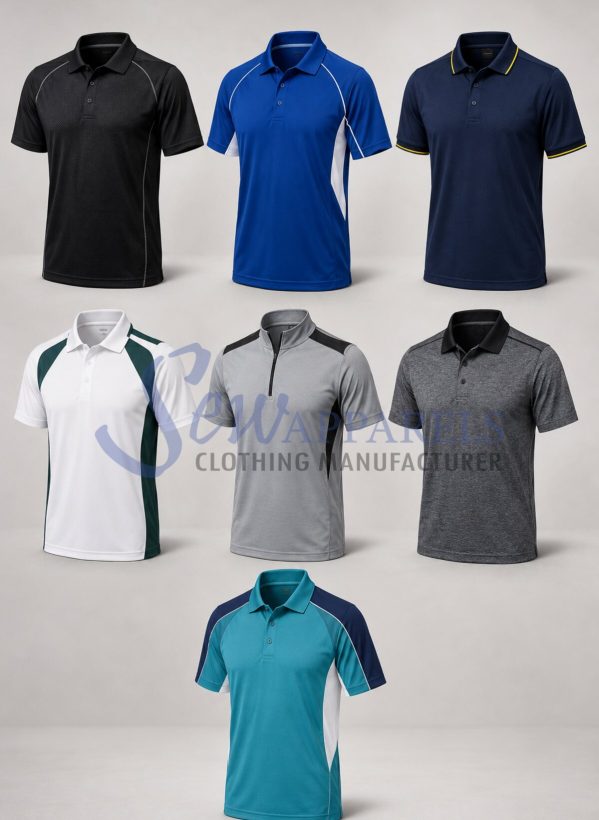
Why performance polo unisex versus separate fit ranges needs a written brief
A unisex description may refer to a relaxed shape, a particular size chart or a shared ordering system. It does not define shoulder width, chest ease, sleeve opening or body length by itself. Separate ranges also need more than a men’s or women’s name. Specify the shape and intended use, including whether the polo is tucked in, worn loose, layered or used during active movement.
The SanMar size-chart and fit reference illustrates how a supplier distinguishes unisex, men’s and women’s fit descriptions. Those definitions belong to the listed ranges. They are useful examples of communicating shape, not a universal sizing rule or a specification for a Sew Apparels product.
1. Define the customers and the fit promise
Start the performance polo unisex versus separate fit ranges review with the people who will order the collection. A staff uniform bought through one central order may need a different assortment from a retail collection with individual returns. An effective unisex versus women’s/men’s polo brief records the expected activities, desired silhouette and size coverage. Avoid assuming that a mixed customer range automatically requires either one block or two.
Collect polo fit range size data: relevant chest or bust, waist, hip and height information where appropriate, with a consistent measuring method. Explain why the information is needed and keep individual records private. Summaries used for planning should show the range of proportions rather than only an average. Two customers with the same chest measurement can need different shoulder, waist or length allowances.
Describe the proposed fits in neutral, concrete terms such as relaxed straight body or shaped waist. If labels use men’s, women’s or unisex terminology, pair those labels with an accurate chart and sample photos. The polo size label fit promise should explain the garment offered rather than make an unsupported statement about the wearer.
2. Compare the garment measurement differences
For performance polo unisex versus separate fit ranges, record polo block garment measurement differences in a table for each proposed block. Include chest width, waist width where relevant, hem width, shoulder, body length, sleeve length, sleeve opening and armhole. Add measurement points, tolerances and whether dimensions apply before or after the agreed care process. Use the same method for comparisons.
Body measurements and garment measurements are different. A body’s full chest circumference is not the same as a polo’s flat chest width. Garment ease must be considered separately, and the intended fabric, stretch and silhouette affect the result. Do not copy a body-size chart into a finished-garment specification or compare two charts without checking their definitions.
The Nike women’s polo specification published by SanMar separates product dimensions from its wearer size chart and defines the measuring points. That product-specific example supports keeping the two records distinct. Its measurements, fabric and branded performance features are not transferable promises for another polo.
A separate shaped block may change the side seam, waist suppression, armhole and sleeve relationship rather than only reduce the overall width. Check collar and stretch placket stabilisation after these changes. With shared fabric, separate polo patterns still require their own approval, and changing one measurement in isolation can create a new fit problem elsewhere.
3. Plan the fit-block sampling scope
Test performance polo unisex versus separate fit ranges with samples representing the proposed patterns and critical sizes. One attractive sample in a middle size is weak evidence for a complete range. Define the polo fit block sampling scope, including base samples, size-set samples and revision rounds, before the supplier quotes. Identify who approves each fit block and who keeps the final specification.
Run a consistent fit trial with intended wearers who represent the relevant proportions. Review normal standing, sitting, reaching and arm movement for the intended use. Record collar comfort, placket gaping, sleeve restriction, hem movement and preferred looseness. Give participants the same questions so that feedback can be compared across blocks.
Keep unisex polo fit trial feedback linked to the sample code and size, not just a general comment such as too big. Distinguish a preference for a closer silhouette from a functional restriction. If a wearer sizes down to improve the body shape but loses shoulder movement, note both effects rather than calling the smaller size a successful solution.
Revise the relevant block and repeat the affected checks. A change to armhole depth may influence sleeve movement, while a body-length change may affect tucked-in wear. The approval file should state what was checked and which sizes still need evidence; it should not imply universal approval from a small trial.
4. Request comparable quotations for each range
The polo extra fit range quotation should separate polo range sample development charges from production prices. Ask for pattern work, base samples, additional fit blocks, size-set samples and agreed revisions as clear line items. Confirm whether grading, testing, decoration setup and packing development are included or charged separately.
An extra fit range can add work even when both versions use the same fabric and colour. Separate polo patterns may require different consumption, cutting plans, collar or cuff dimensions and inspection records. Ask the factory to explain those differences using the proposed specifications. Do not assume identical unit cost or a fixed surcharge without a quotation.
Clarify minimum quantities at each level: total order, fabric colour, fit block, size and decoration variant. Shared fabric may help combine material demand, but it does not automatically remove minimums for garment production or trim purchases. For startup brands, request the smallest feasible approved assortment and identify which choices drive the minimum.
Compare quotes on matching assumptions. A price including two sampled blocks is not directly comparable with a quote for one untested block. Record the delivery stage, inspection scope and any excluded costs. Obtain confirmation before treating a preliminary price as the final purchase basis.
5. Calculate variant proliferation and stock exposure
For performance polo unisex versus separate fit ranges, build a performance polo assortment scenario before placing the order. Count fit blocks, sizes, colours and decoration versions, then allocate demand to each actual combination. Performance polo variant proliferation can leave more small stock positions even if the overall order quantity stays unchanged.
For example, one block across five sizes and two colours creates ten size-colour combinations. Two blocks with the same sizes and colours create twenty. This is a hypothetical planning example, not a sales forecast or Sew Apparels production result. It shows the number of combinations; it does not prove that every combination needs equal stock.
Use available customer orders or demand evidence to distribute quantities. Separate blocks may reduce unsuitable fit choices for some customers, but that benefit must be weighed against sampling cost and separate polo blocks’ stock exposure. A shared block may simplify replenishment while still creating poor fit if the sample does not suit the intended audience.
Agree how reorders will work when one size or block sells faster. Preserve pattern versions, approved measurements and fabric references so that replenishment does not quietly change the fit. Review any substitutions before ordering. Do not promise that a popular size can be supplied independently until the supplier confirms the relevant minimum and availability.
6. Make the purchase decision from evidence
Complete the performance polo unisex versus separate fit ranges decision with a comparison of approved fit, development cost, minimums and assortment risk. The polo fit range purchase decision should record why the chosen structure suits the intended customers. A sensible result might be one shared block, two separate blocks or a staged launch with a second block developed later; the evidence should determine the choice.
Keep the decision file short enough to use: chosen block names, approved sample codes, size charts, garment measurements, care assumptions, quantity matrix and outstanding supplier confirmations. Require a clear acceptance of the final samples before bulk release. If a range is not approved, do not hide it inside a general statement that the collection is ready.
Communicate the same fit descriptions on ordering forms, labels and customer-facing pages. Make it easy to identify which chart belongs to which block. A familiar size letter alone is not sufficient, particularly when two ranges use different proportions. Accurate information helps customers choose without promising a particular outcome for every body shape.
Frequently asked questions about performance polo unisex versus separate fit ranges
Is one unisex block always less expensive?
It may reduce the number of patterns and samples, but the complete quotation depends on fabric, quantities, decoration and the approved construction. Compare the total development and production scope. A simpler range that fails the intended fit trial is not automatically a good purchase.
Can separate blocks use the same fabric?
Yes, subject to supplier confirmation and suitability for both shapes. Shared fabric does not eliminate separate pattern development, grading or fit approval. Verify consumption and minimums for each block rather than assuming that pooling material makes every other cost identical.
Can wearers choose either available range?
Present the actual shapes and measurements clearly so customers can choose the fit they prefer. Avoid using the range name as the only selection rule. For uniforms, provide an approved sample or reliable chart when feasible and record the ordering process before quantities are finalised.
Prepare a performance-polo manufacturing enquiry
A useful performance polo unisex versus separate fit ranges brief includes customer needs, block descriptions, measurement methods, sample scope and a quantity matrix. For custom performance polo manufacturing, discuss these requirements with Sew Apparels and request confirmation of the feasible development route. Private label performance polo production should follow approved samples rather than an assumption that a range label defines the pattern.
Use the Performance Polos Buying Guides to coordinate collar and placket decisions with the chosen fit blocks. Keep the range decision, pattern version and quotation together so that the approved product can be ordered and replenished consistently.