
SCHOOL UNIFORM DRESS DEVELOPMENT LIBRARY
School Dresses Buying Guides
Use these school dresses buying guides to turn a school-dress idea into a controlled production brief. The guides connect pleat construction, fabric and check alignment, fit, grading, pockets, collars, laundering and bulk inspection. Each topic helps uniform suppliers, schools and distributors compare samples with measurable evidence while keeping the original product page focused on manufacturing enquiries. Work through one decision at a time, retain approved measurements and samples, and record every accepted revision so later size, fabric or trim changes can be assessed against the same controlled baseline.
Review the School Dresses product page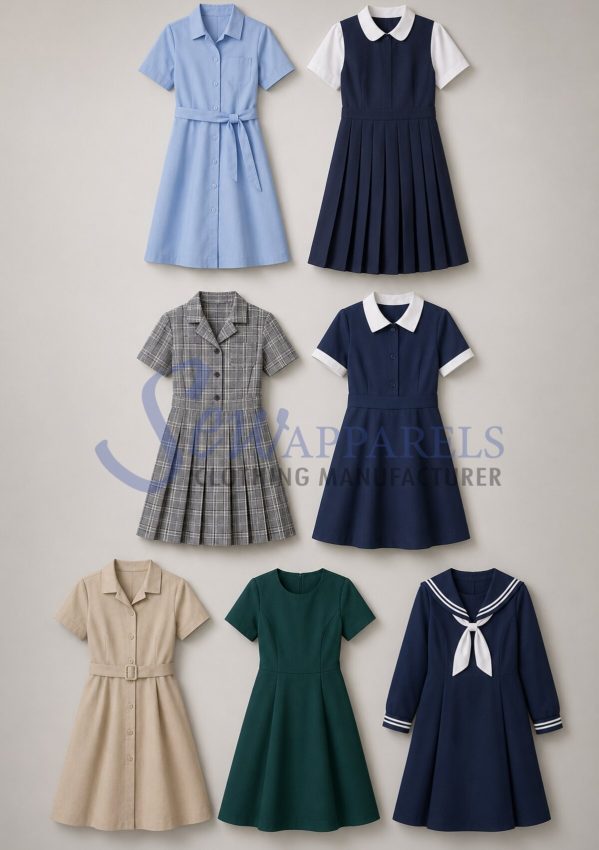
School dress style illustrations from the existing product page, shown for garment and construction context. They do not demonstrate check-matching accuracy, fabric consumption, crease retention, laundering performance or bulk-inspection results; confirm those requirements using production-intent samples and agreed evidence.
GUIDE 01
Pleat Construction Choices: School Dresses
Specify box pleats, knife pleats and pleat depth with measurable pattern, pressing, wash and bulk-inspection controls.
Read the pleat construction guideGUIDE 02
Growth Friendly Hem Design: School Dresses
Specify hem allowance, stitch visibility and length adjustment with measurable alteration, care and bulk-inspection controls.
Read the growth-friendly hem guideGUIDE 03
Checked fabric consumption: define matching priorities and layout assumptions
Define check-matching zones, repeat, usable fabric width and size mix before comparing material estimates. Use five critical checks and a costing sheet to connect the approved appearance with supplier layouts and documented consumption assumptions.
Read the checked fabric consumption guideGUIDE 04
Back closures: compare school dress buttons and zipper samples
Compare complete back-button and zipper samples against the intended dressing workflow. Use five critical checks and a choice matrix to record access, operating sequence, inside contact, care response and specification tradeoffs without promising universal independence or comfort.
Read the back closure comparison guideGUIDE 05
Packing presentation: review folds, pressure zones and unpacking evidence
Compare folded and hanging options against a defined unpacking requirement. Use five critical checks and a packing comparison record to document fold sequence, hardware pressure zones, trial conditions, observations and approval without promising crease-free delivery.
Read the packing crease prevention reviewSchool Dresses Buying Guides: Build a Stable Specification
Start with wearer ages, climate, school rules, layering garments, activity and intended care. Define silhouette, bodice length, waist position, skirt volume, sleeve, collar, placket, pocket and hem. Mark every design line from stable pattern references and identify the approved base size. Record fabric composition, weave, weight, colour standard, pattern repeat, shrinkage and conditioning method.
Add finished measurements, tolerances, grade rules, seam construction, decoration zones and approval samples. Name the sample stage that confirms each decision and the evidence required before the next stage starts. A decision-ready specification prevents pattern, cutting, sewing, pressing and quality teams from approving different interpretations of the same school dress. Use these school dresses buying guides to map each open specification question to its sample stage, evidence owner and acceptance record.
Engineer Pleats, Gathers and Skirt Movement
Choose box pleats, knife pleats, inverted pleats or gathers for a stated movement and design purpose. Define fold lines, visible faces, underfolds, total intake, direction, stitch-down length and release points. Relate the sequence to centre front, centre back, side seams, placket, pockets and hem. Review walking, stairs, sitting and bending on representative wearers. Pleats must open for movement, preserve coverage and return to an intentional position. Test production-intent fabric because weight, drape, grain and crease retention can change a construction that appeared balanced in the pattern or first pressed sample. In the school dresses buying guides, treat pleat appearance and movement as connected sample decisions rather than approving either from a drawing alone.
Control Fabric, Checks and Dimensional Stability
Approve fabric and pattern matching before fit is sealed. Record supplier, lot, fibre content, weave, weight, usable width, colour, check or stripe repeat and care route. Relax and condition fabric before cutting so long skirt panels do not distort during handling. Set centre, fold, pocket, collar and placket relationships to the pattern repeat. Test length and width change after the agreed wash and dry cycles, then reassess pleat position, skirt balance, seam puckering and shade. Any substitute fabric, finish or repeat should reopen the affected sample, marker and consumption approvals. Record the fabric-lot and matching assumptions alongside the relevant school dresses buying guides so later substitutions can reopen the right approvals.
Develop Fit, Grading and Coverage
School-dress fit must support movement while maintaining the buyer’s length and coverage rules. Specify shoulder, chest, waist, armhole, sleeve, bodice length, skirt length, hip ease and hem sweep. Check the dress over the actual shirt or base layer where applicable. Use representative small, middle and large sizes to review waist placement, collar balance, pleat rhythm, pocket access and hem level. Grade bodice, skirt, pleat intake and spacing as a coordinated system. A mechanical increase at every point can move pleats away from centre references or make larger sizes visually sparse. Use the school dresses buying guides with a dated size-set record, keeping wearer observations separate from finished-garment measurements.
Specify Collars, Plackets and Pockets
Define collar shape, stand or facing, seam roll, interlining, edge stitch and neckline position. Plackets need finished width, overlap, button schedule, reinforcement and matching rules. Pockets require position from centre front, waist and side seam, plus opening, depth, reinforcement and pattern alignment. Check every feature on the worn dress and after laundering. Buttons should match approved diameter, colour, attachment and security. Support materials must remain compatible with fabric shrinkage and care. Retain cross-section samples and trim references so production teams can reproduce the approved construction across fabric lots and lines. The school dresses buying guides should support a trim approval file that identifies each component and the garment version on which it was checked.
Validate Care, Appearance and Bulk Quality
Approve the dress only after the specified care cycles and conditioning interval. Measure the same bodice, skirt, pleat, pocket, collar, placket and hem points before and after care. Inspect crease retention, twist, puckering, colour, pattern alignment, button security and seam condition. Repeat movement and coverage checks because shrinkage can change release positions and skirt balance. Bulk inspection should cover sizes, colours, fabric lots, cutting bundles and production lines. Define acceptance criteria for unequal pleats, mismatched checks, uneven hems, distorted collars, exposed reinforcement and incorrect labels, linking every result to its production records. Revisit the school dresses buying guides when a care result changes the approved hem, pleat, fastening or inspection requirement.
Low MOQ School Dresses Manufacturer for Startup Brands
A low MOQ school dresses manufacturer can help a startup brand validate fit, skirt construction, colours and size demand before committing to a larger rollout. Small MOQ school dress development still needs disciplined decisions: limit unnecessary fabric variations, combine compatible sizes and confirm which trims can be shared. Sew Apparels gives facility to startup brands through structured sampling and a clear product brief, while final minimums remain subject to fabric sourcing, colour, pattern repeat, decoration and production planning. Startup companies can present target quantities, markets, size ratios, branding and launch dates early so feasibility, sampling and bulk risks are assessed together.
Sew Apparels’ school-dress product page currently lists an MOQ of 1,000 pieces per design and colour, sampling of 10–15 days, and bulk production of 15–30 days at MOQ after pre-production approval, depending on quantity. Confirm fabric availability, size mix, decoration, development scope and delivery terms in the current quotation. These school dresses buying guides help prepare the brief; they do not promise a smaller minimum or a fixed shipment date.
Prepare a Decision-Ready Dress Brief
Your enquiry should identify style reference, wearer group, size range, target quantity, delivery market, fabric and colour expectations, logo method, labels, packaging and required testing. Attach front and back drawings, measurement chart, pleat or gather plan, collar and placket details, pocket positions, hem construction and tolerances. Mark which features are fixed and where the manufacturer may propose alternatives. Include care method, approval sequence and responsible decision makers. Maintain a concise change log for every accepted revision. This evidence lets costing, sampling, cutting, sewing, finishing and quality teams work from the same approved version. Keep the school dresses buying guides with your working brief and quotation questions; the articles do not replace the supplier’s written confirmation.
Technical References
Use current official measurement and crease-appearance methods as a technical basis when buyer and supplier agree the specimen, care route, rating method and acceptance limit. Fabric results should support evaluation of the finished dress assembly.
Review ISO 7769:2009 Review ISO 18890:2018Turn Your Dress Decisions into a Product Brief
Bring fabric, fit, pleat, pocket, trim, logo and care decisions together before sampling. A controlled brief gives development and quality teams one measurable target and keeps every later revision traceable. Select the school dresses buying guides matching your open decisions, then send one consistent brief for a product-specific quotation.
Review School Dresses Manufacturing