
A school dress back closure comparison should examine how the complete garment is reached, opened, put on and fastened. Choosing between buttons and a zipper from a trim photograph overlooks the opening length, inside contact and dressing workflow. Buyers need comparable samples and a written brief before treating either option as the better configuration.
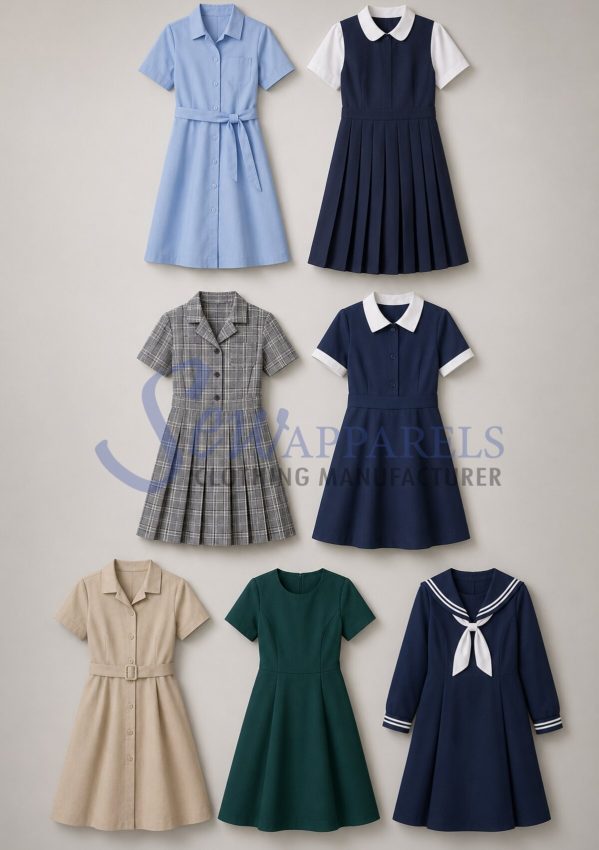
For custom school dress manufacturing, a closure proposal is a development scenario subject to supplier feasibility. It is not confirmation that every construction is currently offered. The five checks below help teams compare actual materials and complete samples, record tradeoffs and decide what needs revision. They do not promise independent dressing for every wearer, a universal comfort result or an automatic price advantage.
Five critical checks for a school dress back closure comparison
- Define the intended dressing workflow.
- Compare access to each proposed rear fastening.
- Record materials and inside contact points.
- Review complete samples after the agreed care route.
- Choose a specification using documented tradeoffs.
1. Define the dressing task before comparing hardware
A school dress fastening brief should identify the intended wearer group, layering garments, opening location and expected assistance. State whether the review concerns putting the dress on, taking it off or both. A closure that operates easily on a table may still be awkward to reach when positioned at the back of a worn garment.
Record the school dress dressing sequence as separate steps: orient the garment, open the fastening, pass through the opening, settle the garment and close it. Include any top fastening or overlap that must be handled before the main closure. This breakdown helps reviewers identify whether a problem comes from reach, garment positioning or component operation.
Agree a respectful, appropriate review process. Where wearer observation is suitable, obtain relevant consent and supervision, avoid scoring children against one another and stop if the task causes discomfort. A small development trial cannot support a claim that all users will dress independently. Record the intended use and the limits of the observation instead.
Keep the school dress back closure comparison separate from pleat construction and growth hems. Those features may affect the overall design, but they do not answer whether the back opening works for the defined dressing task. Establish a closure-specific acceptance brief rather than extending an unrelated sample approval.
2. School dress back closure comparison: opening access
A school dress back button versus zipper decision needs complete garments with clearly identified differences. Record the opening length, starting position, top finish and fastening arrangement for each option. If the two dresses also use different necklines or body ease, acknowledge those differences before attributing every observation to buttons or the zipper.
For the school dress closure access comparison, review where the wearer or assisting person can locate and grip the fastening. Note whether fabric covers the operation area and how the garment settles while the closure is handled. Do not invent a universal reach distance or operating-time target; agree relevant criteria with the buyer for the actual task.
Observe school dress rear fastening operation in stages. With buttons, examine the actual button and finished hole together, including overlap and alignment. With a zipper, examine the actual pull, slider, chain, top finish and supporting fabric. “Buttons are easier” or “zippers are faster” is too broad without evidence from the proposed assembly.
Use a school dress zipper button sample record to describe each sample’s identity and configuration. Note interruptions, fabric catching or alignment corrections in plain language. A reviewer should be able to tell what happened without relying on an overall rating. If access and operation produce different results, keep those observations separate.
3. Record material identity and inside contact
School dress fastener material identity belongs in the comparison matrix. Record the supplier reference, material or coating information available, dimensions, colour and attachment method. A substitute that looks similar may have different geometry or construction. Keep unsupported material descriptions out of the approved specification until they are confirmed.
Review school dress closure interior contact with the dress assembled as intended. Identify seam allowances, zipper tape, backing, attachment thread, overlap and any finishing layer near the wearer. Record visible rough edges, bulk or pressure points as observations. Neither a lined sample nor a smooth-looking trim photograph proves comfort for every wearer.
The school dress back opening specification should state opening extent, fastening positions, seam relationship and interior finish. Check how the closure interacts with the neckline and waist join. A change intended to improve access can alter the garment’s appearance or support, so assess the affected construction rather than approving a revised trim in isolation.
For U.S. children’s products subject to relevant requirements, the CPSC material-change testing guidance explains that changes affecting compliance may require testing of affected components or products. Identify the applicable rules and obtain appropriate review when changing closure materials or construction. A successful operation trial is not evidence of regulatory compliance or a protective performance claim.
4. School dress back closure comparison after care
A school dress closure care trial should use the proposed care route and production-intent configuration. Record sample identity, treatment and assessment conditions. Compare fastening operation, appearance, alignment and interior finish before and after care. If one sample receives different handling, state that limitation instead of presenting it as a controlled comparison.
For U.S.-bound apparel, the FTC care-labeling guidance emphasises reliable support for instructions and consideration of the complete garment, including components. Use that principle when reviewing how the proposed fastening behaves after care. This reference does not prescribe a preferred back closure or replace market-specific labeling review.
Maintain a school dress back closure evidence record showing the original and post-care states. Note wavy opening edges, changed hole operation, alignment differences or catching where observed. Do not use pressing or pulling to conceal a change unless that handling was already part of the agreed route and is documented.
A school dress rear opening wearer review after care can reveal a task difference that a flat inspection misses. Use the same appropriate review conditions and describe the observation’s coverage. A limited sample cannot establish lifetime durability, universal comfort or performance across every production lot. Identify any further evidence needed before broader claims are made.
5. Choose through an explicit tradeoff matrix
Build a school dress fastening choice matrix with one column for each controlled sample. Use rows for access, operating sequence, inside contact, care response, appearance and specification completeness. Attach the evidence reference beside each observation. A matrix should help the buyer make a decision, rather than compress uncertain findings into a misleading overall score.
School dress button zip tradeoffs may include different handling steps, interior finish requirements or development revisions. Record actual observations and supplier feedback. Do not assume a material price, minimum quantity or lead time from the closure type. Obtain a quotation based on the approved construction if commercial comparison is required.
For school dress opening sample approval, identify which configuration is accepted, which issues remain and what the approval covers. An option may be suitable for one brief while another needs revision. Where neither meets the agreed criteria, request revised samples instead of selecting the least problematic result and calling it complete.
A school dress back closure comparison remains useful after the initial decision if its assumptions are visible. Name the sample revision, component reference, opening dimensions and care route. Reopen the affected review when these inputs change; do not carry approval forward automatically to a visually similar substitute.
A school dress back closure comparison matrix
Use the following fields to create a practical evidence sheet. Keep the observations descriptive and link each decision to the sample actually reviewed:
| Control | Information to record | Button sample | Zipper sample |
|---|---|---|---|
| Sample identity: | style, size, pattern revision and component references. | ||
| Dressing workflow: | task, layering, assistance expectations and review conditions. | ||
| Opening access: | location, length, grip area and observed handling interruptions. | ||
| Operating sequence: | steps needed to open and close the complete assembly. | ||
| Interior contact: | backing, seam finish, trim edges and recorded contact concerns. | ||
| Care response: | route, sample state and changes in operation or appearance. | ||
| Decision: | accepted specification, revision request, evidence limits and reviewer. |
Retain rejected or superseded sample records when they explain a revision. Describe the changed variable and reassess affected findings. If several variables change at once, do not pretend the revised result proves which change solved the issue. A transparent change log makes the next sampling discussion more useful.
School dress back closure comparison: buyer questions
Can a loose zipper or button set be approved first?
Component review can support development, but it does not answer the complete dressing task. Confirm how the trim is attached and finished in the actual back opening. A loose component that moves freely can behave differently when sewn into the garment, so final operation observations need the relevant assembly.
Should every size use the same opening detail?
Use the proposed size range and grading brief to decide what requires review. Do not infer that a successful base-size sample proves every size. Ask how opening dimensions, fastening positions and interior finishing are maintained across the range, then identify representative samples needed for the buyer’s approval.
What should be sent for a development enquiry?
For private label school dress production, provide the dressing brief, intended wearer group, drawings, size range and proposed component references. Include two identified complete samples where comparison is possible. Mark uncertain features as proposals subject to feasibility instead of presenting them as existing production options.
Carry the decision into the product brief
Use the existing School Dresses Buying Guides library to organise related development evidence. Keep closure, pleat, hem and fabric-layout decisions identifiable, with separate criteria where their questions differ. Carry the accepted matrix and sample identity into the controlled specification.
Share that specification through the school dress manufacturing product page. A documented school dress back closure comparison helps development teams understand the chosen construction and the tradeoffs behind it. The result is a repeatable brief supported by actual samples, with clear limits and a route for reviewing changes.