
A school dress packing crease prevention review should establish how an approved garment is expected to look when the buyer opens its pack. A neat sample on a hanger does not demonstrate that the same dress will arrive ready for a retail rail after folding, storage and distribution. The useful decision is therefore a documented packing specification, supported by observations from representative garments and the intended handling route.
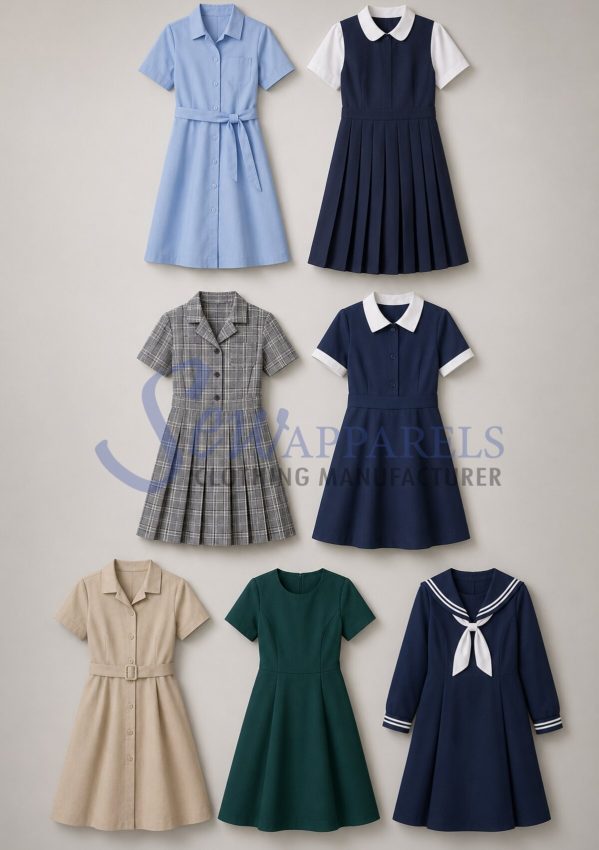
This guide gives procurement teams five critical checks and a practical comparison record. It covers presentation, fold sequence, component placement, trial conditions and release approval. It does not promise crease-free delivery or prescribe a universal storage period. Fabric, construction, pack pressure, moisture and handling can change the result. Compare the actual options available for your order before treating any arrangement as approved.
What a school dress packing crease prevention review should answer
Begin the school dress packing crease prevention review by distinguishing a packing defect from an acceptable temporary fold. A line that relaxes under the agreed unpacking procedure may be acceptable for one retailer and unacceptable for another. A pressure mark across a visible bodice, a distorted pleat or a component imprint can require a different response. Define these conditions before comparing samples so the review does not become an argument over photographs taken at different times.
Keep growth allowance and garment fit decisions in their own specifications. This review concerns how the finished school dress is presented and protected during a defined packing route. It cannot approve a hem alteration, repair an unsuitable fabric or replace construction inspection. Reference the same garment revision throughout, including its size, fabric lot, trim configuration and finishing status.
1. School dress packing crease prevention review: define unpacking appearance
Write the destination first: individual retail sale, school distribution, warehouse replenishment or another confirmed route. Record whether the receiver will unfold, hang, inspect or prepare the dress before presentation. The school uniform dress unpacking appearance requirement should state when assessment occurs and which visible areas matter. A buyer expecting immediate display needs a different acceptance description from a buyer with an agreed preparation step.
Avoid vague instructions such as “no wrinkles.” Describe the bodice, sleeves, skirt and pleats separately. Record whether the approved condition is judged immediately after opening or after a specified recovery interval. Use consistent lighting, viewing distance and garment positioning. Any permitted preparation must follow supported garment care instructions; do not assume that steam, heat or ironing is suitable for every fabric and trim combination.
Create a school dresses unpacked dress presentation field in the comparison sheet. Enter the observation method, required appearance and permitted handling there. This separates the actual acceptance decision from marketing language. Retain dated reference photographs from the actual trial internally where appropriate. Describe what the photographs show rather than treating a photograph alone as proof of every future shipment.
2. Compare folded and hanging options on equal terms
The school dress hanger versus flat pack decision involves more than appearance. Review garment support, pack volume, distribution equipment, receiver workflow and the handling allowed by the buyer. A hanging option may reduce particular fold lines but introduce support marks or require different transport arrangements. A folded option may fit the distribution format while concentrating pressure at specific points. Neither is automatically superior.
For a school dresses flat pack versus hanging option comparison, use garments of the same approved revision and record any differences that cannot be controlled. Include the hanger shape and support position for hanging trials. For folded trials, include the finished fold dimensions, number of folds and positioning of sleeves, collar and skirt. Ask the supplier to confirm practical feasibility before assuming either option belongs in the quotation.
Record the school dresses retail dress packing dimensions as actual measured dimensions of the trial configuration. Do not substitute garment measurements or a nominal bag size. If pack dimensions change, review downstream identification and data requirements with the relevant trading partners. The GS1 dimensional and gross-weight change rule addresses changes to identified trade items; it is not a crease-prevention test or a universal approval of a packing method.
3. Map fold lines and hard-component pressure zones
Lay out the proposed sequence before closing the pack. Buttons, zipper parts, buckles and other hard components can contact visible fabric when the garment is folded. Identify the contact position and the layers between components and the garment face. The school dress packing pressure marks review should distinguish a fold line from an imprint associated with a particular component or localized loading condition.
Use a school dresses dress hardware pressure zones field to describe the component, contact surface and proposed placement. Do not simply write “protected.” If an interlayer or alternative position is proposed, identify its material and dimensions and compare it in the trial. Check that the change does not conceal essential labels, create another concentrated pressure point or complicate the receiver’s agreed unpacking process.
The school dresses fold sequence reference should give a repeatable order, not depend on one experienced packer’s memory. State which surface faces inward, where sleeves sit and how the skirt is arranged. A school dresses fold line inspection can then compare the resulting line positions with the approved reference. Include size-range checks because a sequence that works for a small dress may shift the pressure zones on a larger one.
4. Run a defined packing and unpacking trial
A school dress packing crease prevention review needs a recorded trial condition before its observations are useful. Identify the garment quantities, size selection, packing configuration, storage arrangement and planned observation times. Use representative finished samples where possible. Clearly label any development sample that differs from production. A single unpacking demonstration cannot establish performance across every climate, distribution route or storage duration.
In the school dresses school dress storage trial field, describe the actual storage setting and handling included. Record measured conditions where available, and state what was not monitored. The school dresses defined packing test period must be a buyer-approved trial period for this comparison, not an unsupported claim about how long all dresses can remain packed. If the intended distribution route has known extra handling, include a practical way to assess it or note the limitation.
Unpack options using the same procedure. Record the opening time and the observation time separately. Do not smooth one sample repeatedly while leaving another untouched. If a recovery interval is part of the acceptance method, apply it consistently. Record visible fold lines, displaced pleats, hardware imprints and any relevant label-access issue. A school dresses garment pressure imprint observation should identify its location, extent and associated configuration without guessing the cause.
Do not recommend a heat treatment to rescue a poor trial without checking the supported care method. The FTC Care Labeling Rule guidance discusses reliable evidence for care instructions and visible care information when packaging obstructs a label on covered U.S. products. Use it as a market-specific labeling reference, not evidence that your packing trial certifies compliance or prevents creasing.
5. School dress packing crease prevention review: approve traceable evidence
School dress folded pack approval should identify precisely which option passed the agreed review and which observations remain unresolved. Include the fold sequence, pack dimensions, component positions, materials, garment revision and approved handling notes. Give the record an owner and revision identifier. If a supplier changes any of these elements, ask whether the original evidence still represents the new arrangement before releasing the change.
The school dresses dress packing approval record should link the chosen specification to its trial evidence and acceptance decision. Separate “approved,” “revise and repeat” and “not evaluated.” Do not convert an untested option into an approved substitute because its dimensions look similar. Confirm how the packing reference will be communicated to production and checked at the agreed inspection stage. Where exceptions are accepted, write their scope explicitly.
A useful school dress packing crease prevention review also records commercial consequences. Confirm any differences in material, handling, pack volume or preparation requirements with the supplier. Do not publish estimated savings as guaranteed outcomes. For custom school dress manufacturing, the buyer can submit the required distribution format alongside the garment brief so feasibility and quotation assumptions are discussed before packing release.
A practical packing option comparison record
Use the following school dress packing crease prevention review record for each candidate configuration. Keep separate entries for materially different options, and compare their observations against the same acceptance criteria. This structure supports a decision; it is not a standardized laboratory test method.
- Identity: garment revision, size, fabric lot, trim configuration, sample quantity and finishing status.
- Configuration: folded or hanging method, fold sequence, component positions, interlayers, pack materials and measured dimensions.
- Conditions: storage arrangement, handling included, recorded environment, trial period and limitations.
- Unpacking: opening procedure, immediate appearance, permitted recovery interval and consistent viewing method.
- Observations: fold lines, pressure imprints, pleat position, support marks and care-label accessibility.
- Decision: selected option, acceptance evidence, unresolved issues, revision owner and change-review trigger.
For example, two folded configurations may use the same bag but position a rear button differently. Record the difference before the trial, then compare the corresponding contact zones after unpacking. If one option shows less visible imprint under the defined conditions, that observation supports choosing it for those conditions. It does not establish that the option will eliminate every pressure mark during every shipment.
Prepare the distribution brief before requesting approval
A school dresses distribution presentation brief should identify the recipient, presentation expectation, pack format and handling route. Share the relevant size range and finish requirements rather than requesting a generic “best packing” option. For private label school dress production, also coordinate garment identity and labeling data so the packing specification belongs to the correct approved product revision.
Discuss your garment and distribution requirements through the school dress manufacturing product page. Then use the School Dresses Buying Guides to keep packing decisions connected with the relevant development topics. The product page remains the commercial destination; this article provides the evidence structure for one focused packing decision.
Frequently asked questions
Does a hanging pack guarantee fewer creases?
No. Compare the actual hanging support, garment construction and distribution conditions. Hanging and folded configurations can produce different appearance issues. Choose against the agreed unpacking requirement, not a universal assumption.
How long should the storage trial last?
Agree a period relevant to the intended route and document its limits in the school dress packing crease prevention review. There is no universal duration established by this guide. Repeat the assessment if changed conditions make the original trial unrepresentative.
Can a fold change be approved without repeating the comparison?
Review whether the changed sequence moves contact zones or alters the accepted appearance. The decision owner should determine what additional evidence is needed. Keep the revision and rationale with the approval record.
The final school dress packing crease prevention review should leave the team with a reproducible specification, observable acceptance criteria and a clear change process. That is more useful than an unsupported promise of perfect delivery: it gives buyers and suppliers a shared basis for evaluating the finished dress at the point that matters.