
SCHOOL PINAFORES DEVELOPMENT LIBRARY
School Pinafores Buying Guides
School Pinafores Buying Guides connect buyer questions with measurable development decisions. Use this technical library to turn school pinafore ideas into measurable layering, bodice, neckline, armhole, shoulder, closure, skirt and quality requirements. Each guide links buyer intent to sampling, fit, grading, testing and bulk control while the original product page remains the commercial reference for materials, MOQ, quotation and production planning.
Review School Pinafores Manufacturing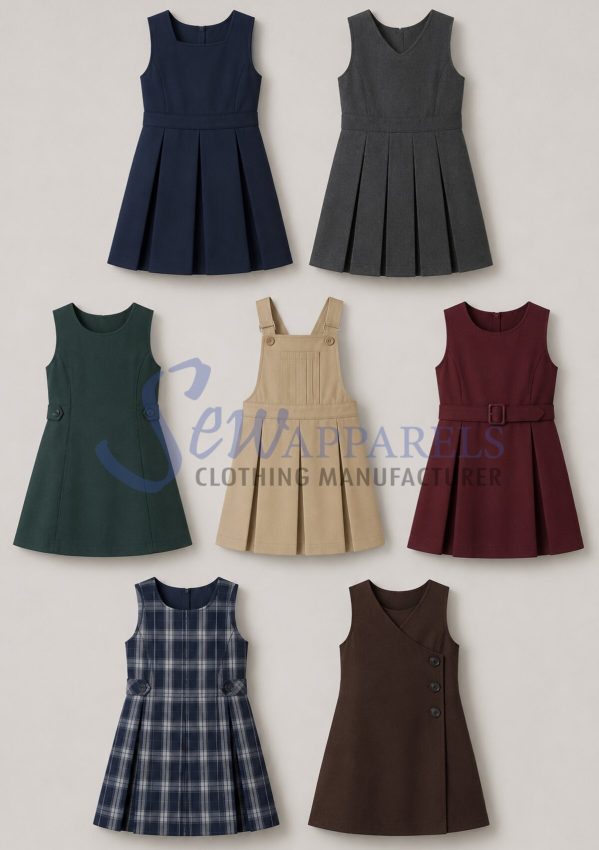
School Pinafores Buying Guides use this existing product-page illustration to discuss style and construction choices; it does not establish fabric performance, wearer-test results or certification.
GUIDE 01
Bodice Layering Allowance: School Pinafores
Set shirt room, armhole depth, shoulder width and movement allowance through measurable fit and grading checks.
Read the bodice layering guideGUIDE 02
Strap And Waist Adjustment: School Pinafores
Set button positions, strap length, waist fastening and grading through measurable range, strength, fit and care checks.
Read the strap and waist adjustment guideGUIDE 03
Seasonal fabric quotation: compare material scope and supplier assumptions
Compare named seasonal fabrics against a consistent pinafore design and size allocation. Use five critical checks and a quote matrix to record material identity, usable width, consumption, care evidence, sample scope and confirmed supplier terms without unsupported performance rankings.
Read the seasonal fabric quotation guideGUIDE 04
Zipper usability: review access, operation and sample feedback
Assess a named pinafore sample in its intended dressing context. Use five critical checks and an observation sheet to record zipper access, opening and closing, fabric catching, interior contact and technical feedback while keeping safety evidence and approval limits separate.
Read the zipper usability review guideSchool Pinafores Buying Guides: Build a Controlled Layering Brief
Start with wearer age, size range, school dress rules, climate, activity, season and the exact shirt or polo worn beneath the pinafore. Record body, underlayer and finished-garment measurements separately. Define chest, waist, cross-back, across-front, shoulder, armhole, neckline, bodice length, skirt length and closure tolerances. State whether the garment must work over short or long sleeves and identify the maximum approved underlayer.
Add fabric, colour, pleat, pocket, badge, label, care and packaging requirements. Link every decision to a dated pattern, graded chart, fit record and sealed production-intent sample. A single controlled brief keeps the buyer, pattern team, factory and inspector aligned before sampling begins. School Pinafores Buying Guides help buyers separate body dimensions, underlayer dimensions and finished-garment targets; identify the source and revision of each before comparing samples or requesting a quotation.
Control Bodice Layering, Neckline and Armhole Geometry
Distribute layering room through chest, front width, back width, shoulder and armhole instead of adding all ease at the side seam. Specify the shirt used for approval, its fabric thickness, sleeve shape and seam bulk. Set neckline width and depth, shoulder slope, shoulder length, armhole depth, circumference and underarm position from defined measurement points. Check that the shirt collar and placket sit cleanly, armholes provide coverage, and the bodice remains centred when the wearer reaches, writes, sits and carries a backpack.
Review small, middle and large sizes because a fixed allowance can become restrictive or oversized as proportions change. Record drag lines, gaping, pressure and ride-up with measurable corrections. Use School Pinafores Buying Guides to record the same underlayer and measurement landmarks for every fit comparison, so an apparent improvement is not caused by a different shirt or measuring method.
Select Fabric, Structure and Pleat Performance
Approve fibre content, weave, weight, usable width, colour, opacity, handle, dimensional stability, crease response and abrasion behaviour in production-equivalent fabric. A structured fabric may hold a crisp bodice and pleat but needs enough comfort for sitting and movement; a softer fabric can drape well yet lose the intended school-uniform silhouette. Specify facing, lining or reinforcement only where it improves stability without creating heat or bulk over the shirt.
Mark pleat type, depth, direction, spacing, stitch-down length and finished hem relationship. Wash and condition the sample, then remeasure the bodice, neckline, armhole, waist and skirt. Reopen approval when fabric supplier, construction, finishing, dye lot or interlining changes. School Pinafores Buying Guides support a like-for-like seasonal fabric quote: record material identity, usable width, consumption assumptions and the evidence requested for the intended care route before judging price differences.
Balance Fit, Movement, Growth and Grading
Evaluate the pinafore over the approved shirt during dressing, fastening, desk sitting, forward reach, arm elevation, bending, stairs and backpack use. Observe shoulder alignment, neckline position, armhole pressure, side-seam rotation, waist level, pleat opening and hem balance. Define permitted growth room through controlled circumference, bodice length, hem allowance or adjustable features rather than an oversized pattern. Grade chest, back width, front width, shoulder, armhole, neckline, bodice length, waist and skirt as connected measurements.
Fit representative small, middle and large sizes and compare the result with body and shirt data. Record each approved adjustment by pattern revision so later samples and repeat orders use the same balance. In School Pinafores Buying Guides, a fit observation should name the sample, size, shirt and activity; record who reviewed it and which changes need another fitting rather than treating feedback as universal approval.
Engineer Closures, Pockets and Reinforcement
Specify zipper, button, snap or side-opening type, length, overlap, placement, fastener spacing and opening access. The wearer should dress independently without twisting the bodice or trapping the shirt. Define pocket position, opening angle, depth, bag shape, load and reinforcement so books, cards or personal items do not distort the skirt. State seam type, allowance, stitch density, thread, bar tacks and reinforcement at pocket corners, closure ends, waist joins and strap attachments.
Check the inside surface for bulky overlaps or sharp label edges. Perform repeated opening, pocket-load and movement checks on production-intent samples. Retain approved trim references and machine settings so bulk production can reproduce both function and appearance. School Pinafores Buying Guides distinguish dressing feedback from technical trim approval. Record zipper access, fabric catching and interior contact separately, then identify the supplier specification and any testing required for the destination market.
Validate Care, Colour and Bulk Quality
Use the intended wash and drying route, then check dimensional change, shade, colourfastness, seam puckering, pleat retention, lining behaviour, closure function, surface appearance and label legibility. Remeasure the key bodice and skirt points after conditioning and repeat the movement review over the approved shirt. Define tolerances and inspection sampling before production. During bulk, trace fabric roll, dye lot, cutting bundle, size, line, operator and date when a failure appears.
Inspect neckline symmetry, shoulder length, armhole shape, waist level, pleat position, hem, closure, pockets, branding and packaging. Keep sealed samples and current test reports available so quality teams can compare evidence rather than relying on memory or pressing. Use School Pinafores Buying Guides to connect each quality issue with the affected sample or lot, agreed inspection method and corrective action; photographs alone do not demonstrate colourfastness, durability or regulatory compliance.
Low MOQ School Pinafores Manufacturer for Startup Brands
Sew Apparels supports startup brands with structured development priorities, clear sample comments and production planning based on the product brief. A low or small MOQ school pinafore programme still needs confirmed fabric availability, approved underlayer, size ratio, colour, pleat, closure, trims, badges, labels, packaging, testing and delivery requirements. Limit the first range to controlled options and consolidate decisions before sampling to reduce revisions.
Use one approved pattern and fabric route, then document every change. Final minimums, prices and lead times depend on materials, colours, decoration, size mix and production conditions, so the product page remains the correct commercial enquiry route. School Pinafores Buying Guides give startup buyers a practical enquiry checklist: specify the first-order quantity, size allocation, destination and sample scope, then obtain written confirmation of commercially feasible options before committing to a launch.
The linked school pinafores product page currently lists a minimum of 1,000 pieces per design/colour, sampling of 10–15 days and bulk production of 15–30 days at MOQ after pre-production sample approval, with quantity-dependent timing. These are published product-page planning terms, not a confirmed offer for every enquiry. School Pinafores Buying Guides recommend reconfirming material availability, colour allocation, sample approval, capacity and shipment requirements in the current written quotation before a startup brand sets its launch date.
Keep Documentation Ready for Repeat Orders
Maintain one controlled file containing the wearer profile, body data, approved shirt details, measurement chart, graded patterns, fabric and trim specifications, construction drawings, seam and stitch requirements, artwork, labels, care route, test reports, tolerance table, packing method and sealed samples. Record every approved change with its date, owner and pattern revision. For repeat orders, recheck current fabric, colour and trim lots instead of assuming the earlier result will repeat.
Traceable documentation helps sourcing, pattern, cutting, sewing, finishing, quality and logistics teams reproduce the same school-pinafore standard while allowing later guide articles to link back to a stable technical and commercial reference. School Pinafores Buying Guides should remain attached to the buyer’s controlled product file. Keep quotations, sample comments and approvals dated, and clearly separate proposed changes from the version released for production.
Technical References
Use current official body-measurement and apparel-sizing references as technical foundations when buyer and supplier agree the target population, measurement method, underlayer, garment ease, fit protocol and acceptance limits. Published body data supports development but does not replace production-intent sampling and wearer evaluation. ASTM D6192/D6192M-19(2023) is an active body-sizing reference for the girls’ size ranges named in its title; assess whether that population matches the buyer’s market. ISO 8559-1:2017, confirmed in 2026, concerns body-measurement definitions. Neither reference certifies a pinafore, supplies a finished-garment ease allowance or validates a zipper, fabric or care claim.
Review ASTM D6192/D6192M Review ISO 8559-1:2017Turn Your Pinafore Decisions into a Product Brief
Bring wearer, shirt, layering allowance, bodice, armhole, shoulder, fabric, pleat, closure, care, grading and quality decisions together before sampling. One controlled brief gives development and production teams the same measurable target.
Review School Pinafores Manufacturing