
School pinafore seasonal fabric quotation is most useful when it compares documented materials against the same purchasing brief. Calling one fabric summer cloth and another winter cloth does not explain the difference in garment cost, sample scope or suitability. Buyers need the actual material references, garment assumptions and evidence included in each supplier offer.
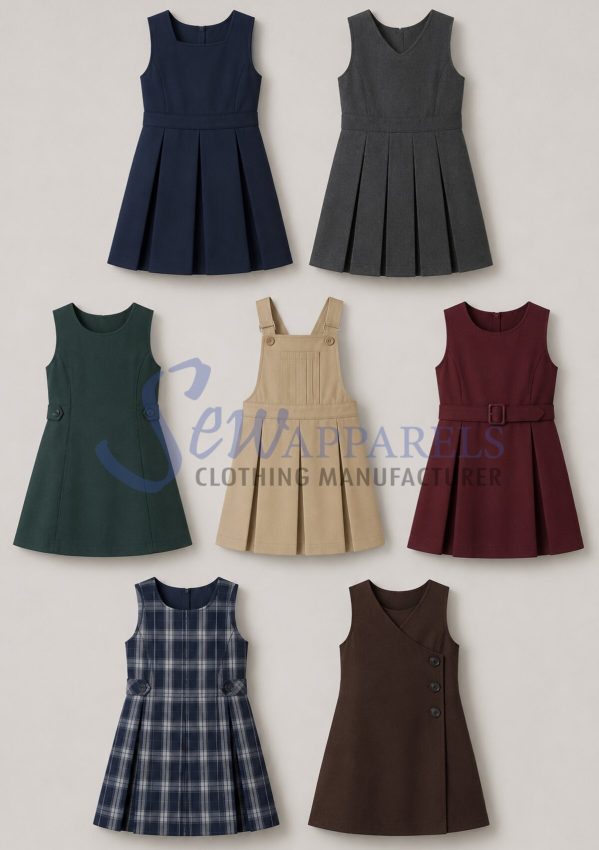
A school pinafore summer winter fabric quote should show what changes between seasons and what stays constant. Keep the garment design and size allocation visible while comparing fabric prices, usable width, consumption, finishes and preparation requirements. The result is a seasonal fabric quote matrix that supports a purchasing decision rather than a list of prices that appear comparable but describe different products.
This guide presents five critical checks for building that matrix. It concerns material selection and quotation scope, rather than adding shirt room to a pinafore pattern. No fibre name or fabric weight alone establishes warmth, breathability or durability. Any seasonal performance claim needs suitable evidence for the intended garment and use.
1. Define the actual seasonal use brief
Begin school pinafore seasonal fabric quotation with the buyer’s requirements. Identify the destination market, school uniform requirements, age and size range, planned accompanying garments and expected care route. Describe the intended use conditions rather than assuming the meaning of summer or winter is identical across schools and locations.
A school pinafore warm season specification can record the requested garment construction, colour, appearance, laundering expectations and evidence needed for any comfort claim. Avoid saying that a lighter fabric must be more breathable. If comfort is a purchasing criterion, agree an appropriate assessment with a qualified specialist and specify what the evidence must address.
A school pinafore winter cloth quotation likewise needs the intended layering arrangement and use requirement. An extra fabric weight is a specification change, not a guaranteed warmth rating. Ask whether the supplier is quoting a defined construction, finish or lining change, and whether the proposed development needs additional samples before approval.
Separate requirements from preferences
Mark school-mandated colours or design details separately from optional buyer preferences. A preference for a particular hand feel may be evaluated through identified samples, while an advertised technical claim may require a different evidence route. This distinction prevents the quote from treating every descriptive phrase as an established product capability.
2. Record each candidate material precisely
School pinafore seasonal material costing starts with a fabric reference that the supplier can identify. Record composition information, construction, colour, finish, quoted weight where provided, usable width and supply stage. Clarify whether the offer concerns finished fabric or a material that still requires processing before garment production.
The FTC textile and wool labeling guide identifies fibre content, country of origin and responsible business identity as labeling information for most covered products in the United States. These are identification requirements, not a seasonal performance ranking. Confirm destination-market requirements and preserve substantiated material information in the development file.
A school pinafore fabric offer comparison should not treat two supplier trade names as equivalent material descriptions. Ask for the actual specification and candidate sample references. If one offer includes a documented finish and another does not, show that difference as a scope item instead of hiding it inside an apparently lower unit price.
School pinafore fabric finish assumptions deserve a separate field. Record what is included, what is proposed and what remains unconfirmed. Do not describe an optional treatment as currently available without supplier confirmation. If a finish changes care requirements or the intended claim, include the relevant evidence and approval work in the comparison.
Check the material price basis
School pinafore material price basis should state the currency, unit, material stage and included charges. A price per metre cannot be compared directly with a price per kilogram without an appropriate, documented conversion for the candidate material. Keep supplier-provided data and calculation assumptions visible, and ask for clarification when the basis is missing.
3. Hold garment and size assumptions consistent
A school pinafore same pattern fabric quote is a useful starting comparison, but the supplier must confirm what the same pattern means. Identify the pattern revision, size range, hem allowance, pleats, straps, pockets, closure and lining. Include artwork or decoration scope if it belongs in the garment offer.
School pinafore size ratio cost can change the consumption basis when a quoted order contains a different mixture of sizes. Supply the same size quantities to every bidder and request confirmation that the quote uses them. Compare an alternative allocation separately; do not present it as a material saving when the size mix has changed.
School pinafore consumption quotation should identify the usable width and relevant layout assumptions. Directional fabric, checks, matching requirements or material defects may affect the cutting calculation. Ask the supplier to document its consumption estimate for the actual garment, rather than applying a universal wastage percentage to every seasonal option.
If a different fabric requires a pattern or construction adjustment, record that change explicitly. Retaining a design reference does not prove that every material will produce the same garment dimensions or appearance. A school pinafore seasonal fabric quotation should distinguish an initial cost comparison from approval of the resulting physical sample.
Use transparent calculation fields
The material subtotal can be recorded as quoted consumption per garment multiplied by the applicable fabric unit price, provided the units are compatible. Keep allowances, processing charges and unused material commitments separate. This is a purchasing calculation structure, not a claim about any supplier’s actual consumption or charge.
4. Compare care and sample evidence included
School pinafore seasonal sample requirements should name the samples included in the quote and the decisions each sample supports. Distinguish a fabric swatch from a garment sample, a colour approval from a fit review, and a revised sample from a repeat of the same development stage. Ask which changes would require a new quotation.
The FTC care-labeling guidance explains that care instructions need reliable support, including the garment as a whole. In a US-market brief, preserve that evidence requirement when comparing materials. Do not assume that a fabric swatch establishes care compatibility for a finished pinafore with lining, trim and decoration.
For school pinafore seasonal fabric quotation, list the proposed care route and the supporting work included in each offer. If testing is proposed, identify the question, method scope, sample preparation, laboratory responsibilities and reporting deliverable. Do not substitute a generic certificate for a report covering the actual material or garment question.
Compare sample charges, shipping and revision scope alongside the garment offer. A quotation may omit development work that another supplier has included. Ask for a clear inclusion statement before treating the difference as a saving. Performance conclusions should come from suitable evidence, not from the amount charged for a sample.
Preserve approval boundaries
Approval of one colour or material revision should not silently extend to all seasonal variants. Identify which candidates need separate review and why. Where representative sampling is proposed, have the relevant specialist define its scope and limits. Keep untested variants visible in the purchasing record rather than calling the entire range approved.
5. Compare supplier offers with all assumptions visible
School pinafore comparable supplier prices require comparable scope. Record garment quantity, size allocation, colours, material references, sample stage, packaging, currency, delivery basis and quotation validity. Show excluded charges and conditional terms. A supplier offer that depends on a different material minimum or delivery arrangement is an alternative scenario, not an equivalent price.
School pinafore fabric minimum questions should distinguish material commitments from finished-garment order quantities. Ask whether a minimum applies per colour, finish or material reference, how unused material is handled, and whether a repeat order depends on later availability. Request written terms; do not invent a minimum or assume unused stock is reserved automatically.
The school pinafore material route decision can then consider scope, sample evidence, financial commitments and confirmed feasibility together. If a candidate is commercially attractive but its garment sample remains unresolved, record that position honestly. Commercial preference and technical acceptance should be separate decisions until both have supporting information.
A school pinafore seasonal fabric quotation does not become better simply because it has the lowest headline price. It becomes more useful when the buyer understands what that price purchases, which assumptions could change it and what evidence is still required before production approval.
School pinafore seasonal fabric quotation: build the matrix
A school pinafore seasonal quote worksheet can be arranged with one column per candidate and a row for each assumption. Use the supplier’s actual data rather than estimated company terms. This original worksheet structure is a purchasing aid, not a laboratory standard or a promise of available configurations.
| Field | Required information | Candidate A | Candidate B | Clarification / owner |
|---|---|---|---|---|
| Use brief: | season reference, market, accompanying garments, school requirements and care expectations. | |||
| Material identity: | reference, composition information, construction, colour, finish, weight where supplied and usable width. | |||
| Garment basis: | design revision, size quantities, pattern assumptions, trims, lining and decoration scope. | |||
| Cost basis: | currency, fabric unit, quoted consumption, processing, garment charges and separate development costs. | |||
| Evidence scope: | named samples, care support, proposed testing, reports, approvals and exclusions. | |||
| Supplier terms: | material minimums, unused stock arrangements, delivery basis, validity and unresolved conditions. |
Mark every missing entry as unconfirmed and assign a clarification action. For instance, if two offers quote different usable widths, first obtain their garment consumption assumptions. Do not compare only the fabric unit prices or infer that the wider material necessarily creates a lower finished-garment cost.
School pinafore seasonal fabric quotation: prepare the enquiry
For custom school pinafore manufacturing, send the seasonal use brief, design reference and size allocation through the school pinafores manufacturer page. Ask the supplier to confirm candidate material feasibility and provide an offer with the assumptions above. Availability, pricing, minimums and timing need product-specific confirmation.
For private label school pinafore production, preserve approved material references and substitution controls in the purchase documentation. The school pinafores buying guides connect commercial material decisions with garment-development topics. A price comparison should support those decisions without replacing fit, construction or evidence review.
School pinafore seasonal fabric quotation: buyer questions
Is a heavier fabric automatically better for winter?
No seasonal performance ranking should be based solely on weight or fibre names. Define the intended use and ask what evidence would support the proposed garment claim.
Can the same garment reference cover both materials?
It can anchor the quotation comparison, but any required pattern, construction or care change must be identified. Confirm the physical sample before transferring approval between candidates.
What should the final comparison deliver?
A traceable school pinafore seasonal fabric quotation ends with a matrix of named materials, consistent garment assumptions, included evidence and confirmed supplier terms. The buyer can then select a documented development route and close clarification items before committing to production.