GUIDE 01
Contrast Collar Colour Planning: School Polo Shirts
Control collar colour match, stripe placement, colour transfer, laundering and bulk lot consistency through seven measurable checks.
Read the contrast collar colour guide
SCHOOL POLO SHIRTS PRODUCT DEVELOPMENT
School Polo Shirts Buying Guides connect product decisions with a controlled buyer brief. Use this technical hub to turn school polo shirt ideas into measurable colour, collar, stripe, fabric, fit, care and quality requirements. Each guide supports one product-development decision while keeping sampling, approval and production evidence connected. Start with the relevant guide cards below, then use the product page when your brand is ready to prepare a focused manufacturing enquiry.
Review the School Polo Shirts product page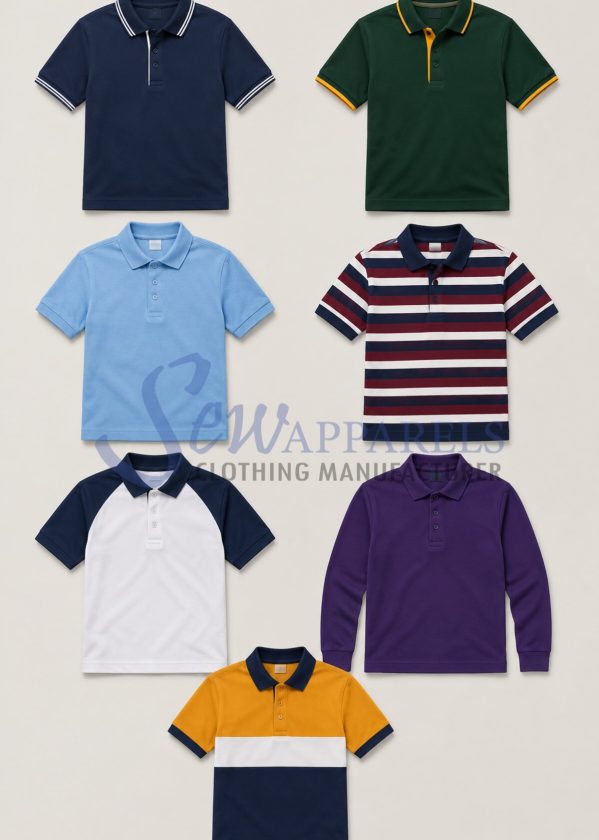
School Polo Shirts Buying Guides use this existing product-page illustration to discuss design choices; it does not establish colourfastness, fabric performance, sample approval or certification.
GUIDE 01
Control collar colour match, stripe placement, colour transfer, laundering and bulk lot consistency through seven measurable checks.
Read the contrast collar colour guideGUIDE 02
Engineer button attachment, placket-base reinforcement, interlining, stitches and wear testing through seven measurable checks.
Read the placket durability guideGUIDE 03
Compare named crest artwork, dimensions and variant quantities against a consistent polo brief. Use five critical checks and a quotation sheet to separate development, setup, repeat-run charges and decorated sample approval without invented prices or stitch counts.
Read the embroidered crest costing guideGUIDE 04
Compare sewn and printed neck-label proposals against a named polo and destination market. Use five critical checks and a quote worksheet to record information, materials, application, sample observations, supplier-entered charges and garment care evidence.
Read the neck label quotation guideGUIDE 05
Compare single polos and fixed multipacks against a documented channel brief. Use five critical checks and a decision matrix to record pack contents, buyer demand, supplier packaging charges, identifier review, care-label access and stock exposure without guaranteed sales claims.
Read the retail pack quantity guideA useful school polo brief begins with the wearer, school identity, climate, timetable, care route and replacement cycle. Define the approved silhouette, body fabric, collar construction, sleeve length, placket, size range, logo and colour relationships. Translate appearance words into measurements, drawings, physical standards and acceptance checks. Record the fit-model profile, approved base size and representative graded sizes.
This prevents collar, body, sleeve and trim decisions from being approved separately when they must work as one garment. The brief should distinguish design preference from required performance and identify who approves each stage. School Polo Shirts Buying Guides help the buyer connect crest costing, neck labels and retail pack quantities with this garment brief; keep the confirmed specification identical when comparing supplier offers.
Approve collar colour against a named physical standard under agreed lighting and conditioning. Record whether the collar must match another uniform garment, reproduce an institutional colour or create deliberate contrast with the body. Knitted rib, jersey body, thread, buttons and logo can reflect light differently, so review the complete assembly rather than isolated swatches. Define the permitted tolerance, approval authority and replacement standard.
Keep sealed collar and body samples with batch references. If a digital value is used for communication, make clear that the physical approved standard controls production and repeat orders. Use School Polo Shirts Buying Guides to document which physical colour reference controls each quotation and approval, and keep proposed substitutes separate until the buyer has reviewed the actual collar-and-body combination.
Map collar tipping with stripe sequence, width, gap, distance from the outer edge and distance from the neckline seam. Include tolerances and a scaled drawing. Check the layout after the collar is attached, turned and washed because seam take-up, fold position and rib relaxation change the visible stripe. Define finished collar width, point shape, centre-back balance, placket overlap and undercollar treatment. For cuffs, state whether the stripe sequence mirrors the collar. Inspect symmetry on several samples and record how stripe placement is graded or controlled across sizes. School Polo Shirts Buying Guides link collar appearance with placket construction: record the installed stripe position, opening detail and sample revision rather than assuming that an unattached rib swatch represents the finished polo.
Select school polo fabric through composition, finished weight, knit structure, opacity, stretch, recovery, shrinkage, pilling, shade and surface requirements. Fit should be checked through shoulder position, chest ease, sleeve opening, body length, placket behaviour and hem balance. Use standing, sitting, writing, reaching, bending and backpack movements with the intended underlayer. Grade rules must preserve collar, neckline, body and sleeve proportions across the size range. Measure selected small, middle and large sizes after laundering, then compare them with the approved chart and sealed garment. In School Polo Shirts Buying Guides, each fit decision should identify the sample size, intended wearer profile and care condition. Record unreviewed sizes explicitly instead of presenting one successful fitting as approval of the full range.
A saturated collar beside a pale body needs a deliberate transfer-control plan. Specify relevant dry and wet rubbing, laundering, colour-change and staining requirements for the intended market and care label. Test production-intent collar, body, stripe yarns, thread, buttons, neck tape, labels and logo together. Define which trims match the collar, which match the body and which provide contrast. Inspect exposed neckline stitching and placket components. Results for an isolated fabric do not prove that a multi-colour garment will remain clean during wear, storage, pressing and washing. School Polo Shirts Buying Guides also support a crest-costing comparison: name the artwork revision, placement, supplier setup and sample approval scope before treating embroidery charges from different offers as equivalent.
Confirm the washing temperature, detergent route, drying method, cycle count and pressing conditions before sealing the polo. Measure shrinkage, torque, collar width, collar length, stripe location, neckline shape and body dimensions before and after care. Evaluate shade, staining, collar curl, stripe distortion, placket puckering and logo condition under agreed light. Build bulk inspection around physical standards, assigned dye lots, measurable points, visual zones and defect limits.
Retain approved pre-production and washed samples with reports so incoming fabric, sewing output and repeat orders can be compared with one traceable target. Use School Polo Shirts Buying Guides to separate a care observation from a validated claim. Record the method, sample identity, report scope and agreed acceptance criteria; a style photograph or a previous dye lot does not establish the new lot’s result.
A low MOQ school polo shirts manufacturer can help a startup brand validate collar colour, stripe geometry, fabric, fit, logo and packaging before a larger programme. Small MOQ development still needs a controlled technical pack, approved materials, size set, care route, inspection plan and sealed sample. For startup development, the first brief should limit colour combinations and define clear approval stages.
Begin with one base silhouette, one body fabric and one collar system, then record measurable changes between variants. Confirm the current commercial minimum, material availability and development schedule for the chosen polo before ordering. School Polo Shirts Buying Guides give startup buyers an enquiry route that starts with quantity, size allocation, destination and the first sample decision. Ask for written material feasibility, minimums and development charges before setting a launch commitment.
The linked school polo shirts product page currently lists a minimum of 1,000 pieces per design/colour, sampling of 10–15 days and bulk production of 15–30 days at MOQ after pre-production sample approval, with quantity-dependent timing. These published planning terms are not a confirmed offer for every brief. School Polo Shirts Buying Guides recommend reconfirming fabric and collar availability, colour allocation, sample scope and shipment needs in the current written quotation before a startup brand commits to its first order.
The final school polo package should connect the technical drawing, measurement chart, grade rules, bill of materials, physical colour references, stripe diagram, artwork, labels, packaging, care method and quality plan. Give every file a version and date, and identify the person who approves lab dips, collar samples, fit samples, size sets and pre-production garments. Record yarn, dye, fabric-roll, collar-batch and cut-bundle references.
Before production, reconcile the purchase order with the sealed sample so quantity, size ratio, colour, logo, labelling and delivery terms point to one controlled product definition. School Polo Shirts Buying Guides should remain linked to the purchasing file: record neck-label identity and pack contents alongside the garment revision, and keep a dated owner for each open approval or supplier clarification.
Use ISO 105-X12:2016 to assess resistance to rubbing and staining with dry or wet rubbing cloths, and ISO 105-C06:2010 to assess colourfastness to domestic and commercial laundering. These references support defined collar, body and stripe evidence. They do not replace product-specific wear trials, buyer-selected grades, sealed samples, lot control or target-market requirements. ISO lists 105-X12:2016 as published and under systematic review; 105-C06:2010 was confirmed in 2026. Select the precise method conditions with the laboratory. The laundering reference concerns defined detergent and bleach systems and does not reflect optical-brightener effects or automatically establish every industrial wash outcome. Neither reference certifies Sew Apparels or supplies a universal buyer acceptance grade.
Review ISO colour fastness to rubbing Review ISO colour fastness to launderingUse the guide above to prepare the physical colour standard, collar and stripe drawing, body fabric specification, fit measurements, care evidence, logo details, size range and quantity route. Send the confirmed brief for focused costing and sample development. Keep every approval measurable so production can be inspected against the same sealed standard and repeat orders can return to controlled references.
Review custom School Polo Shirts manufacturing