
School polo neck label quotation should begin with the information a buyer needs to communicate, not a preference for a woven label or a printed logo. Two suppliers can quote different materials, application stages and approval work even when both offers describe a “neck label.” A clear comparison connects the label to the actual polo, destination market and care requirements.
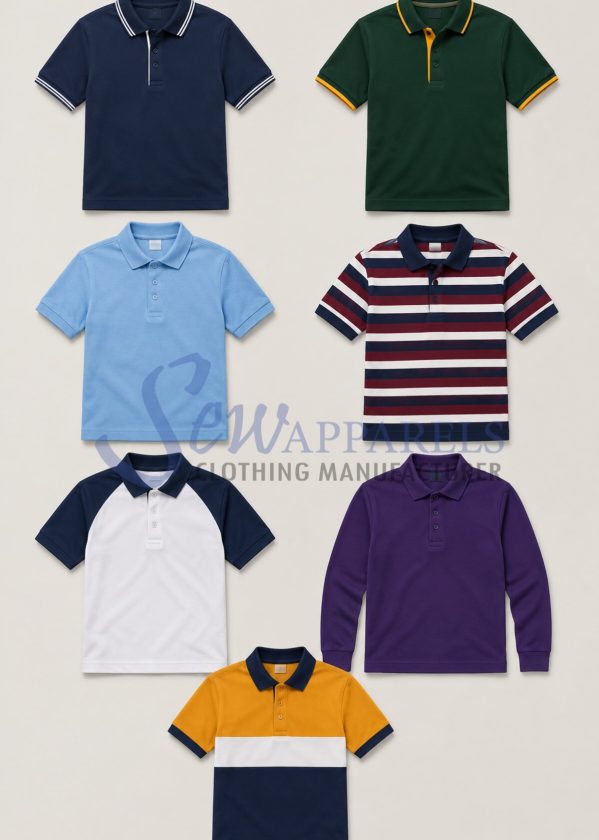
This guide sets out five critical checks for comparing sewn and printed options. It provides a label-method quote table that records information fields, application route, evidence, setup and unit charges. It does not supply invented prices or claim that one method is universally more comfortable, durable or legally sufficient.
Use school polo neck label quotation as a controlled purchasing exercise. Freeze the garment and label brief, request supplier confirmation and review a representative finished sample. An attractive label preview is useful, but it cannot replace the information and evidence needed for commercial approval.
1. Define the market and label information first
Identify the destination country, intended wearer, sales route and responsible business before preparing the artwork. Separate brand identity, size identification and optional owner-name space from required product information. The label arrangement may use more than one location, but the full garment information must remain coherent and accessible.
The FTC’s textile and wool labeling guidance describes US requirements concerning fibre content, origin and business identity. It also addresses placement and attachment. For a US-market polo, have the responsible reviewer confirm the information and arrangement. A school logo or size mark does not automatically satisfy those separate obligations.
Develop the school polo label information layout only after the data owner has checked the current garment specification. Identify which version covers each fabric, colour and size. If the composition differs between alternatives, do not reuse an unverified layout merely because the garments belong to the same collection.
A school polo labeling commercial brief should name the person approving factual information, the person approving appearance and the person releasing the order. These responsibilities can belong to different people. Keep their decisions recorded so a visual approval is not mistaken for confirmation of the underlying data.
School polo neck label quotation is more reliable when all offers refer to the same approved information. If a supplier proposes a different arrangement, ask for a clearly identified alternative rather than silently comparing it with the original request.
Separate mandatory information from convenience features
A writable owner-name area, school identifier or replacement code can help a uniform programme, but it serves a different purpose from required product labeling. Confirm permission, data handling and practical use before adding personal information. Avoid printing children’s names into a sample or quotation when generic placeholders can demonstrate the proposed layout.
2. Compare actual materials and application routes
A school polo sewn printed label quote should identify the physical option being priced. For a sewn label, request the material, finished dimensions, edge treatment, fold arrangement and attachment proposal. For a printed option, identify whether the supplier means a separate printed label, a transfer or another confirmed application route.
The school polo woven label supplier quote should state what the supplier is supplying and who attaches it. A trim-only offer differs from an offer covering application to finished polos. Record responsibility for supplying artwork, checking the garment substrate and approving a finished sample.
School polo heat transfer label pricing inputs include the approved artwork dimensions, colour information, application location and actual fabric reference. Ask the supplier to confirm the proposed material and application process. Do not insert guessed temperatures, dwell times or pressure settings into the brief; those details require the supplier’s method and technical review.
For a school polo label application quotation, identify the production stage. Applying a label during garment assembly may have a different scope from handling completed polos individually. Ask what preparation, access and inspection activities the quote includes without assuming that one route is necessarily quicker or cheaper.
Keep school polo neck label quotation tied to the same substrate. A proposal reviewed on one fabric should not automatically be approved for a different knit or finish. Record any supplier-requested trial and the evidence needed before the option can move from a development scenario to an agreed order specification.
3. Review access, legibility and interior contact
A school polo label legibility trial should use an actual-size sample with the approved information. Check whether the intended user can locate and read it under a stated review condition. Do not approve tiny text solely from a magnified screen preview, especially when the final application differs from the artwork display.
Record school polo neck label interior contact as an observation on a named sample. Note label edges, folds, seam bulk and the application surface in the intended wearing arrangement. Discuss concerns with the supplier and request a revised sample where necessary. A brief touch assessment does not prove that a label is skin-safe or suitable for every wearer.
Inspect the whole neckline rather than the label alone. The attachment may interact with neck tape, collar seams or the body fabric. Ask whether the supplier’s proposed process requires a changed construction detail and whether that change is included in the quote. Keep this review separate from broader placket durability work.
A useful school polo label method comparison records the evidence behind each observation. Mark whether the review concerns a loose trim, an applied trial or a finished garment. These stages answer different questions; a loose label does not show the final attachment or its relationship with the polo neckline.
School polo neck label quotation should distinguish appearance acceptance from unresolved technical questions. If one option has been sampled and another has only a digital preview, show that difference clearly. Commercial decisions become stronger when the team understands the unequal evidence instead of treating both options as fully approved.
4. Request setup and unit charges against the same brief
Ask each supplier to complete the same response fields. The school polo label setup charge should identify what preparation it covers, such as a specific artwork revision or a proposed application trial. Record any separately quoted development stage and ask what a changed information layout would require.
The school polo garment label unit cost should state the applicable quantity and whether application is included. Distinguish the price of the trim from handling, attachment, inspection and packaging where the supplier prices them separately. Do not invent a breakdown if the offer is combined; request clarification.
School polo neck label cost also depends on the scope being compared. An offer for one size label differs from an offer covering several size variants. Record the quantities for each layout and reconcile them with the polo size allocation before presenting the quote as complete.
Request a confirmed school polo label minimum quantity for the actual proposed material and artwork. Keep trim minimums and garment order quantities in separate fields. A supplier may need further information before confirming either; no minimum should be advertised as a factory commitment without agreement.
List school polo label quote exclusions explicitly. Possible questions include whether a sample, revised artwork, application to buyer-supplied garments or transport is outside the stated scope. These are matters to confirm, not assumptions that every supplier charges separately.
For custom school polo shirt manufacturing, send the agreed garment and label brief through the school polo manufacturing page. Include actual quantities and unresolved questions. School polo neck label quotation then supports a focused enquiry instead of promising an unverified price or production route.
5. Approve the label after a defined garment care trial
Ask for school polo label wash evidence that relates to the proposed finished garment and application. Identify the sample, care conditions and observations. Check legibility, attachment and visible surface changes after the agreed trial, and record issues for supplier review rather than declaring a pass from an unrelated material result.
The FTC’s Care Labeling Rule guidance explains that instructions require reliable evidence, must consider the garment’s components and must remain legible for the product’s useful life. For a US-market polo, review the final label arrangement and supporting care basis together. A trial record supports a decision but does not automatically establish complete compliance.
School polo neck label quotation should identify who pays for the agreed sample and what happens if a revision is required. Confirm whether the sample uses production-intent material and the proposed application process. If the supplier substitutes a material, request an updated identification and evidence review before accepting it as equivalent.
For private label school polo shirt production, retain a controlled label file with the garment specification and approved sample reference. Record the approval date, decision owner and any restrictions. A later fabric change or updated business information can require the label brief to be reviewed again.
School polo neck label quotation comparison worksheet
Record a separate response for each proposed label route using the following fields. Keep supplier-entered figures separate from the buyer’s confirmed information. The worksheet compares scope and evidence; it does not select a winner through an unsupported universal score.
| Required record | Proposed route A | Proposed route B |
|---|---|---|
| Reference: supplier, quote date, artwork revision and garment specification. | Pending confirmation | Pending confirmation |
| Information: required text, size variants, data owner and market-review status. | Pending confirmation | Pending confirmation |
| Physical method: actual material, dimensions, application proposal and attachment responsibility. | Pending confirmation | Pending confirmation |
| Evidence: sample identity, access and contact observations, care conditions and unresolved issues. | Pending confirmation | Pending confirmation |
| Commercial response: confirmed setup, unit scope, quantity basis, minimum and exclusions. | Pending confirmation | Pending confirmation |
| Decision: approved version, conditions, revision needed and responsible release owner. | Pending confirmation | Pending confirmation |
For example, compare a supplier’s applied sewn-label sample with its quoted printed alternative only after identifying the evidence available for both. If the printed route has not been trialled on the named fabric, record that gap. Request the missing confirmation before treating the alternatives as equally ready for production.
Keep school polo neck label quotation updated when the factual data, artwork or garment specification changes. A revised quote should reference the current brief. Retain the superseded file for traceability, but make the approved version easy for purchasing and production teams to identify.
Questions buyers ask before ordering
Is a printed neck label always more comfortable?
No universal claim should decide the order. Compare actual applied samples, the proposed material and the intended wearing context. Record observations and obtain the relevant technical evidence rather than treating a method name as proof of comfort or safety.
Can a school logo replace the garment information?
A school identifier and required product information serve different purposes. Confirm the market-specific data and arrangement with the responsible reviewer. Keep optional branding from obscuring information the garment needs to communicate.
What should accompany a repeat label order?
Send the approved artwork revision, garment reference, size allocation and any changed information. Reconfirm material availability and quoted scope. Use the school polo buying guides to keep this decision connected to the wider product brief. Complete school polo neck label quotation with confirmed terms and a documented sample decision before releasing the order.