GUIDE 01
Seated Fit Development: School Shorts
Specify rise allowance, seat ease, leg opening and movement checks through one measurable seated-fit approval method for school shorts.
Read the seated fit development guide
SCHOOL SHORTS PRODUCT DEVELOPMENT
Use these School Shorts Buying Guides to convert a school shorts concept into measurable rise, seat, leg opening, waistband, pocket, care and quality requirements. Each guide addresses one development decision while keeping sampling, approval and production evidence connected. Start with the seated-fit article below, then use the product page when your brand has a controlled specification ready for focused manufacturing review.
Review the School Shorts product page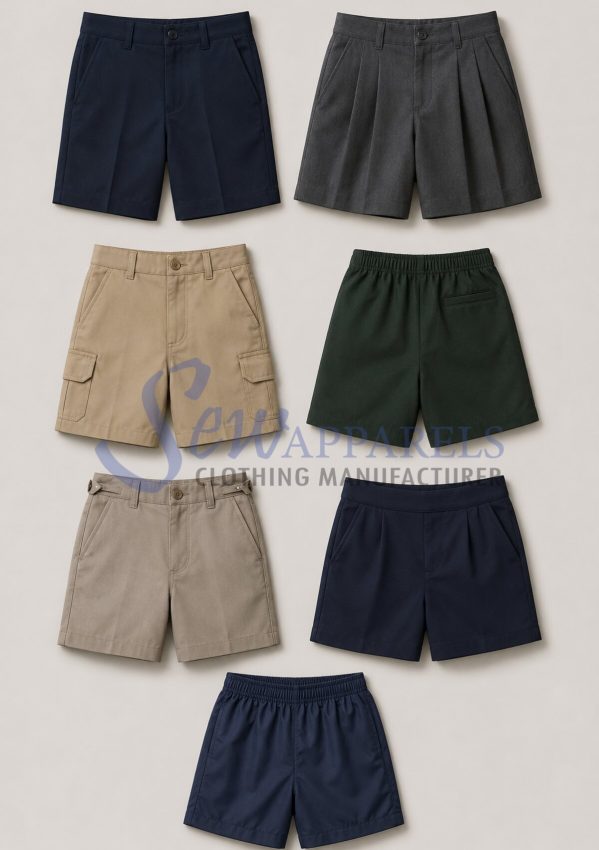
School shorts style examples from the existing product page, including flat-front and elastic-waist options. The image illustrates silhouettes; it does not establish fit approval, material availability, wash performance or certification.
GUIDE 01
Specify rise allowance, seat ease, leg opening and movement checks through one measurable seated-fit approval method for school shorts.
Read the seated fit development guideGUIDE 02
Control bartack placement, pocket bag anchoring, opening shape and load testing through one measurable school-shorts construction method.
Read the pocket reinforcement guideGUIDE 03
Compare proposed zip-fly and pull-on fronts against the same school-shorts brief. Use five critical checks and a cost matrix to record drawings, fabric, trims, sample work, operation observations and supplier-entered charges without assuming one route is cheaper.
Read the fly versus pull-on costing guideGUIDE 04
Build a seasonal school-shorts preorder from confirmed purchasers, comparable size-level sales and usable stock. Use five critical checks and a planning model to separate initial commitments, replenishment options, supplier minimums and documented assumptions without invented demand rates.
Read the seasonal preorder quantity guideA useful school shorts brief starts with the wearer, school environment, activity level, uniform policy, climate, care route and approved underlayer. Define the intended silhouette, fabric family, size range, waistband system, pocket use and required coverage before drawing style details. Convert words such as comfortable, smart or durable into measurements, construction rules and acceptance checks. Record the fit-model profile, approved base size and representative graded sizes. This keeps rise, seat, thigh, hem and waistband decisions connected as one garment rather than separate cosmetic choices.
It also gives sampling, costing and quality teams one controlled target for every revision. School Shorts Buying Guides help the buyer separate policy requirements from pattern preferences. Keep approved observations and unresolved questions in different columns, identify who can authorise each change, and send suppliers the same revision so quotations cover comparable work.
School shorts must work through standing, walking, climbing stairs, sitting at a desk and bending to collect bags or books. Document these movements and the planned shirt, underwear and seasonal layers used during fitting. Photograph front, side and back views in the same postures and note waistband movement, back coverage, crotch strain, pocket opening and hem lift. A standing-only approval can conceal discomfort that appears after several minutes of sitting. Use the same chair height and movement sequence when comparing samples.
Clear use conditions help the pattern team interpret fit feedback consistently and prevent subjective comments from becoming uncontrolled pattern changes. Use School Shorts Buying Guides to record the difference between an observed restriction and its suspected cause. A pocket opening or tight thigh can look like a rise problem; change one variable and repeat the same movement before accepting the correction.
Specify front rise, back rise, total crotch length and key horizontal balance points from stable landmarks. Rise allowance must support the seated body without creating excessive looseness when standing. Check whether the waistband stays level, the back remains covered and the front crotch lies cleanly without drag lines or pressure. Review the relationship between rise, inseam, seat shape and waistband depth rather than correcting only one number. Measure the garment flat using a documented method, then confirm the result on the approved fit model.
Record every pattern change and recheck after laundering because shrinkage can reduce functional rise and alter the approved balance. Within School Shorts Buying Guides, a rise correction should identify the affected pattern pieces and the unchanged measurement points. Confirm that the new version resolves the original observation without introducing a waistband or hem problem in another posture.
Seat ease should provide movement without producing a bulky or dropped appearance. Define body measurements, finished garment measurements and the resulting ease at hip and seat level. During fitting, observe whether the fabric pulls across the back, the waistband moves downward, side seams rotate or pocket openings flare when the wearer sits. Check recovery after standing again, since a fabric or pattern may stretch temporarily and remain distorted. Use consistent posture, timing and underlayers across samples.
Approve ease together with dart, yoke, panel and seam placement where present. Grading must preserve the intended relationship between waist, seat, thigh and rise throughout the contracted size range. School Shorts Buying Guides should distinguish body dimensions, intended ease and finished garment tolerances. A supplier cannot interpret a single hip measurement correctly without knowing whether it describes the wearer or the garment and how the buyer measured it.
Define the finished leg opening, thigh width, hem depth, inseam and outseam for the base size and grading plan. The opening must support walking, stairs and seated knee movement while maintaining the required school-uniform coverage. Inspect side-seam swing, inner-leg drag, hem flare and fabric contact at the thigh during movement. A wider opening may improve mobility but can change modesty, silhouette and pocket stability, so evaluate the whole lower-body system.
Mark exact measurement points and tolerances in the specification. Confirm both legs are balanced after pressing and laundering, and review selected small, middle and large sizes before approving the grade for production. Apply School Shorts Buying Guides when comparing hem lengths across sizes: record the school coverage rule, garment length and movement observation separately. A photograph can support discussion, but an approved point of measurement is needed for repeatable inspection.
Coordinate the waistband, elastic or adjuster, fly, closure, belt loops and pockets with the approved seated fit. State finished waistband height, extension, overlap, button or hook position, elastic length and adjustment range. Test fastening, sitting and repeated movement without sharp pressure, rolling or unintended opening. Pocket placement should be measured from stable seams, with usable width, depth, reinforcement and load defined for the items students may carry. Loaded pockets must not pull the waistband or distort the seat.
Approve trims and attachment methods in production-intent materials. Include functional checks in the sample report and bulk inspection plan rather than relying only on visual matching. School Shorts Buying Guides can connect construction choices with quotation scope. Ask suppliers to identify the front system, trim schedule, elastic or adjuster, reinforcement operations and proposed packing; compare like-for-like proposals before deciding whether a fly or pull-on route meets the brief.
Confirm the actual wash temperature, detergent, drying method, cycle count and pressing conditions before sealing school shorts. Measure dimensional change, twist, waistband recovery, crease retention, seam puckering, shade and trim condition before and after care. Use ISO garment measurement principles to define every point while keeping the buyer specification as the controlling acceptance document. Inspect rise, seat, thigh, leg opening and total length with the garment conditioned and laid consistently. Retain the approved pre-production sample, washed sample, measurement report, shade reference and defect limits.
Traceable evidence helps production teams identify causes before bulk cutting and supports repeat orders with the same fit standard. School Shorts Buying Guides organise care evidence by sample identity, material lot, method and revision. Record measured changes rather than a general pass label; the buyer and supplier still need an agreed test method and acceptance limits for this specific uniform.
A low MOQ school shorts manufacturer can help a startup brand validate seated fit, fabric, waistband, pockets, branding and packaging before committing to a larger programme. Small MOQ development still requires a controlled technical pack, approved material, size set, care route, inspection plan and sealed sample. For startup development, the first brief should limit variables and define clear approval stages. Begin with one base silhouette, one fabric and one waistband system, then record measurable changes between variants. Confirm the current commercial minimum, material availability and development schedule for the chosen style.
Treat the first order as a disciplined validation stage that creates reliable evidence for repeat production and future colour or size extensions. For new programmes, School Shorts Buying Guides should lead to a brief that a supplier can cost and sample. Include expected quantity by colour and size, destination, required delivery date and unresolved material choices, while marking forecasts separately from confirmed school orders.
For commercial planning alongside School Shorts Buying Guides, the public product page currently lists 500 pieces with matching export-quality stock fabric or 2,000 pieces with custom woven fabric, per colour and style. It lists sampling at 10–15 days and bulk production at 15–30 days at MOQ after pre-production approval, with timing dependent on quantity. These are published planning terms, not an unconditional stock or delivery commitment. Ask the supplier to confirm the chosen fabric route, available colours, size allocation, sample charges and production schedule in the current quotation before placing an order.
Use ISO 8559-1:2017 for consistent anthropometric definitions that support clothing size and body profiles, and ISO 18890:2018 for principal garment measurement points and agreed additional measurements. These references strengthen rise, seat, leg and graded-size documentation. They do not replace product-specific movement trials, laundering validation, sealed samples or buyer acceptance limits. Neither reference certifies Sew Apparels, specifies garment ease or replaces the buyer’s agreed tolerances. Keep body measurements and finished garment measurements separate in the technical pack; use product-specific evidence for care and movement approval.
ISO anthropometric measurement definitions ISO garment measurement methodUse the guide above to prepare wearer profile, rise and seat measurements, leg opening, waistband construction, pocket plan, fabric standard, care evidence, branding details and quantity route. Send the confirmed brief for focused costing and sample development. Keep each approval measurable so production can be inspected against the same sealed standard.
Review custom School Shorts manufacturing