
School shorts fly versus pull on costing should compare two defined garments against the same school brief. A zip-fly front and a pull-on waist can differ in components, pattern work, sample approval and dressing operation. Their names alone do not establish which option is cheaper, easier to use or more suitable for a particular school.
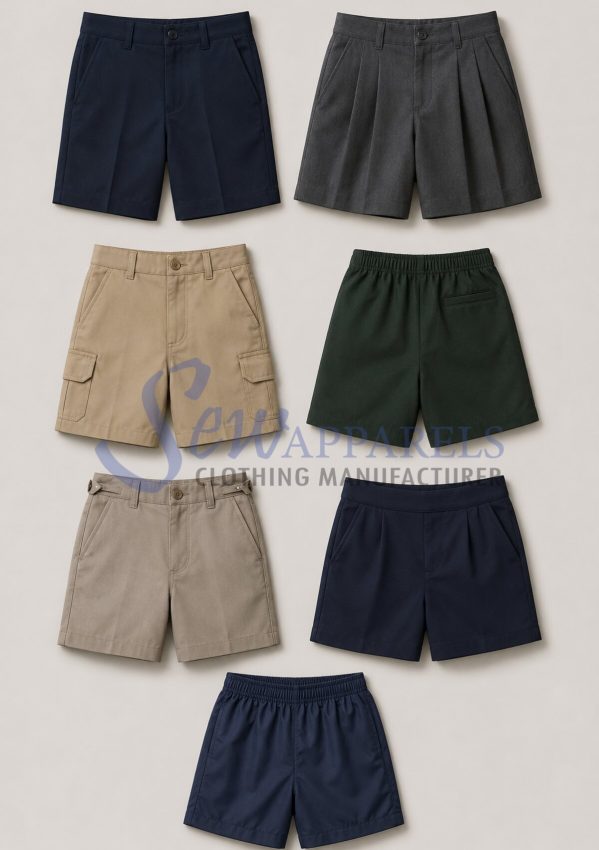
This guide explains five critical checks for buyers requesting comparable quotations. The practical deliverable is a front-construction cost matrix that records garment details, trims, sample work, operation observations and supplier-entered charges. It keeps commercial comparison separate from unsupported claims about safety, comfort or universal dressing ability.
Start school shorts fly versus pull on costing with the intended wearer, appearance requirements and actual material specification. Describe each proposal clearly, ask the supplier to confirm feasibility and retain a traceable sample decision before releasing the selected construction.
1. Define appearance and dressing requirements
Ask the school to identify the required front appearance, waistband arrangement and any restrictions on visible fastenings. Record whether the proposed shorts must resemble an existing uniform item. A general request for “formal school shorts” is not enough to determine whether a functional fly, mock fly or pull-on arrangement is acceptable.
A school shorts dressing construction choice should reflect a stated use context. Identify the intended size range, wearing arrangement and the school’s practical dressing requirements. Avoid assuming that every wearer will find the same closure easy to operate or that removing a zipper resolves all dressing concerns.
Prepare a school shorts front construction brief with reference drawings and a named approval owner. Show which appearance details are mandatory and which are alternatives for supplier review. Keep suggestions conditional until the supplier and school have accepted the proposed construction and sample scope.
School shorts fly versus pull on costing needs this shared baseline before prices are requested. If one offer covers a different waistband, pocket arrangement or fabric, label it as a separate proposal. Do not attribute the full price difference to the fly when other specifications have changed.
Separate the decision from general fit development
Both options still need an appropriate fit review. This commercial comparison does not replace seated-fit development or a full size-set approval. It identifies what changes between the proposed fronts and what evidence is needed to approve each one against the same garment brief.
2. Describe the actual front constructions
A school shorts pull on zip fly quote should name the construction being priced. For the fly option, identify the proposed zipper, top fastening, shield or facing arrangement and waistband details. For the pull-on option, identify the proposed elastic arrangement and whether the front appearance includes a mock detail.
School shorts front trim requirements should use confirmed component references rather than generic descriptions where possible. Ask the supplier to identify unresolved items and propose suitable components for review. Do not invent zipper grades, elastic performance or fastening specifications to make an early enquiry appear production-ready.
School shorts zipper fly development should identify the required pattern and sample work. Ask whether a new front pattern, revised waistband or additional operation trial is included in the quotation. Confirm the proposed development route rather than assuming the supplier can reuse an existing design without changes.
A school shorts elastic waist quotation should state the actual proposed elastic and attachment arrangement. The commercial brief can request review of casing, joins and waistband recovery, but it should not prescribe unverified tension or extension values. Those parameters need product-specific technical confirmation.
School shorts fly versus pull on costing should retain a clear drawing reference for each option. A mock fly and a functional opening are different constructions, even when their finished fronts look similar. Make that distinction visible in the quotation and the sample identification.
3. Hold fabric and size allocation consistent
School shorts matched fabric quotes should refer to the same material identity, colour, finish and garment specification when the aim is to isolate the front-construction difference. If a supplier proposes another fabric, request a separately identified alternative and record why it was suggested.
For school shorts comparable price inputs, issue the intended size range and quantity allocation alongside the drawings. A quote for one base size and a quote for a complete size distribution can carry different assumptions. Ask suppliers to confirm the allocation they have used rather than comparing headline figures alone.
The school shorts pull on supplier price basis should identify whether the proposed route changes fabric consumption, waistband components or development requirements. Record the supplier’s actual explanation. Do not assume that eliminating a zipper always produces a lower total garment price.
School shorts front style cost assumptions should distinguish confirmed information from items awaiting sampling. Pattern consumption, component availability and production handling may need further review. Keep provisional figures visibly provisional and identify the stage at which the supplier can confirm them.
School shorts fly versus pull on costing becomes misleading when quantity units differ. Confirm whether prices are stated per garment, per size allocation or against another agreed order basis. Record currency, quote date and expressly included scope so the purchasing team understands what each offer covers.
4. Request component and development differences
School shorts front construction costing should show the scope behind the comparison. Ask which trims, sewing activities, pattern work and sample stages are included. If the supplier quotes a combined garment price, request an explanation of the differences rather than inventing a labour breakdown.
For school shorts fly component cost, record supplier-entered information for the named zipper and fastening proposal. Ask what happens if the selected component changes after approval. A cheaper substitute should not be accepted as equivalent without an updated specification and appropriate sample review.
School shorts construction minimum questions belong in the enquiry because material or trim arrangements can affect the proposal. Ask the supplier to confirm any applicable minimum for the actual option and allocation. Keep trim minimums separate from garment quantities, and avoid advertising an unconfirmed factory MOQ.
Request a clear statement of development charges, sample scope and revision conditions. Identify whether the quote covers both front options or only the selected one. The school should know whether a comparison sample is included before asking the supplier to proceed with additional work.
For custom school shorts manufacturing, send the controlled comparison brief through the school shorts manufacturing page. Include both drawings, material references and quantity allocation. School shorts fly versus pull on costing then supports a focused quotation request without promising prices, availability or turnaround that have not been confirmed.
Keep delivery, tax and freight assumptions explicit. A construction quote does not automatically establish a complete landed cost. Mark excluded or unresolved items so the team can complete the commercial review before issuing the order.
5. Approve actual fit and operation samples
Review a named sample for each proposed front. Confirm that it represents the quoted fabric, waistband and component arrangement. Observe opening, closing or dressing access in an appropriate agreed context, and route difficulties to the technical team. Do not describe a brief observation as safety certification.
School shorts pull on sample approval should identify the sample version, review conditions and decision owner. Record whether waistband access, garment position and the intended appearance meet the brief. A sample approved for one size should not automatically authorize every graded size without the required size-range review.
For the fly option, record the proposed fastening sequence, garment distortion and any fabric catching observed during the agreed review. Avoid inventing an operating-force threshold or instructing unqualified testing. Ask the supplier or relevant specialist to investigate technical concerns before commercial release.
The FTC’s Care Labeling Rule guidance explains that care instructions need reliable supporting evidence and must account for garment components. For a US-market offer, review the finished shorts and proposed trims together. An isolated fabric result does not automatically establish appropriate care instructions for the final construction.
The FTC’s textile and wool labeling guidance addresses matters including fibre content, origin and business identity. Keep the destination-market information review connected to the selected garment specification. A front-construction decision does not certify that the product’s labeling is correct.
For private label school shorts production, retain the approved drawings, component references and sample decision with the order brief. School shorts fly versus pull on costing should be updated if the supplier changes the fabric, waistband or fastening after that decision. Confirm the consequences before accepting the change.
School shorts fly pull on matrix for quotation review
Record a separate response for each proposed construction using the following fields. Use the same garment basis and show differences explicitly. School shorts fly versus pull on costing remains traceable when the worksheet connects supplier charges with the drawings and sample evidence they actually cover.
| Required record | Zip-fly proposal | Pull-on proposal |
|---|---|---|
| Shared garment basis: school brief, material reference, colour, size allocation and intended order quantity. | Pending confirmation | Pending confirmation |
| Front definition: functional or mock opening, waistband arrangement, component list and drawing revision. | Pending confirmation | Pending confirmation |
| Supplier response: confirmed feasibility, garment price scope, development charges and stated exclusions. | Pending confirmation | Pending confirmation |
| Sample evidence: sample identity, appearance and operation observations, care basis and unresolved concerns. | Pending confirmation | Pending confirmation |
| Approval: selected version, decision owner, conditions and release status. | Pending confirmation | Pending confirmation |
For an illustrative review, compare two proposals sharing the same fabric and size allocation. If the fly version uses a different waistband or the pull-on version changes the front appearance, list those differences before comparing prices. The example supplies a method, not invented costs or a prediction that one route will win.
Keep school shorts fly versus pull on costing separate from a final purchase authorization. A completed matrix makes the decision clearer, while confirmed commercial terms and approved product evidence establish what may be ordered. Retain superseded proposals but make the current approved version easy to identify.
Questions before selecting the front
Are pull-on shorts always cheaper?
No universal saving should be assumed. Compare confirmed quotations against equivalent garment specifications and explicit development scope. Component differences alone do not establish the final cost.
Can one sample approve the full size range?
Record what the sample represents and agree the required grading and size-set review. Do not infer a complete range approval from one base-size observation.
What should accompany the first enquiry?
Send the school appearance brief, both front drawings, fabric reference and size allocation. Use the school shorts buying guides to connect the comparison with the wider garment brief. Complete school shorts fly versus pull on costing with confirmed scope, sample evidence and a recorded decision before production release.