
School shorts seasonal preorder quantities should start with evidence of who is likely to buy, which sizes they need and when the stock must be available. Enrollment is useful context, but it is not a purchase order. Families may retain suitable uniforms, buy from another approved seller or choose a different item within the school’s rules.
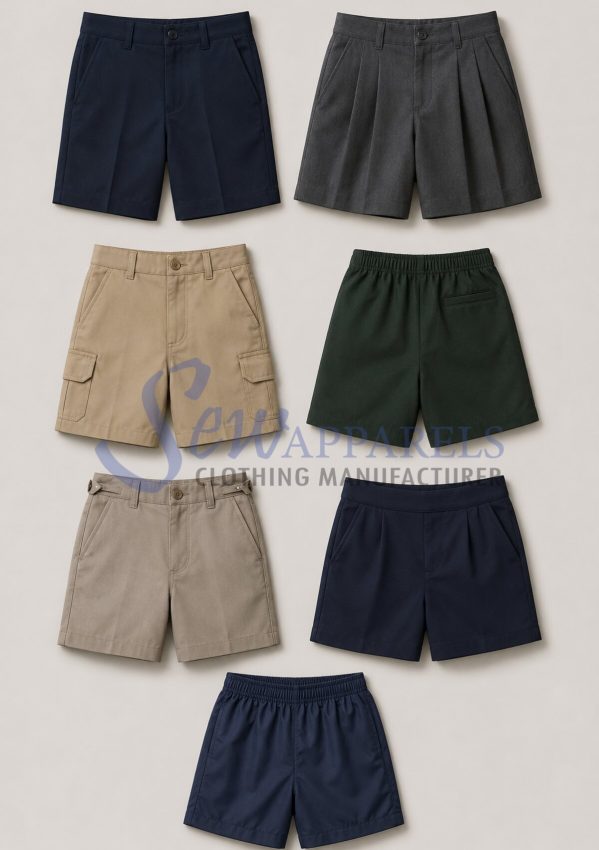
This guide presents five critical checks and a seasonal preorder model for buyers planning school-uniform shorts. The model separates confirmed demand, evidence-based assumptions, usable inventory and supplier conditions. Its purpose is a clear purchasing decision, without invented enrollment figures, conversion rates, minimum quantities or delivery promises.
Use school shorts seasonal preorder quantities as a controlled planning exercise. Keep each school, garment specification and selling period identifiable. A combined headline quantity may look convenient while concealing shortages in one size and excess stock in another.
1. Distinguish eligible pupils from confirmed purchasers
Define the eligible population first: the school, year groups, uniform rules and period covered. Ask the school or buyer to supply the relevant count and its date. Do not treat a general school population as eligible demand when only certain classes wear the proposed shorts or the uniform policy permits alternatives.
Record the school shorts confirmed purchaser count separately. A confirmed request needs an identifiable order reference, garment specification, requested size, quantity and status. Use aggregate planning information rather than placing pupils’ personal details in a supplier enquiry. Decide how cancellations and unpaid reservations affect the count before calculating demand.
The school shorts eligible pupils versus purchasers distinction also prevents double counting. A pupil may appear in enrollment data and in a preorder list. The preorder is evidence about part of the population, not an additional population to add to the same demand estimate.
For school shorts seasonal preorder quantities, document whether a purchasing rate comes from actual comparable sales, a buyer survey or a planning assumption. An assumption can support a scenario, but it must not be presented as a measured conversion rate. Give the input an owner and review date.
Define the unit being counted
Separate purchasers, garments and retail packs. One purchaser may request more than one pair, while a pack may contain several garments. Write the units beside every input. If purchases per participating buyer are unknown, request evidence or show an explicitly provisional scenario instead of silently assigning a quantity.
2. Compare actual sales by school and size
Review school shorts summer preorder sales history using a comparable period and garment. Separate completed sales from reservations, cancellations, returns and exchanges. Note when an item was unavailable: recorded sales during a stockout do not establish the full demand that could have existed.
A school uniform shorts preorder size ratio should reflect the intended customer population and current fit specification. Compare sales by size and school, with any changes to enrollment, uniform requirements or measurement charts recorded. A ratio from a different garment or market needs an explanation before it becomes a planning input.
Build the shorts size demand curve from observed size-level evidence, not an even split chosen for convenience. Where records are incomplete, identify the missing sizes and collect confirmed preorder sizes or fitting information. Keep uncertain allocations visible rather than allowing a spreadsheet to conceal them inside a total.
Review the school shorts historical short exchange adjustment carefully. An exchange can shift demand between sizes without adding a new final purchase. Record the original and replacement sizes, whether the returned garment is usable, and whether the transaction has already been included in completed sales.
School shorts seasonal preorder quantities should therefore use net, consistently defined records. Keep damaged or unapproved inventory out of available stock. Existing stock must match the current school colour, approved construction and size identification before it can reduce the planned purchase.
Separate evidence from explanation
A buyer may believe a warmer season or a changed timetable will increase demand. Record that explanation as a hypothesis unless actual evidence supports it. Climate descriptions alone do not provide a purchasing rate. Compare the hypothesis with confirmed school requirements and customer orders before increasing the commitment.
3. Set the order cover period and review dates
Define the school shorts order cover period with a start date, end date and intended selling occasions. An initial back-to-school launch, an entire term and a full seasonal programme are different stock commitments. Identify which customer orders must be covered by the first receipt and which may be served later.
For school shorts seasonal purchase quantities, align the selling window with supplier-confirmed material, sampling, production and transport conditions. Request dates in writing and distinguish estimates from contractual commitments. A preferred arrival date does not prove that the manufacturing or shipping route can meet it.
Record approval deadlines for the technical pack, fabric, trims, size set and packaging. Quantities may be ready while the product is not approved. Use a controlled custom school shorts manufacturing brief to connect the purchasing plan with the garment that the supplier is being asked to produce.
Keep school shorts advance order assumptions in a dated register. Include demand inputs, inventory status, school-policy changes and supplier conditions. When one assumption changes, identify the affected size quantities and commercial terms instead of replacing the total without an explanation.
School shorts seasonal preorder quantities benefit from a named review schedule. Agree who checks confirmed orders, usable inventory and remaining commitments before a release. A review is a decision point, not a promise that replenishment will be available whenever the buyer requests it.
4. Separate the initial buy from replenishment
The school shorts initial buy replenishment split should distinguish a committed purchase from a possible later order. Ask the supplier whether the later route is feasible for the same fabric, colour, trims and size range. Record its minimums, pricing basis and timing conditions independently.
Plan school shorts summer order allocation by size and destination, with confirmed customer commitments identified. Avoid spreading an extra allowance across every size automatically. Any allowance should have a stated purpose, buyer approval and evidence basis, such as documented exchange requirements or a clearly labelled demand scenario.
Usable opening stock can reduce a purchasing requirement, but allocated stock cannot serve two orders simultaneously. Separate physical stock, reserved stock and incoming stock. An expected receipt belongs in a dated availability plan; it should not be treated as available today.
With school shorts seasonal preorder quantities, compare the consequence of a larger initial commitment against the uncertainty of a later receipt. Document exposure to unsold sizes, changed requirements and unavailable replenishment. Do not describe either route as automatically cheaper or safer without the relevant quotations and demand evidence.
Preserve product identity across receipts
Record the exact garment, size, colour and packaging identity used for ordering and receiving. The GS1 GTIN Management Standard provides rules for identifying trade items and changes to packaging configurations. Where GS1 identification is used, review relevant changes with the responsible brand owner; the standard does not supply a seasonal demand forecast.
5. Compare scenarios against confirmed supplier terms
Request the school shorts supplier minimum preorder basis for the actual programme. Clarify whether conditions apply per style, fabric, colour, size or total order. A stated aggregate minimum may not mean that every proposed size allocation is acceptable.
Prepare school shorts seasonal short quantity scenarios from documented buyer inputs. Keep the confirmed-order requirement visible in every scenario, then vary only the named uncertain inputs. Explain what changes between the scenarios and what remains fixed. Do not attach probabilities that have not been validated.
A school uniform short advance buy also needs a quote scope: garment specification, quantities by size, packing arrangement, sample charges, shipping basis and exclusions. Compare equivalent offers. A lower headline price cannot resolve a mismatch in material, size coverage or delivery scope.
Before releasing school shorts seasonal preorder quantities, reconcile supplier rounding or pack multiples with the size-level requirement. Show the additional garments caused by those terms and obtain the buyer’s decision. Do not hide excess stock inside an unexplained final adjustment.
A seasonal preorder model buyers can use
Keep one identified record per school, garment and size. Keep source references alongside inputs and retain the version that supported the purchase decision. The following structure is a working method, not a forecast of any school’s purchasing behaviour.
| Required record | Planning record A | Planning record B |
|---|---|---|
| School / garment / size / source reference | ||
| Population and participation: eligible pupils, confirmed purchasers, source date and any explicitly provisional participation assumption. | ||
| Garment demand: confirmed garments by size, expected additional demand without overlap, and the defined cover period. | ||
| Availability: usable unallocated opening stock, accepted incoming receipts and their confirmed availability dates. | ||
| Purchase requirement: demand plus an approved, explained allowance, less stock available for those same requirements. | ||
| Supplier adjustment: confirmed minimums, multiples, exclusions, prices and the incremental stock created by those conditions. | ||
| Release decision: initial commitment, conditional replenishment route, approval owner and next review date. |
Maintain a shorts order assumption log explaining each adjustment. If estimated demand already includes confirmed purchasers, do not add their orders again. If it covers only the remaining eligible population, state that clearly. Where the calculated purchase requirement is negative, review the excess-stock position instead of creating a negative purchase order.
Review school shorts seasonal preorder quantities with purchasing, stock control and the school contact before supplier release. Confirm that the sums across sizes equal the approved total and that reservations are counted once. Keep a separate record of unresolved inputs that prevent a defensible commitment.
Product readiness belongs in the quantity decision
A purchasing model should not replace sample approval. Confirm the seated fit, waistband, pocket construction, grading and care evidence for the actual shorts. For products intended for the United States, the FTC care-label guidance explains the need for supported care instructions. Review the destination’s applicable requirements rather than assuming one market’s rules apply everywhere.
For private label school shorts production, send the supplier the approved product specification together with the dated size allocation and purchasing scenario. Ask for current feasibility, commercial conditions and a defined sample route. Small initial programmes still need clear evidence and controlled approval; a smaller order does not remove these steps.
Questions before approving a seasonal preorder
Can enrollment alone set the quantity?
Enrollment identifies a potential population. Confirm uniform eligibility, buyer participation and garments per purchaser before treating it as demand. Use actual orders and comparable sales wherever available, with uncertain inputs labelled.
Should all sizes receive the same allowance?
Use size-level evidence and an explained allowance purpose. An equal split can create excess in slow sizes while failing to cover confirmed requests in others.
What should accompany the supplier enquiry?
Send the garment specification, sales and preorder summary, size allocation, cover period and requested commercial scope. Use the school shorts buying guides to connect demand planning with product development. Finalize school shorts seasonal preorder quantities only after the buyer has approved the assumptions, allocation and supplier conditions.