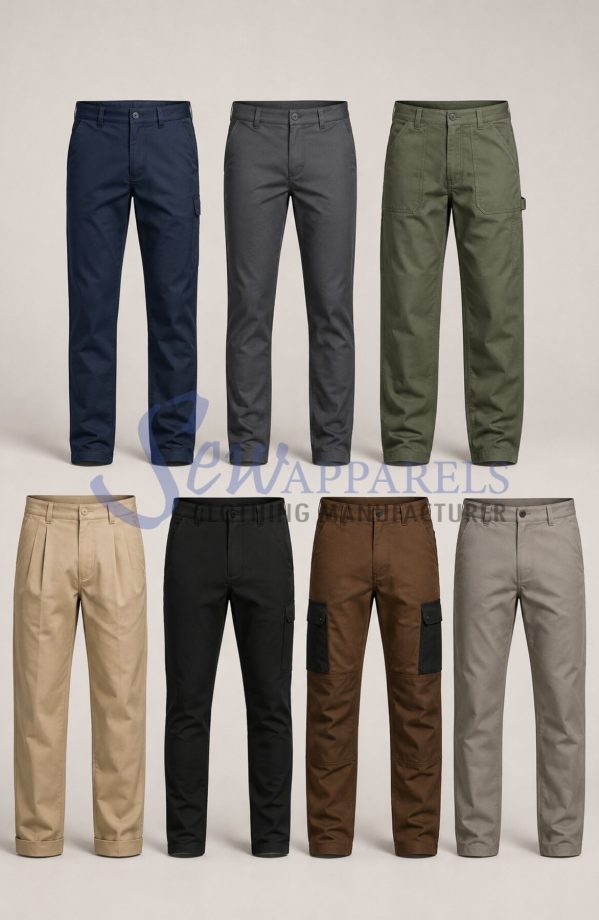
Crease and Mobility Balance: 7 Essential Checks
Compare fabric stretch, leg taper and pressed-crease performance before approving work chino trousers for a uniform program. Use the crease and mobility buying checklist to record the sample approval points.
Read the full work chino trousers crease and mobility balance article →
Pocket Bag Durability: 7 Essential Checks
Specify pocketing fabric, bag anchoring and seam finishes that protect work chino trouser pockets under realistic loads. Use the pocket bag durability buying checklist to document material, anchor and seam approvals.
Read the full work chino trousers pocket bag durability article →
Work Chino Trousers Finished Inseam Order Options: Hems, Quantities and Alteration
Compare finished and alteration-ready supply using an agreed hem sample, length quantity matrix and clear quotation scope. Record who completes local fitting, finishing and final checks before garments are issued.
Read the finished inseam order guide
Pleated Versus Flat Front Work Chinos: Fit, Appearance and Range Choices
Compare identified fit samples in standing and seated positions, record wearer feedback and decide whether each front style adds a useful range option. Keep the approved construction, quotation and garment identity aligned.
Read the pleated versus flat front guide
Work Chino Trouser Hangtag Attachment: Location, Removal and Packing Approval
Approve the actual tag, matched fastener and attachment location on the finished garment. Check the area after removal, information access in the pack and the current instruction before releasing the tagged product.
Read the hangtag attachment guide
Work Chino Trousers Seat Shine Evaluation: Baseline, Pressing and Wear Evidence
Separate the starting surface condition from pressing and wear history. Compare actual samples under recorded viewing conditions, document ordinary contact and keep appearance evidence within its assessed scope.
Read the seat shine evaluation guide
Custom Work Chino Trousers
For fabric, fit, sampling, order planning and production questions, review the original custom work chino trousers manufacturer page alongside these technical guides.
Explore work chino trousers manufacturing
Work Chino Trousers Buying Guides: A Clear Development Brief
Work chino trousers must look polished while remaining comfortable through walking, sitting, driving and repeated daily movement. Fabric stretch affects recovery, while leg shape and pressed crease decisions affect both mobility and uniform presentation. This hub connects each decision to a measurable sample check. Define the wearer group, daily activities, climate and care route before choosing a stretch level. A trouser intended for reception staff may need a sharper press than one used for warehouse movement, even when both share a uniform colour. Compare the same base size and finished wash condition rather than judging two unrelated samples. Record the fabric lot and pattern version with every fitting comment so the next sample addresses a specific cause.
Use the guide before sampling, when comparing a supplier sample or when preparing a repeat order. The product page remains the place for manufacturer, supplier, MOQ and production questions. Keep the manufacturing brief and the learning route distinct: the articles explain individual decisions, while the buying guides turn those decisions into approval steps. Where a sample changes fabric or seam construction, repeat the fit and wear review before signing off. Use a sealed reference garment to compare later production lots and keep any variation in waist, leg shape or crease position traceable.
How to use this guide during sampling
Start with the movement brief, then review the actual fabric in the approved block. Record stretch direction, extension and recovery, and check rise, seat, thigh, knee, inseam and hem together. Review the crease while standing, walking, sitting and after the planned care route. Keep every sample comment tied to a dated fabric and pattern reference. Use the crease and mobility article above to prepare the trial.
Compare the trouser while standing, seated and climbing stairs; photograph crease alignment and note pulling at the seat or knee. Repeat the observation after the planned washing and pressing route. For finished inseam orders, record each length quantity, the approved hem construction and who completes any local alteration. A body measurement and a finished garment length are different records; neither should silently replace the other.
For a startup brand or smaller first run, approve one controlled fabric and colour before adding multiple variables. This keeps development focused while protecting the intended silhouette and repeatable uniform appearance. Use the pocket bag durability article above to review pocketing fabric, anchoring and seams under realistic carried loads. Use an actual phone, keys or small tool that matches the wearer brief, then inspect the bag opening, corners and attachment after use. Store the pocket-bag pattern and reinforcement notes with the sample record.
Compare pleated and flat front samples in the same wearer trial before adding both to a range. Assess the selected hangtag after attachment, packing and removal, and distinguish initial seat appearance from later pressing or wear history. These decisions need their own dated evidence even when they share one garment.
Buyer checklist before bulk approval
- Confirm stretch method, direction and recovery.
- Check fabric GSM, composition, finish and wash route.
- Review rise, seat, thigh, knee and hem grading.
- Check movement through sitting, stairs and vehicle entry.
- Approve crease alignment and post-wash appearance.
- Record tolerance, test method and sealed reference sample.
Final check: approve work chino trousers only when fabric, mobility, leg balance and crease appearance meet the same written specification. Keep a dated approval sheet with fabric ID, waist and leg measurements, pocket-load observations, crease photos, wash route, tolerances and the person approving each checkpoint. If the factory changes a pocketing fabric, seam method, press setting or stretch level, log the change against the sealed sample and rerun the relevant check. That record reduces ambiguity in a repeat order and gives the buyer a clear basis for comparison.
Technical references and approval evidence
The public scope of ISO 8559-1 body measurement guidance describes anthropometric definitions for body measurement. Use it to clarify the wearer measurement language, while recording finished trouser dimensions and tolerances separately in the approved specification. It does not choose the buyer’s inseam quantities, hem style or alteration arrangement. Link each fit observation to the identified wearer trial, sample size and garment condition. Agree the measurement points before comparing supplier comments, and check whether a result was recorded before or after care. A consistent record helps the buyer interpret changes without assuming one stated length fits every wearer.
The Coats trousers sewing application guidance relates thread and seam choices to garment construction and fabric. Treat it as a technical discussion aid when reviewing an identified hem, pocket or seam with the supplier. It does not verify Sew Apparels’ thread brands, machine settings or a particular garment’s durability. Ask for the proposed construction and assess the actual sample under the intended use and care route. Keep attachment, surface appearance and fit findings within the conditions assessed; an acceptable seam observation cannot establish resistance to seat shine, or approve an untested hangtag fastener.
Low MOQ Work Chino Trousers Manufacturer: Plan Your First Order
A low MOQ work chino trousers manufacturer discussion should begin with the style’s real production variables: fabric booking, colour count, size range, pocketing material, trims and required sampling. A smaller first run is easier to control when the brand approves one base fabric, one fit block and one pocket construction before adding variants. Ask the manufacturer to confirm the achievable minimum for the chosen specification, rather than assuming a general number applies to every fabric or finish. Reserve enough time for a revised sample if movement, crease recovery or pocket-bag strength fails the first review.
Support for Startup Clothing Brands
Use the work chino trousers buying guides to turn a startup brand’s first uniform range into a clear sample brief. Bring a reference garment or sketch, target customer, intended work setting, estimated order range and branding requirements. Prioritise the tests that directly affect wear and appearance: mobility, crease retention, pocket load, measurements and post-wash condition. A written comment sheet helps a startup compare changes between samples and decide when the design is stable enough for a production quotation. We do not treat a first sample as approval until the agreed specification and sealed garment match.
Turn work chino trousers decisions into a product brief
Use these work chino trousers buying guides to prepare one coordinated product brief. Include the fabric and pattern references, wearer trial, pocket bag construction, crease review, finished inseam quantities and alteration responsibility. Add the agreed front style, hangtag attachment and removal check, seat appearance baseline, care route and dated approval comments. Visit the original manufacturer page to discuss the actual sampling, minimum quantities and quotation requirements with Sew Apparels. Reopen the relevant checks if fabric, construction, pressing or packing changes; a previous sample approval should remain tied to the garment and conditions it assessed.
Explore work chino trousers manufacturing