
Pleated versus flat front work chinos is a product development decision about the complete trouser, not a shortcut for choosing a better fit. The front style changes how the garment looks and how its pattern must be considered. A useful uniform comparison also checks the waistband, rise, hip and thigh proportions, fabric and intended working movements.
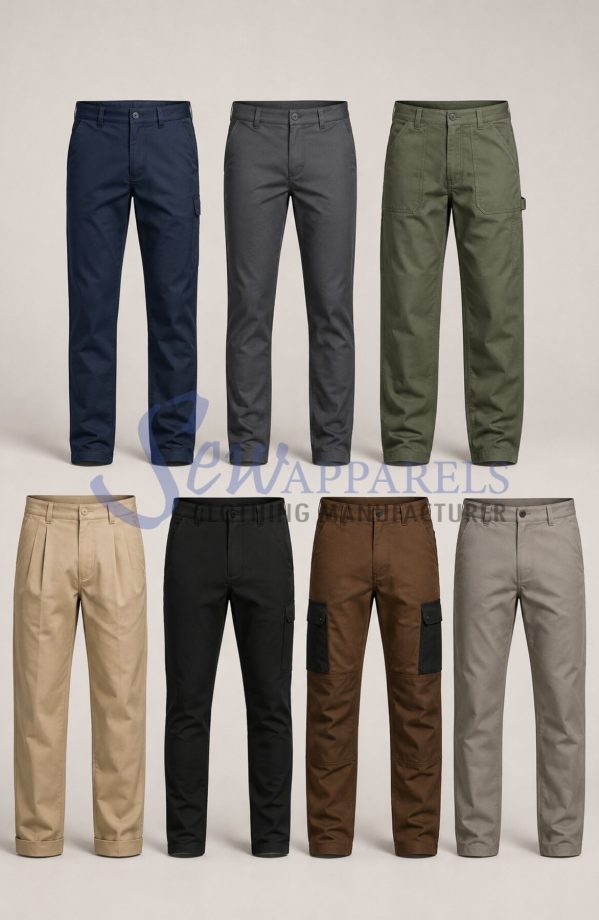
Buyers should avoid assuming that every pleated trouser is roomy or that every flat-front trouser is slim. Both styles need an appropriate fit sample. This guide explains six checks for comparing front styles, recording wearer feedback and deciding whether a second option adds practical value to a uniform range.
Use our work chino trousers manufacturing page to discuss the product brief. The examples below are development scenarios, not claims that a particular construction has been tested by Sew Apparels or that every front style is available under every order arrangement.
1. Define pleated versus flat front work chinos before sampling
A pleat is a controlled fold in the front construction. A flat-front style has no such pleats, but that description alone does not tell the buyer its complete shape or ease. Record the intended front style alongside the garment fit and relevant sample measurements.
For a work chino trouser front style brief, specify the desired appearance rather than relying on a broad label such as “formal” or “modern.” If a pleated style is being developed, describe the pleat arrangement and show the approved reference. If a flat-front style is required, identify the intended silhouette and sample rather than assuming one universal cut.
The Proper Cloth overview of trouser front options explains its no-pleat, single-pleat and double-pleat designs. It also makes clear that a flat front need not mean a slim fit. This is useful manufacturer guidance on its own products, not a universal uniform specification or a rule for every body shape.
In pleated versus flat front work chinos, keep the front style distinct from a pressed crease down the leg. A buyer may want a particular crease presentation, but that is another specification to review. The finished sample should make both decisions clear so that a pleat discussion does not unintentionally change the agreed leg presentation.
2. Compare complete fit rather than the front label
A pleated versus flat front work chinos trial should use samples identified by their actual pattern and construction. The same size label on two garments does not establish that their waist, rise, hip and thigh proportions are equivalent. Check the relevant dimensions before drawing a conclusion about the front style.
A pleated work chino comparison can assess whether the pleats lie as intended in the standing position and how the complete garment feels during normal movements. Record the observation without assuming that a visible opening or tension line has only one cause. The surrounding fit and fabric need consideration too.
For flat front uniform chinos, review the same whole-garment questions. Check the waistband position, front appearance, seat and leg movement. A smooth front while standing is useful, but it does not establish that the garment works well when the wearer sits or performs the relevant ordinary task.
Use a flat front work trouser sample with an identified material and fit version. If one sample has a different rise or substantially different thigh shape, explain that difference in the comparison. Otherwise, the team may attribute an effect to pleats that actually comes from another part of the design.
The Proper Cloth guidance on creating a pleated trouser size describes separate pattern and size considerations in its own ordering system. Its product-specific adjustments should not be copied as universal workwear allowances. Agree your own garment measurement basis and verify the resulting sample instead.
3. Record standing, seated and working appearance
For pleated versus flat front work chinos, a work chinos front silhouette review should include more than a single posed photograph. Record the standing appearance with the waistband positioned as intended. Then observe ordinary sitting and the safe movements relevant to the proposed uniform use.
Work chinos seated front appearance can reveal a different presentation from the standing view. Note how the front fabric and pleats behave, whether the wearer reports restriction and whether the waistband remains comfortable. Describe those observations separately; a visual preference and a comfort concern are different findings.
Work chino front appearance should also be considered with the intended uniform top. A tucked shirt, untucked top or longer jacket exposes different parts of the trouser. Compare samples in the planned outfit so the buyer is judging the presentation that will actually be used.
Use consistent sample conditions where possible. Keep the same footwear, comparable preparation and a clear record of the wearer and sample version within the buyer’s appropriate internal process. If samples have different care histories, identify that difference rather than presenting the images as a controlled style comparison.
A fictional example makes the distinction clear. Sample A is a pleated trouser with a higher rise and Sample B is a lower-rise flat-front trouser. A wearer prefers A when seated. That feedback supports a preference for the complete sample, but it does not prove that pleats alone caused the difference. Review the fit variables before choosing a revision.
4. Gather useful wearer feedback without stereotypes
A pleated versus flat front work chinos decision should use actual wearer feedback and the intended uniform requirements. Avoid assigning a front style automatically by age, body shape or job title. A suitable sample and a clear discussion provide a stronger basis than assumptions about who should wear pleats.
Pleated chino wearer preference can be recorded as a specific comment: preferred front appearance, perceived room during sitting or a concern about maintenance. Ask the wearer to explain the relevant observation. Keep subjective preference distinct from a measurable garment issue that requires development work.
A uniform chino pleat decision may involve a representative wearer review rather than one person’s opinion. Agree which sizes and relevant use situations need sample coverage. Do not claim that a small trial represents every future wearer or that a particular front style guarantees comfort.
For chino uniform silhouette options, describe what the buyer is trying to offer. A single consistent look may be suitable for one programme, while an alternative approved shape may be useful for another. The benefit should be stated in practical terms and supported by the sample review.
Keep the feedback record respectful and limited to information needed for the uniform decision. The product file can identify sample versions and summarized findings without unnecessary personal detail. This makes the findings easier to use when development moves to another reviewer or a later order.
5. Decide whether both styles justify separate range entries
When considering pleated versus flat front work chinos, adding another style also adds an assortment decision. It can create a useful alternative, but it may require separate sample identity, quantities and packing instructions. Discuss these practical inputs before calling a second front style a simple interchangeable option.
A pleated chino uniform range should state which fit and front construction belong to that entry. If a flat-front alternative is included, make its identity equally clear. Shared fabric or colour does not mean the two garment specifications are identical.
A work trouser style assortment should have a reason for each version. The buyer might require two approved silhouettes based on a wearer trial, or choose one version to simplify issue. Neither approach is automatically better. Consider the actual workforce, expected quantities and the supplier’s confirmed development and ordering scope.
Review work chino style duplication before adding another entry. Two differently named styles that have no meaningful specification difference can confuse allocation and replacement. Conversely, two distinct constructions should not share an ambiguous identifier that makes it difficult to know which garment was approved.
A pleat versus flat front sample comparison should therefore end with an assortment decision as well as a fit comment. Record whether one style is selected, both are retained, or another development trial is needed. Keep unresolved issues visible rather than releasing both simply because the sample photographs look acceptable.
6. Close the brief, quotation scope and approval record
A pleated versus flat front work chinos approval should name the selected garment version. Include the front style, relevant fit specification, material and accepted sample. This connects the visual decision to the product that will be quoted and supplied.
A uniform chino range brief can summarize the accepted silhouette choices and their intended allocation. Ask the supplier to confirm the relevant quantity and development implications. Do not invent a minimum order, price difference or lead time based only on the presence or absence of pleats.
For custom work chino trousers manufacturing, provide clear sample references and explain whether the enquiry covers one construction or alternative front styles. A quotation comparison is more useful when both parties understand which sample work, material and finishing requirements are included.
For private label work chino trousers production, keep style identifiers, labels and packing instructions aligned with the approval. If two front styles remain in the range, make it possible to distinguish them during receipt and issue. A replacement request should refer to the actual accepted garment rather than a generic “chino trouser.”
Review the decision if the material or relevant fit construction changes. A previous front appearance approval may not represent the revised sample. Confirm the changed version instead of assuming that the same front-style name proves an unchanged result.
A concise sample approval checklist
Before closing pleated versus flat front work chinos development, verify the following points against the real samples and the buyer’s specification.
- The front construction and intended silhouette are clearly identified.
- The samples’ relevant fit dimensions and material versions are recorded.
- Standing and seated appearance have been reviewed separately.
- Wearer preference is distinguished from fit or construction findings.
- Each retained style has a practical range purpose and clear identity.
- The quotation, allocation and approval file describe the same selected garment.
These checks help make pleated versus flat front work chinos a traceable uniform decision. Connect the result with the garment’s pocket, length and care requirements in our work chino trousers buying guides. The useful outcome is a complete approved sample and a clear supply brief, with a documented next step wherever the evidence still needs improvement.
Record the selected front style alongside the work chino trousers finished inseam order options. Keep the approved silhouette, length allocation and finishing reference consistent. Choosing a preferred front appearance does not confirm the quantities or final hem arrangement for the complete uniform order.