
Garment washed kids shorts finish approval turns a preferred sample appearance into a usable production decision. A soft, faded or irregular finish can look attractive while leaving buyers unsure which differences belong to the design and which indicate a process problem. Approval should identify the garment version, finishing process, intended variation and reference samples together. A photograph labelled “washed look” cannot carry that whole decision.
This guide explains five checks for a garment washed kids short sample and provides a finish approval board for development teams. It addresses appearance and process control rather than replacing fit approval, product safety review or care testing. Use the board to describe what you want, record what you observed and assign the next action before treating the sample as a production reference.
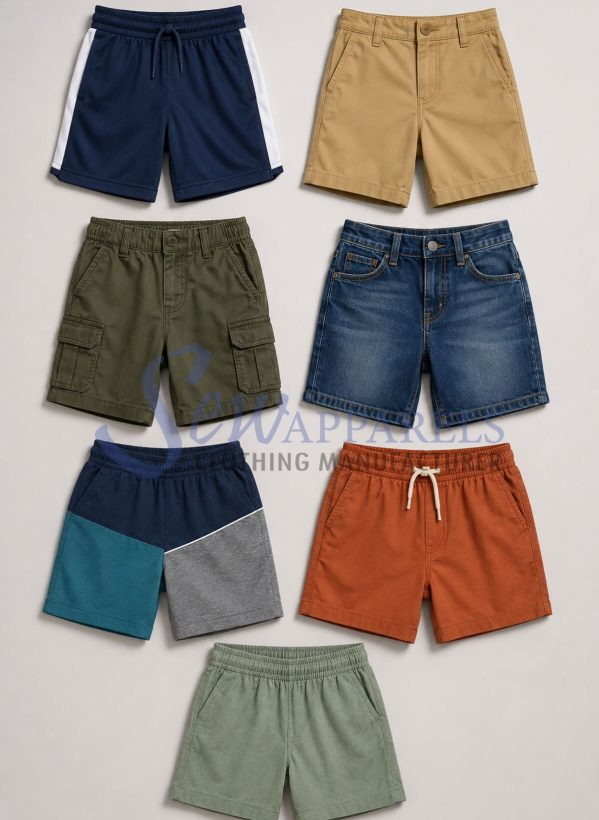
1. Garment Washed Kids Shorts Finish Approval: Define the Reference
Start garment washed kids shorts finish approval with an identified reference garment. Record its style code, size, fabric specification, colour designation and sample revision. State whether it represents the target appearance, a boundary of acceptable variation or an example that must be rejected. Keep those roles distinct: a rejected sample should never become the factory’s visual target because somebody forwarded its photograph without the decision notes.
A kids shorts washed finish reference needs more detail than a general description such as vintage, casual or worn. Describe the intended contrast at seams, the relationship between panels and the character of the surface. If the garment has a deliberately uneven effect, indicate where that character is welcome and where it would interfere with the design. Written descriptions and photographs support the physical reference; they do not eliminate differences caused by lighting, camera processing or screen settings.
Review children shorts garment wash appearance under an agreed viewing arrangement. Keep the comparison conditions consistent and record them with the assessment. A garment that looks acceptable in one photograph may appear noticeably different beside the retained reference. Ask reviewers to assess the actual garment whenever the decision depends on a subtle colour or surface distinction.
Separate intended character from unintended variation
Define kids shorts intentional shade variation through examples, not an unlimited permission to vary. The buyer might accept controlled contrast at seams while rejecting an isolated mark across the front panel. Another design may need a more even appearance. Both decisions are possible, but neither can be inferred from the word washed. Identify the proposed boundary and obtain the responsible buyer’s approval.
2. Identify the actual process and garment version
For garment washed kids shorts finish approval, connect every sample to the process that produced it. Record the finishing route supplied by the development team, the relevant sample batch reference and any subsequent change. Do not invent a recipe from the appearance. Similar-looking garments can result from different combinations of material, colouration, construction and finishing.
Kids short finish process identity should remain traceable even when the commercial description is simple. Ask the responsible team which process information it can document and which changes require another sample. An approval record can reference a controlled internal process document without distributing confidential operating details to everyone involved in the order.
Keep kids shorts wash effect approval tied to the current fabric, thread, trim and construction version. Changing a pocket bag, waistband component or sewing thread may affect the finished appearance. A previous approval is useful history, but its relevance to the revised garment needs an explicit decision. Record the change instead of copying the old approved status automatically.
When discussing kids short garment dye wash character, establish whether garment dyeing is actually part of the proposed route. Garment washing and garment dyeing are not interchangeable labels. Use the terminology confirmed for the sample and correct the development brief if a marketing description implies a process that was not used.
3. Review representative garments across the proposed range
One attractive sample is a starting point for garment washed kids shorts finish approval, not proof that every proposed size and colour will look identical. Agree which garments are needed for development review. Document the scope of that selection, including the sizes, colourways and sample batches it covers. The selection should answer the programme’s actual questions rather than follow an invented universal sample quantity.
A kids shorts appearance range standard can identify target and boundary references. State whether a particular garment illustrates an acceptable difference or a defect. Keep the references labelled so the production and inspection teams can interpret the same decision. A range of approved character should still have a defined limit.
Compare children short finish consistency across garments without confusing it with perfect uniformity. A deliberately varied design may allow differences that an even-colour design would reject. Look for recurring patterns, isolated abnormalities and relationships between garment areas. Record observations in plain language: for example, whether a seam effect repeats as intended or an irregular patch appears in a position the design did not specify.
Review the complete garment as well as individual panels. A panel may look acceptable on its own while creating an unwanted contrast beside another component. Keep fit and finished measurements in their own approval records, but refer to them when finishing changes the garment’s practical presentation. The finish board should show who owns each unresolved decision.
4. Inspect seams, trims and care evidence separately
Garment washed kids shorts finish approval should include kids short washed seam inspection. Look at the areas where the finish interacts with stitching, hems, pockets and waistband construction. Record the observation and its location. Avoid diagnosing a technical cause solely from a photograph; ask the responsible development team to confirm the cause and proposed correction.
Children shorts trim finish interaction deserves its own review. Compare the appearance and function of buttons, fastening components, labels and other proposed trims after the actual sample process. An attractive body fabric does not establish that every component is suitable. Any safety or performance concern needs the relevant specialist assessment and evidence rather than a visual approval alone.
Document kids shorts wash effect defects separately from the design’s intended character. The record should identify the affected garment, area and revision, explain why it conflicts with the approved reference and assign a response. Replacing a defect description with “normal wash variation” removes the information needed to resolve it.
Use evidence for the question it actually answers
ISO 105-C06 describes colour fastness testing for laundering under specified conditions. Its scope concerns resistance of textile colour to laundering; it does not prescribe your garment finishing recipe or establish the acceptable visual variation for this order. Agree the relevant method and acceptance criteria with the qualified testing team. Keep that evidence alongside the appearance approval without treating the two as interchangeable.
For covered garments sold in the United States, the FTC’s care labelling guidance explains the need for reliable evidence supporting instructions for the complete garment. Component results need to support that whole-garment decision. An appearance-approved finish is therefore not, by itself, evidence for a care claim. Assign care instruction review to the appropriate responsible team for the destination market.
5. Retain the reference and control revisions
Complete garment washed kids shorts finish approval by identifying the kids shorts retained finish sample and the decision it represents. Record where it is kept, who can access it and which programme revision it covers. If more than one team needs a reference, confirm how their copies relate to the approved original rather than assuming independently selected samples are equivalent.
A kids short finish acceptance board should distinguish approved, conditionally approved and awaiting revision. Conditional approval needs the outstanding condition and the person authorised to close it. The record should make it difficult to mistake a development discussion for permission to proceed with a changed finish.
For a garment wash kids shorts revision, describe what changed, request the necessary evidence and retain the superseded reference as history. Mark it clearly so it is not used accidentally for the current order. A revision may require another visual comparison, a component review, a care evidence review or several actions together. Document that decision instead of treating every change as either harmless or an automatic full restart.
Finish approval board: a practical buyer decision table
Use this board during garment washed kids shorts finish approval to connect observations with actions. Adapt the fields to the actual programme. The examples describe information to capture; they are not preset production tolerances, testing requirements or guarantees of available finishing options.
| Approval item | Information to record | Decision and owner |
|---|---|---|
| Process identity | Sample revision, garment specification and controlled finishing route reference | Development team confirms which process the sample represents |
| Intended variation | Target appearance, permitted character and labelled boundary examples | Buyer approves the visual range or requests clarification |
| Unacceptable effects | Garment identity, affected area and reason the observation conflicts with the brief | Responsible team investigates and proposes correction |
| Reference garments | Retained sample identity, storage location and programme coverage | Named custodian confirms the current reference is accessible |
| Evidence and release | Relevant care or performance evidence and remaining conditions | Authorised decision owner records the final status |
Garment Washed Kids Shorts Finish Approval: Buyer Questions
Can a photograph be the only finish reference?
A photograph is useful for communication, but subtle finish decisions benefit from an identified physical reference. Agree how images will be used, record their limitations and keep the approval role of the retained garment clear. Do not replace a sample identity with an unlabelled image in a message thread.
Does an approved washed appearance prove wash durability?
No. Appearance approval records the agreed visual result. Durability and colour fastness require the relevant assessment and evidence under defined conditions. Keep those decisions connected in the programme record while preserving their separate purposes.
Should every garment have exactly the same wash character?
The answer depends on the approved design. Specify the accepted range and rejected effects rather than promising perfect uniformity or accepting unrestricted variation. Compare actual examples when the distinction is difficult to describe.
Turn the finish decision into a manufacturing brief
For custom kids shorts manufacturing, share the garment specification, proposed finishing description, labelled reference and unresolved decisions. Review the kids shorts manufacturing page for the commercial discussion and confirm the requested configuration directly. This guide does not promise a particular wash recipe, minimum order, price or currently available finishing route.
For private label kids shorts production, keep garment washed kids shorts finish approval linked to the exact programme revision before requesting a quotation or sample update. Use the Kids Shorts Buying Guides to coordinate related construction decisions. A clear finish board gives the development team a specific question to answer and gives the buyer a reference that can be used when the next sample arrives.
For custom kids shorts manufacturing, supply the finishing reference, destination, size ratio and quantities with the quotation brief. Identify which process and appearance decisions remain provisional.
For private label kids shorts production, retain the selected finish and garment revision with the approved sample record.
Use the playwear pocket design review for pocket construction decisions. A washed-finish approval does not establish the pocket opening, attachment or inside finish of a revised sample.