
Kids shorts integrated liner specification defines how an inner layer works with the outer garment, rather than treating the lining as an invisible extra. Buyers need to explain the intended use, identify the materials and describe the attachment arrangement before a sample can answer the right questions. Without that brief, two samples can both be described as lined shorts while behaving very differently.
Clear kids shorts integrated liner specification also identifies who owns the final release decision.
This guide provides five development checks and an outer/liner interaction map. It covers an optional construction scenario subject to supplier feasibility, not a promise that a particular liner is currently offered. A kids shorts built in liner brief should help the responsible teams review the complete garment without turning an ordinary pair of shorts into swimwear, protective equipment or a performance product through unsupported wording.
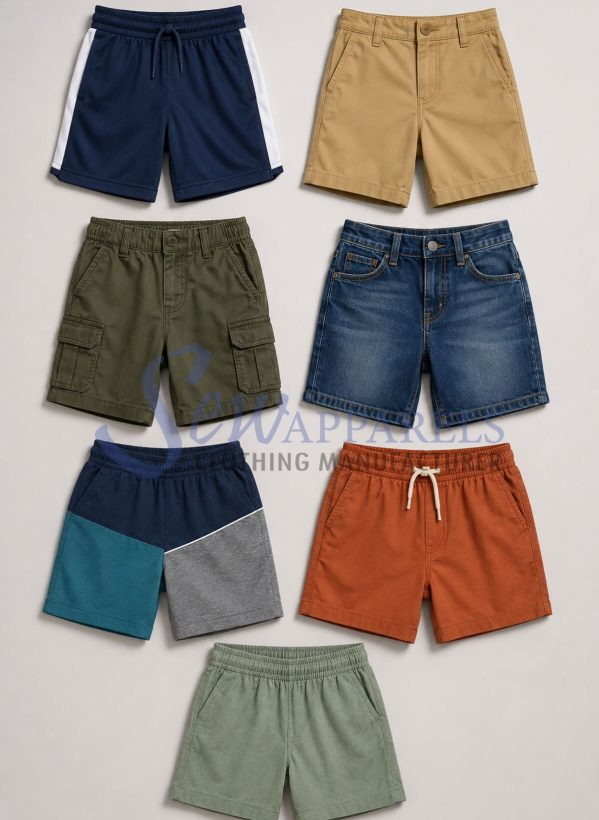
1. Kids Shorts Integrated Liner Specification: Define the Purpose
Begin kids shorts integrated liner specification with a clear description of the garment and its use. Identify the proposed wearer range, destination market, outer silhouette and purpose of the inner layer. The liner might be considered for coverage, interior presentation or another defined development objective. State that objective in the buyer brief and ask the supplier to review its feasibility.
Describe children shorts inner liner construction in practical terms. Identify whether the inner layer is continuous or limited to particular areas, where its edges finish and how it relates to the outer waistband and leg opening. Avoid vague instructions such as add a comfortable liner: they leave the material, shape, attachment and evaluation method undecided.
A kids shorts integrated brief sample needs an identified configuration. The term brief can describe a proposed inner shape, but it should not imply that every lined short needs that form. Record the selected shape with the technical drawing and explain which questions the sample is intended to answer. Keep alternative configurations labelled as alternatives until the buyer chooses one.
Keep intended use separate from unsupported claims
Do not assume an integrated liner makes the garment suitable for swimming or provides protection during sport. Such descriptions need the appropriate product brief and evidence. A construction decision can be discussed without promising medical benefits, universal comfort or safety outcomes. Record the actual evaluation scope and route specialised claims to the qualified responsible team.
2. Specify materials and attachment points together
Kids shorts integrated liner specification needs an outer material reference and an inner material reference. For each, record the current specification or approved sample identity. Identify any relevant supplier description that remains to be verified. The practical question is how the proposed combination behaves in the assembled garment, not which fabric name sounds most persuasive.
For children shorts liner material, ask the development team to identify the proposed composition, construction and applicable material reference. Record the evidence provided and the gaps still open. A material substitution should be visible in the revision history, even when its commercial description appears similar to the first option.
Map kids short lining attachment on the technical drawing. Mark the joining areas, any free edges and the relationship to the outer seams. Identify the intended sewing arrangement and request clarification where the sample differs. Do not rely on the outer garment photograph to explain an attachment hidden inside the waist or another seam.
Keep children shorts liner specification connected to construction details. For example, a change to the outer waistband may alter where the liner is secured or how much internal bulk is present. That does not mean the change is necessarily unsuitable; it means the revised combination needs a documented review. The drawing, material references and sample should describe the same version.
3. Compare outer and liner movement on actual samples
Use kids shorts integrated liner specification to define the observations needed from a sample. Review the outer and inner layers together under the agreed development conditions. Record whether the layers remain in their intended positions, pull against each other or bunch at a particular attachment. Describe the observation without assuming its cause before the technical team investigates.
A kids shorts outer liner movement review should identify the garment size, sample revision and activity or handling used for the check. The team needs that context to interpret a comment such as the inner layer pulls at the side. A short video or marked photograph can help communicate an observation, but the written record should still state what was seen and where.
Plan the children short liner size set around the questions raised by the proposed range. Agree which sizes need review and why. Do not invent a fixed sample count for every programme. If the relationship between the layers changes with size, record that finding and assign the relevant pattern or construction review before extending approval to the entire range.
Keep dimensional checks and movement observations connected but separate. A layer can meet its recorded dimensions and still behave differently when attached to the outer garment. Likewise, a movement comment does not automatically identify a measurement error. The interaction map should preserve both kinds of information so the development team can choose the appropriate next action.
Turn feedback into a location-specific comment
Instead of writing liner uncomfortable, identify the garment area, sample state and observed interaction. For kids short liner seam contact, record where a seam or edge meets the inside of the garment and what the reviewer observed. Use an agreed review process appropriate to the programme. Do not convert informal feedback into a medical conclusion or a guarantee of comfort for every wearer.
4. Check interior bulk and care interaction
Kids shorts integrated liner specification should cover the assembled interior, including joins that are easy to overlook when the sample is displayed from the outside. Open the garment and inspect the proposed attachment areas. Record whether the liner, pocket components, waistband or other parts crowd a particular location. Ask the technical team to evaluate any concern against the intended construction.
For kids shorts interior bulk review, identify the exact area and the layers involved. A general request to make everything thinner may create new uncertainty about materials or seam construction. A marked drawing helps the supplier respond with a specific proposal. Any revised proposal should be assessed as a change to the garment rather than silently replacing the approved detail.
Kids short liner care interaction belongs to the whole-garment review. Discuss the proposed care route with the responsible team and record the sample conditions used for assessment. Compare the relevant observations before and after that procedure: whether the layers retain their intended relationship, whether appearance changes and whether attachment areas need attention. Avoid setting universal test cycles or limits without the programme’s agreed requirements.
The FTC’s care labelling guidance explains that care instructions for covered US garments need reliable evidence supporting the complete garment. Component results must support that assembled-product decision. For this development scenario, a satisfactory outer fabric result alone therefore does not settle the care instruction for the outer-and-liner combination. The responsible team should review the relevant evidence before approving the label.
5. Approve the configuration and control changes
Close kids shorts integrated liner specification by identifying the exact kids shorts lined configuration that has been reviewed. Record the outer and liner references, construction drawing revision, sample identity and outstanding conditions. Distinguish a development preference from final approval. A favourable comment on one detail should not erase unresolved questions elsewhere in the garment.
Kids shorts lining sample approval should state the scope of the decision. Identify which sizes or configurations were reviewed and which still need action. Keep the retained reference accessible to the teams that use it. If a later sample differs, compare it with the current approved version rather than relying on memory of the first development meeting.
Track kids shorts liner technical revision whenever the material, attachment, pattern or another relevant feature changes. Record the reason, proposed effect and review owner. Keep superseded drawings labelled as history. A supplier should be able to determine which version applies without choosing between conflicting files attached to different messages.
The CPSC’s material change testing guidance explains that changes to design, manufacturing or component sources can affect compliance with applicable US children’s product requirements. Where that framework applies, the responsible firm must assess the change and relevant testing and certification obligations. A sample approval or similar appearance is not a substitute for that review.
Keep kids short inner layer evidence with the configuration it supports. This may include the relevant material information, sample observations and qualified review records. Do not describe the file as complete merely because it contains documents: check whether those documents actually relate to the current garment and answer the questions raised by the revision.
Outer/liner interaction map
This map supports kids shorts integrated liner specification by linking the construction question to the evidence and decision. Adapt the entries to the actual product. The table is a development tool, not a preset test protocol or a claim that every optional configuration is feasible.
| Interaction | Record for the current sample | Decision or next action |
|---|---|---|
| Attachment arrangement | Marked drawing, joining locations, free edges and sample revision | Confirm the arrangement or request a clarified construction proposal |
| Material pairing | Outer and liner references, proposed specifications and unresolved evidence | Approve the pairing for the stated scope or identify the remaining review |
| Movement observation | Garment size, agreed review conditions, location and observed interaction | Assign a pattern, material or construction investigation |
| Care response | Procedure used, complete-garment observations and applicable evidence | Refer the care instruction decision to the responsible team |
| Technical revision | Change description, current files, reference sample and decision owner | Confirm the release status and any conditions still open |
Kids Shorts Integrated Liner Specification: Buyer Questions
Can the liner be approved separately from the outer garment?
A separate material or component review can support development. Final configuration approval also needs the assembled relationship: attachment, interior arrangement, movement and relevant care evidence. Record what each approval covers so a component decision is not mistaken for complete-garment release.
Does adding an inner layer change the product category?
The inner layer alone does not establish a new intended use or support a performance claim. Describe the actual product and obtain the appropriate review if the programme introduces specialised use or claims. Keep the commercial description consistent with the evidence.
What should a buyer send for the next sample?
Send the current outer and liner references, marked attachment drawing, size range questions and location-specific observations. Identify the decision needed from the new sample and the person who will close it. A clear revision brief is more useful than an unexplained instruction to improve the lining.
Prepare a product-specific manufacturing discussion
For custom kids shorts manufacturing, review the kids shorts manufacturing page and share the proposed outer/liner brief. Ask the team to confirm feasibility, evidence needs and quotation inputs. This article does not set an order minimum, price, production schedule or promise that a particular liner construction is available.
For private label kids shorts production, use the Kids Shorts Buying Guides to coordinate related development decisions. Keep kids shorts integrated liner specification connected to the product brief so the sample, technical files and approval status describe the same garment. That gives each responsible team a clear question to resolve before the configuration moves forward.
For custom kids shorts manufacturing, submit materials, attachment drawing, market and quantities.
For private label kids shorts production, retain the selected inner-layer configuration and unresolved conditions with the sample version.
Use the adjustable waist construction review for waist details. Record how a waistband revision affects the liner joins.