
Kids polo spare button sourcing control connects each replacement component with the button and garment version originally approved. A spare that looks similar may still have a different material, finish or source. Buyers should be able to identify the proposed part, understand what changed and find the approval record before it is released for the intended use.
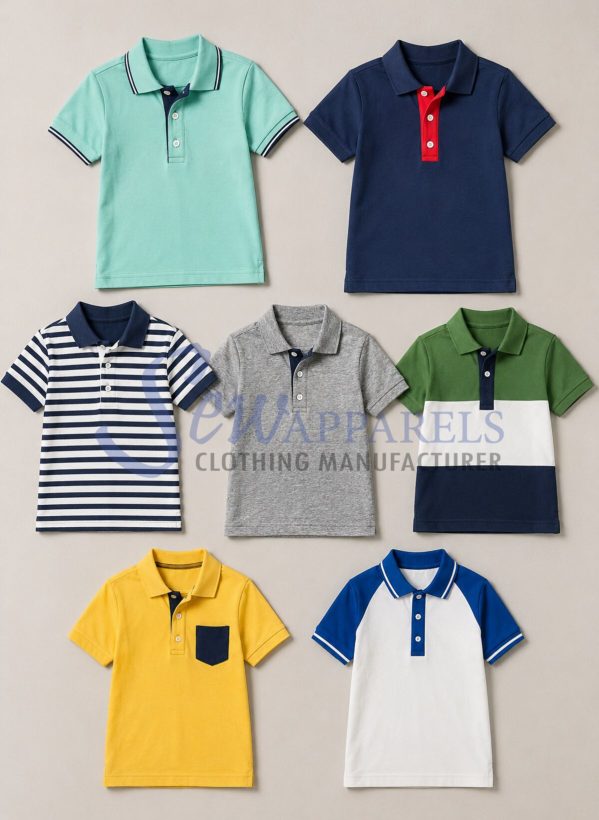
This guide uses five checks to organise a button reference register and a clear change-review process. It addresses sourced component identity rather than placket construction or button spacing. It does not provide consumer repair instructions or declare a substitute safe from appearance alone. Use Sew Apparels’ custom kids polo shirts manufacturing page to discuss the approved trim specification, intended market and actual spare-supply requirements.
1. Kids Polo Spare Button Sourcing Control: Record the Approved Part
A children polo spare button component code should lead to an identified part. Record the supplier reference, material description, finish, dimensions and applicable style. Keep the accepted sample or reference available to the relevant teams. A colour name or a photograph is useful context, but it is not a complete component identity.
Kids polo spare button sourcing control needs the garment relationship as well as the button details. A kids polo shirts button garment version link should show which released style revision uses the part. If one component is approved for several styles, list those relationships explicitly. Do not assume that a button used somewhere in the collection is approved for every shirt with a similar front appearance.
Kids polo button supplier traceability should identify who supplied the accepted part and what records accompany it. Ask the supplier to clarify ambiguous reference names before release. If two codes appear to describe the same button, establish whether they represent the same material and finish or merely similar descriptions. Keep unresolved equivalence questions visible.
The kids polo shirts approved replacement button code should distinguish a proposed spare from a released one. A request for a substitute is not approval of that substitute. Record the reviewer, date and evidence supporting the accepted relationship. This gives purchasing and customer service a clear point of reference when the original component is no longer available through the same proposal.
2. Identify differences hidden by matching appearance
Kids polo shirts spare button material identity should be requested directly from the source. Ask which material reference the supplier offers and whether it differs from the accepted part. Record the answer alongside the sample. Do not infer chemistry or suitability from the way the button looks or feels during an informal comparison.
For kids polo spare button sourcing control, a kids polo shirts button finish supplier record should describe the actual finish and relevant version information. A similar colour can hide a changed finish proposal. If the supplier changes the coating or other surface treatment, identify the change and ask the responsible team what evidence is needed for the actual product and market.
Kids polo shirts matching appearance equivalence limits belong in the review brief. The visual comparison can answer whether the proposed part resembles the accepted reference; it cannot establish every material or product requirement. Keep visual acceptance separate from technical and applicable compliance decisions. A clear separation helps prevent an attractive sample from receiving broader approval than the evidence supports.
A kids polo replacement trim specification should therefore list confirmed details and unresolved ones. If a material description is provisional, mark it as provisional. If the supplier has not provided the finish reference, request it. Do not fill gaps with assumed certifications or a general statement that all buttons from the supplier are equivalent.
3. Define the spare-supply requirement with the buyer
Kids polo shirts spare button supply requirement should explain what the buyer actually needs. Is the request for development samples, an agreed spare allocation with an order, or a controlled replacement component for a particular garment version? These scenarios require different quantity and packaging records. Treat each as a proposal requiring supplier confirmation rather than promising a standard spare programme.
Kids polo spare button sourcing control should identify the component quantity separately from the number of shirts. Ask the supplier to explain the available commitment basis and how the parts will be identified. Do not invent an allowance per garment or imply that spare quantities are automatically included in a quotation. Retain the buyer’s requirement and the supplier’s accepted proposal together.
A button reference register
Use the register below with actual component references and approval records. Its role is to make the relationship between a sourced part and an approved garment visible. The example fields do not establish a spare allocation, a supplier offering or an accepted replacement material.
| Register field | Information to retain | Review question |
|---|---|---|
| Supplier code | Original and proposed component references | Can each part be identified without guessing? |
| Material and finish | Confirmed descriptions and relevant revision | What differs from the accepted component? |
| Garment version | Style and released product revision | Which shirt is the part intended for? |
| Replacement status | Proposed, under review or approved | Who authorised the intended use? |
| Kids polo shirts: kids polo spare parts register | Controlled record version and responsible owner | Which current register governs the request? |
| Issued quantity | Supply record and receiving reference | Can the issued parts be reconciled with the approved request? |
Keep the register manageable by using one controlled record for each component relationship. Do not create a second approval simply because a different department uses a different nickname for the button. Where records genuinely represent different parts, preserve that distinction. The aim is clear identity, not the smallest possible number of codes.
4. Review substitutions through the applicable change process
Children polo button change approval should begin with a written comparison between the accepted part and the proposal. Identify changes to material, finish, supplier source or other relevant details. Ask the responsible product and compliance teams to determine which questions require further evidence. A buyer’s visual preference is one decision within that review, not a substitute for the whole process.
Kids polo spare button sourcing control should use the CPSC material-change guidance where US children’s product requirements apply. The guidance addresses changes to design, manufacturing processes or component sources that could affect compliance. Such changes can require testing and a new Children’s Product Certificate. Whether evidence for a changed component is sufficient depends on the effect of the change. Have the responsible team determine the scope for the actual garment and replacement proposal.
Kids polo shirts button source change evidence should remain connected to the precise part reviewed. A document for a different material or finish should not be treated as proof for the proposed replacement. Record the relevant source, sample and configuration. If the evidence does not answer the actual question, identify the gap rather than approving the part because some documentation exists.
Kids polo shirts component replacement approval should state what use has been accepted. A part may be approved for a particular garment revision without establishing universal use across the collection. Keep those limits in the register. Do not recommend consumer repairs or attachment procedures beyond the product’s appropriate instructions and responsible review.
Kids polo shirts button substitution review should also preserve the rejected or superseded proposal as history. This helps explain why an earlier code cannot be used for the current request. Keep the released record clear while retaining the information needed to trace the decision. A later supplier proposal should be reviewed against the accepted reference, not against a vague memory of an earlier sample.
5. Link issued parts with the approved garment version
Kids polo shirts replacement trim traceability should connect the supply record to the approved component and garment relationship. Identify the parts issued, quantity, receiving reference and relevant approval. If a request names only a style nickname, clarify the product revision before selecting a component. Similar names can describe garments produced with different button specifications.
Kids polo spare button sourcing control should complement the product’s broader traceability records. The CPSC tracking-label guidance addresses permanent distinguishing information for children’s products and packaging, to the extent practicable. It includes manufacturer or private-label identity, production location and date, and information helping identify the production source. An internal spare register does not replace those requirements. Have the responsible team maintain the relevant product records separately.
When issuing a spare proposal for an older shirt, check the actual garment version rather than selecting the newest button in the register automatically. Kids polo spare button sourcing control should preserve the original component relationship long enough to answer that question. If the original part is unavailable, route the substitute through the same applicable review process before release.
Reconcile issued components with the request and record any discrepancy. If a supplier delivers a different code, do not silently update the register to make the delivery appear correct. Investigate whether it is a naming difference or an actual substitution. Keep the receiving decision and evidence linked to the part so the next team can understand what was accepted.
Buyer questions before releasing a spare component
Does a visual match establish an acceptable replacement?
No. It supports a visual comparison only. Kids polo spare button sourcing control should identify the actual material, finish and source, then obtain the relevant approval for the intended garment version. Do not infer safety or complete equivalence from appearance.
Can one code serve several styles?
It can be considered when the actual component relationships are reviewed and recorded. List the accepted styles and revisions explicitly. A shared code should make the approved relationship clearer rather than hide differences between garments.
What should a startup brand provide first?
Share the accepted button reference, relevant garment version and spare-supply purpose. For custom kids polo shirt manufacturing, identify material or finish questions still needing supplier input. For private label kids polo shirt production, include the intended market and component record so the discussion addresses the actual product.
Kids Polo Spare Button Sourcing Control: Release Brief
Kids polo spare button sourcing control works when source identity, material, finish and garment version remain connected through a controlled register. Define the actual supply need, review substitutions and issue parts against an identified approval. Preserve the difference between a visual match and the broader evidence needed for the intended use.
The Kids Polo Buying Guides connect this trim-control decision with related development topics. Share the register and unresolved questions with the supplier so component proposals remain traceable to the accepted shirt specification.
For custom kids polo shirt manufacturing, submit the component register, intended market and spare quantities with the quotation request.
For private label kids polo shirt production, retain the approved trim and garment revisions with the supply record.
Use the short placket construction guide for the opening assembly. A sourced spare’s identity does not establish its attachment or finished-placket approval.