
Kids pajama glow print claim evidence should connect the words used to describe a decoration with the exact material, sample and conditions reviewed. A supplier photograph or an attractive demonstration is a starting point for discussion, not approval of every statement a brand might make. Before describing a pajama print as glow in the dark, identify what the proposed wording means and what evidence would support that meaning on the finished garment.
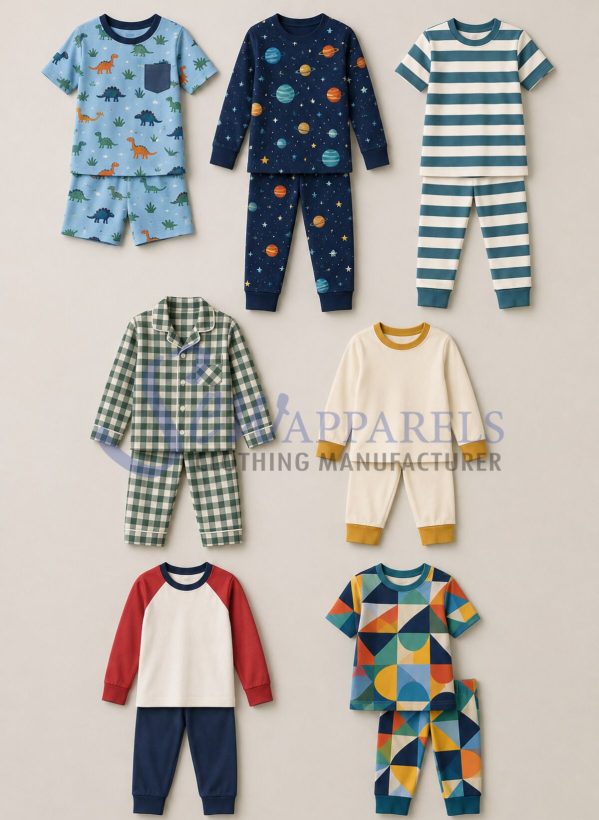
This guide provides five checks for preparing a product-specific claim dossier. It keeps the visual-function review separate from sleepwear compliance, care performance and artwork appearance. If a glow decoration is being considered, confirm supplier feasibility before treating it as an available configuration. Use Sew Apparels’ custom kids pajama sets manufacturing page to discuss the actual product brief, materials and evidence required for the intended market.
1. Kids Pajama Glow Print Claim Evidence: Define the Statement
A kids pajama glow print evidence review begins with the proposed consumer statement. Specify whether the wording describes a visible decorative effect under stated conditions or implies a duration, brightness level or repeated-use performance. These statements are different and need different supporting information. Do not approve a broad phrase simply because a sample showed some visible effect during one informal demonstration.
Kids pajama glow print claim evidence must identify the conditions attached to the statement. Ask the material supplier for its proposed preparation, charging and viewing instructions, then determine how the finished decoration will be reviewed. Record the actual conditions used rather than assuming that a buyer and consumer will reproduce a supplier’s demonstration. If the intended instructions are not available, keep the claim unresolved and request clarification.
For children sleepwear glow decoration, distinguish a decorative description from a protective or health-related claim. Do not suggest that the decoration improves nighttime safety, protects visibility or helps a child sleep without appropriate evidence for those separate statements. A kids pajama luminous ink claim should stay within the documented scope of the actual material and finished-product review. Attractive wording is not a substitute for a defined claim.
List where the statement will appear: product page, label, packaging or buyer presentation. Review images and captions together with the text, because a demonstration can imply more than its written description. Ask the responsible brand team to approve the complete presentation against the evidence dossier. Keep the approved wording identifiable so a later marketing edit does not quietly extend the original claim.
2. Identify the decoration material and sample
The pajama glow print supplier material record should identify the supplier, product reference and relevant revision or batch information provided for development. Ask how the offered material will be applied to the specified garment fabric. Record any supplier instructions that affect the proposed finished decoration. A generic brochure for a range of materials does not show which product was used on the reviewed sample.
Kids pajama glow print claim evidence should remain linked to that material identity. Kids pajama luminous print identity is especially important when a supplier proposes a substitute after initial sampling. Request the proposed change in writing and identify the sample affected. Do not assume that two materials with similar descriptions support the same visual statement, care expectation or market-specific evidence.
A pajama glow artwork sample should represent the actual decoration being considered, including its position, area and agreed application route. Distinguish a material swatch, a print trial and a finished pajama set. Each can answer a different development question, but they are not interchangeable evidence. A sample record should make clear whether the top, trousers or both carry the decoration.
Keep the fabric specification and decoration reference together. If either changes, ask the responsible team which observations or supporting documents need review. Do not add unconfirmed claims about the chemistry, certification or availability of a proposed material. The practical aim is to make the claim traceable to the product that might be ordered, rather than to an unspecified supplier capability.
A glow-claim dossier worksheet
Use the worksheet below to organise evidence before wording approval. Enter actual references and review decisions in a working copy. Empty fields identify questions still needing an answer; they should not be replaced with invented performance figures or assumed certificates.
| Dossier field | Information to retain | Approval question |
|---|---|---|
| Material identity | Supplier, decoration reference and sample relationship | Does the evidence describe the offered material? |
| Preparation and charging | Actual instructions and conditions used during review | Are these conditions relevant to the proposed wording? |
| Viewing conditions | Environment, timing and observation record | Can another reviewer understand what was observed? |
| Finished decoration | Garment fabric, artwork area and sample identity | Was the actual proposed configuration reviewed? |
| Applicable evidence review | Responsible reviewer, market and unresolved requirements | Are visual and product-safety conclusions separated? |
| Approved wording | Exact statement, limitations, approver and date | Does the presentation stay within the evidence? |
3. Separate visual performance from product requirements
Kids pajama decoration evidence scope should state which questions a document answers. A visual observation cannot establish chemical compliance, and a product-safety report does not automatically substantiate a promised glow duration. Ask the responsible reviewer to map each proposed statement to the evidence that supports it. If a document covers a different material or configuration, identify the gap instead of treating its existence as approval.
Kids pajama glow print claim evidence requires a relevant market and product review alongside the decoration discussion. The CPSC children’s sleepwear guidance explains that construction, intended use, marketing and fabric features affect classification. Specific criteria apply to infant and tight-fitting exceptions; a product description alone does not establish an exemption. Have the responsible team review the actual finished set and applicable requirements. Do not infer approval of a decorated garment from its visual appearance.
Kids pajama glow component review should also identify changes from the material or configuration previously assessed. The CPSC material-change guidance addresses changes to design, processes or component sources that could affect compliance. Such changes can require testing and a new Children’s Product Certificate. Whether component evidence is sufficient depends on the effect of the change. Ask the responsible compliance team to determine the scope for the actual product; this article does not establish that a particular substitute is equivalent.
Kids pajama decoration safety review should record the reviewer, the product represented and any unresolved action. Keep safety conclusions outside the decorative wording unless the relevant claim has been properly assessed. Do not write child-safe, non-toxic or certified based only on a supplier’s informal description. Evidence must be appropriate to the actual statement and product being presented.
4. Evaluate the finished decoration under stated conditions
A kids pajama glow condition test should start with an agreed review plan. Define the sample identity, supplier instructions, observation conditions and intended decision. If a quantitative claim is proposed, ask a qualified reviewer what method and evidence are appropriate. Do not invent a charging period, brightness threshold or duration simply to fill the dossier. A commercial claim needs relevant evidence rather than a convenient demonstration recipe.
For kids pajama glow print claim evidence, record observations in language that reflects what was actually reviewed. Kids pajama glow viewing conditions belong next to the observation, including any preparation or environmental limitations relevant to interpretation. If a photograph is retained internally, record how it was produced and avoid treating a visually enhanced image as a measurement. The reader of the dossier should be able to distinguish observation from interpretation.
Pajama glow print care durability is a separate question requiring its own agreed assessment. Identify whether the reviewed sample was new or had undergone specified care procedures, and record those procedures through the responsible technical team. Do not extend an initial visual observation into a wash-life promise. If appearance after care matters to the wording, obtain evidence for that condition and keep it linked to the same decoration and garment configuration.
Kids pajama glow performance limitations should remain visible in the approval record. If only one sample or condition has been examined, explain that scope. If the brand intends a wider statement, request the additional evidence before approval. Differences between observations should prompt investigation of the sample and conditions; they should not be resolved by selecting the most impressive result and ignoring the others.
5. Approve wording within the evidence
Children pajama glow wording should describe the substantiated decorative feature and retain relevant limitations. Avoid introducing a stronger performance promise during copy editing. The responsible team should compare the proposed statement with the dossier, including the actual sample and viewing conditions. Where the evidence supports only a limited description, keep the language limited or defer the claim until further review.
Kids pajama glow print claim evidence should be part of children sleepwear glow claim approval, not an attachment nobody consults. Record the exact wording, approver, date and evidence references. Identify where that wording is authorised for use. If packaging, product text or a buyer presentation is later revised, check whether the new presentation still communicates the same supported statement.
Keep material substitutions and claim changes connected. A supplier change may affect both the product review and the visual-function dossier. Request an updated record instead of carrying the old approval forward automatically. For custom kids pajama set manufacturing, share the intended decoration statement during development. For private label kids pajama set production, include packaging and label wording in the same controlled review.
Questions buyers should resolve
Is a supplier video enough to approve a glow claim?
Kids pajama glow print claim evidence needs more than a demonstration. It can help identify the intended effect, but it does not establish all relevant conditions or the finished product’s evidence. Request material identity, sample details and the conditions used. Determine whether those details support the exact statement proposed for the actual pajama set.
Can the same wording be used after a material change?
Revisit kids pajama glow print claim evidence when the material changes. Similar appearance or a similar trade description does not prove equivalence. Ask the responsible technical and compliance teams to identify the evidence needed for the new configuration, then approve wording against that updated record.
What if the decoration is only a development idea?
Describe it as a proposal requiring feasibility and evidence review. Do not present it as a confirmed offering or promise a result before the supplier has assessed the actual fabric, artwork and requirements. A clear initial brief can still support a useful development discussion.
Kids Pajama Glow Print Claim Evidence: Final Review
Kids pajama glow print claim evidence is strongest when the material, finished sample, viewing conditions and approved words remain traceable together. Build that record before making a consumer statement. Keep visual observations separate from product-safety conclusions, and revisit the dossier when materials, processes or wording change.
Use the Kids Pajama Buying Guides to connect this focused claim review with the wider development brief. Share the proposed statement and the actual decoration reference so the supplier discussion can address the specific evidence still required.
For custom kids pajama set manufacturing, submit the proposed wording, material reference, market and quantities for feasibility review.
For private label kids pajama set production, retain the approved packaging statement with its evidence and sample version.
Use the all-over print continuity review for artwork coordination; appearance approval does not substantiate a glow-performance claim.