
Kids polo embroidery interior covering should be reviewed as part of the complete decorated shirt, not selected only from the badge’s front appearance. The reverse side can contain backing, stitches, thread ends and an additional covering layer, each with its own material and application details. Buyers need to know what the proposed finish contains, how it sits inside the garment and what evidence supports its intended care.
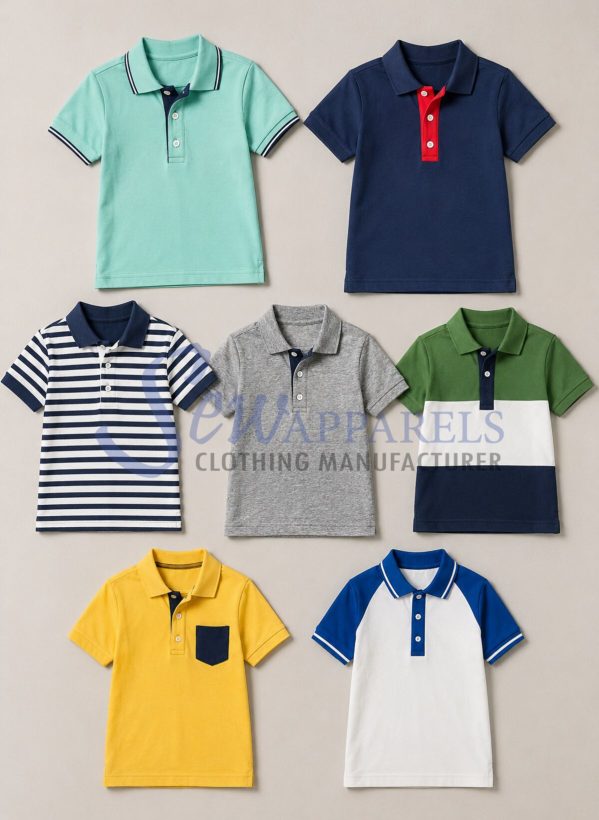
This kids polo embroidery interior covering review uses five checks to compare reverse-side finishes through identified samples and clear observations. It does not promise irritation-free or hypoallergenic performance. Any optional covering method needs supplier feasibility and product-specific review before being treated as an available configuration. Use Sew Apparels’ custom kids polo shirts manufacturing page to discuss the actual badge, shirt fabric and intended market.
1. Kids Polo Embroidery Interior Covering: Record the Construction
A kids polo embroidery reverse side review starts with a record of the decoration itself. Identify the artwork reference, badge position, garment fabric and embroidery sample. Ask the supplier to describe the thread and backing system used for that sample. If the decoration is a separately attached badge rather than direct embroidery, make that distinction clear in the brief. Similar front appearances do not establish identical reverse-side construction.
Kids polo embroidery interior covering must remain traceable to those details. A children polo badge backing specification should identify the offered material reference and the intended relationship between backing, embroidery and any additional cover. Do not rely on a description such as soft backing without an identifiable sample and supplier information. Ask which components remain in the finished shirt and which development materials are removed during finishing.
The kids polo embroidery inner layer record should distinguish a structural backing from a proposed skin-facing cover. They may serve different purposes in the supplier’s construction. Ask the supplier to explain those purposes without assuming one layer can replace another. If a substitute is suggested, identify what changes and which parts of the sample review need to be repeated.
Retain the sample’s revision, material references and relevant application instructions. This gives the buyer a basis for comparing alternatives instead of comparing unnamed swatches. When the supplier proposes a different finish after approval, keep the change visible. A covering that looks similar in a photograph should not automatically inherit the previous sample’s approval.
2. Inspect exposed thread ends and local bulk
Children polo embroidery thread ends should be inspected on the finished reverse side. Record visible loose ends, local concentrations of stitches and the relationship between the decoration and the proposed cover. Keep observations specific: where the feature appears, which sample is involved and what needs a supplier explanation. A general comment such as improve comfort is less useful than an identified observation that the team can investigate.
For kids polo embroidery interior covering, inspect the edges and attachment area as well as the middle of the badge. Kids polo embroidered backing contact is a review topic requiring an agreed product assessment, not a reason to claim a universal comfort outcome. The responsible team should determine how to evaluate the actual material and garment. Do not present a visual or handling observation as proof that every wearer will experience the same result.
Kids polo embroidery interior bulk should be compared under consistent sample conditions. Identify whether the shirt is lying flat, turned inside out or arranged for a specific inspection. Record what the reviewer sees or feels without inventing a universal acceptable thickness. If one option adds a noticeable local layer, ask how that affects the complete shirt and whether the proposed finish meets the buyer’s agreed brief.
A children polo badge underside review should also check that the sample represents the actual artwork. A dense badge and a simpler logo may have different reverse-side arrangements, so do not assume that an approval for one design covers every other design. Keep artwork identity with the observations. If the buyer changes the badge, request a review of the affected finish rather than approving it from the old sample alone.
3. Compare proposed covering options through complete samples
A children polo badge inside covering proposal should explain the material, coverage area and attachment route. Ask whether the supplier proposes bonding, stitching or another identified method, and confirm feasibility for the specified shirt. Treat these as development alternatives until the supplier has assessed them. Do not claim that a particular cover is currently offered or suitable for every polo fabric.
Kids polo embroidery interior covering should be compared with the same badge and garment specification wherever possible. A kids polo badge covering sample made on a different substrate can support a preliminary discussion but does not establish the finished shirt’s result. Ask for an appropriate decorated garment sample before approving the complete configuration. Record unavoidable differences between alternatives so the comparison does not hide them.
An interior-decoration comparison card
Use this card to organise the actual sample review. Enter supplier-specific references and observations in your working copy. The fields show what to record; they do not prescribe a covering material, bonding recipe, stitch setting or universal acceptance limit.
| Review field | Option A | Option B | Decision to document |
|---|---|---|---|
| Thread and backing | Identified references and artwork | Equivalent reference information | Confirm which components differ |
| Covering method | Proposed material and attachment route | Alternative material and route | Confirm supplier feasibility for the shirt |
| Reverse-side observations | Edges, thread ends and local bulk | The same review points | Identify specific observations needing action |
| Care result | Sample identity and agreed assessment | Comparable assessment information | Record attachment and appearance findings |
| Complete garment status | Decorated shirt reference | Decorated shirt reference | Record approval scope and unresolved requirements |
A kids polo interior decoration finish decision should be based on that comparison and the buyer’s requirements. If a simpler option meets the agreed brief, explain why it was selected. If an additional cover is selected, record the evidence supporting the decision. Neither more layers nor a more impressive material description automatically establishes a better finished result.
4. Review attachment after the agreed care assessment
Kids polo backing wash compatibility should be considered with the complete garment’s care plan. Ask the responsible technical team which assessment represents the proposed instructions and which samples will be examined. Record the procedure through that team rather than inventing a generic wash temperature or cycle count. The goal is evidence relevant to the actual shirt, decoration and covering combination.
Kids polo embroidery interior covering needs a clear starting record before care review. Inspect and identify the cover edges, attachment area and local appearance on the new sample. After the agreed assessment, compare the same features under consistent review conditions. Keep separate observations for lifting, displacement, stitching changes or appearance differences. Do not collapse all findings into a broad statement that the patch passed.
Kids polo decoration cover adhesion should be recorded where bonding is part of the proposed finish. If the method uses stitching, record the relevant attachment observations instead. Ask the supplier to explain any change and propose a correction linked to the actual construction. Do not specify an unsupported heat or pressure setting as a universal remedy; the supplier and responsible technical team must establish the appropriate process.
For US products covered by the rule, the FTC care-label guidance requires reliable support for care instructions. Its guidance addresses evidence for the complete garment when multiple components are involved. A fabric-only result does not automatically establish that the decoration and covering will remain acceptable under the same instructions. Have the responsible team determine the evidence and wording for the actual finished shirt.
Kids polo interior patch care should therefore remain tied to the selected finish. If a cover or backing changes, ask whether the existing care evidence still represents the garment. Update the comparison card and relevant product records. Avoid extending one sample’s observations into a lifetime durability promise, especially when the reviewed conditions cover only a defined assessment.
5. Approve the complete decorated garment
Kids polo finished embroidery inspection should include both the badge’s face and reverse side. Confirm that the accepted interior finish appears on the identified shirt and matches the supplier’s recorded construction. Check the selected covering edges and attachment alongside the embroidery, then record any unresolved action. A cover swatch approval does not establish approval of its application on the garment.
Kids polo embroidery interior covering also needs a change-review process. The CPSC material-change guidance addresses design, process and component-source changes that could affect compliance with applicable children’s product requirements. Such changes can require testing and a new Children’s Product Certificate. Have the responsible compliance team determine the effect of an actual material substitution; matching appearance does not establish equivalent evidence.
A kids polo decorated garment comfort review should state its scope and method through the responsible product team. Do not describe a finish as hypoallergenic, irritation-free or suitable for every child based on handling alone. Keep observational findings separate from claims needing qualified evidence. If a buyer wants stronger wording, identify the evidence required before using it.
The approval record should retain the artwork, material references, covering route, sample identity, care assessment and accepted observations. Identify the approver and date, and state what is still unresolved. If the finish changes later, compare the new proposal against this record. This helps the supplier act on a specific requirement rather than a general request for a softer shirt.
Questions to settle before selecting the finish
Does every embroidered badge need an additional cover?
Review the actual reverse-side construction and buyer requirements. Kids polo embroidery interior covering is a product-specific decision, not an automatic rule. Ask the supplier to compare identified options on the intended garment before selecting a finish.
Can a softer-feeling swatch prove comfort performance?
No universal conclusion follows from a swatch alone. Identify the complete decorated configuration and use an appropriate review defined by the responsible team. Do not convert a handling observation into an irritation-free or medical claim.
What should a startup brand send first?
Share the badge artwork, intended position, shirt fabric and any reverse-side concerns. For custom kids polo shirt manufacturing, identify the sample and proposed covering options. For private label kids polo shirt production, also state the intended market and care brief so the supplier discussion covers the actual finished configuration.
Kids Polo Embroidery Interior Covering: Approval Brief
Kids polo embroidery interior covering becomes easier to approve when each observation connects to a named sample and construction. Record the thread and backing system, inspect local bulk and edges, compare feasible covering routes and review the selected finish after agreed care. Approve the complete decorated shirt with clear limits on any performance statement.
The Kids Polo Buying Guides connect this interior-decoration decision with related product development topics. Bring the completed comparison card into the supplier brief so material changes and sample corrections remain traceable.
For custom kids polo shirt manufacturing, submit the badge, backing references, destination and quantities with the quotation brief.
For private label kids polo shirt production, retain the selected covering and care evidence with the approved sample version.
Use the short placket construction guide for opening details. A badge interior approval does not establish the placket’s construction or fastener assessment.