
Kids polo fabric specification simplification starts with a collection question: which styles genuinely need different body fabrics, and which differences belong in the pattern, collar or decoration? A range can accumulate similar material references without a clear reason for each one. Before combining them, identify the intended use and required properties of every style. Fewer references are useful only when the proposed common material still supports the products the buyer intends to develop.
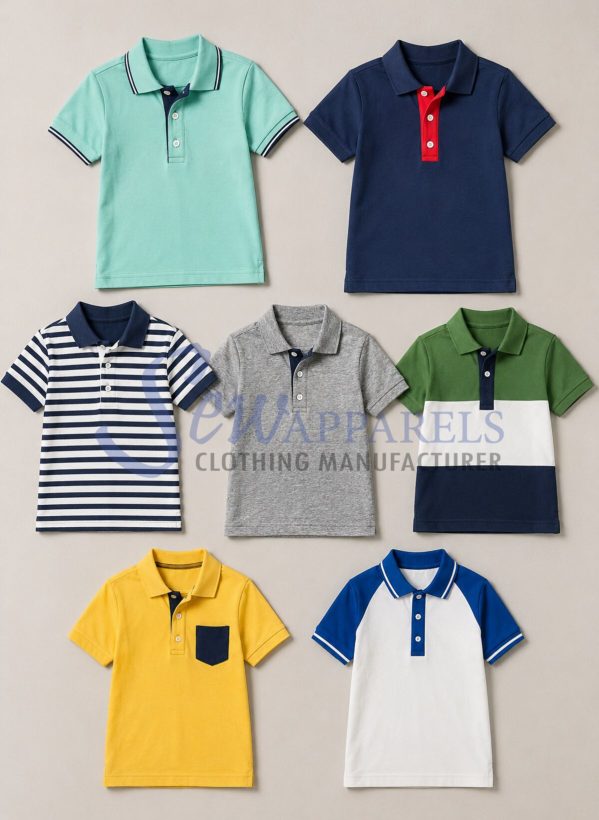
This guide uses five checks to compare fabric requirements, supplier commitments and distinct style samples. It does not assume that consolidation reduces minimum quantities, lowers prices or preserves performance automatically. Use Sew Apparels’ custom kids polo shirts manufacturing page to discuss the actual range and material priorities. Treat a shared fabric as a candidate requiring review, rather than an approved substitute for every existing specification.
1. Kids Polo Fabric Specification Simplification: Map Style Roles
A kids polo shared fabric platform needs a clear reason for existing. List the styles in the collection and explain what distinguishes them. A casual polo, a school programme proposal and a decorated promotional style may have different requirements, even when the body fabrics look similar in a catalogue. Record the intended use, appearance, care brief and material priorities before suggesting that the references can be merged.
Kids polo fabric specification simplification should protect meaningful differences instead of removing them from the brief. Children polo material consolidation works best when the buyer separates essential properties from preferences that can be reconsidered. Identify which requirements are fixed and which need supplier input. Do not label a property unnecessary merely because its current material reference appears to complicate ordering.
Use kids polo shirts polo style material role as a defined field in the range worksheet. Explain why the style uses its current body fabric and which evidence supports that choice. If the reason is unknown, record the uncertainty and investigate it. A forgotten historical decision may be an opportunity for clarification, but it is not evidence that the fabric can be replaced without review.
Record the current kids polo collection fabric count alongside the number of genuinely different requirements. Several reference codes can sometimes describe similar proposals, while one broad reference can conceal different finishes or colourways. Ask suppliers to identify what each code means. Count confirmed specifications rather than assuming that code names alone establish either duplication or equivalence.
2. Compare body fabric separately from collars and trims
Kids polo fabric specification simplification needs a clear boundary between body material and the rest of the garment. List the body fabric’s construction, fibre composition, weight reference, finish and relevant performance brief as supplied for development. Keep collar, cuff, tape, placket and decoration details in their own records. A common body fabric does not automatically create a common specification for every component.
Kids polo shirts collar trim separate specification is a useful control when comparing styles. One polo may retain a distinct collar design even if its body material is shared with another. Record that difference instead of rewriting both garments into one generic construction. The purpose of consolidation is to clarify material decisions while preserving the intended identities of the finished styles.
A kids polo shared body fabric decision should compare the actual candidate with each style’s requirements. Ask what would change in appearance, handling or agreed assessment. Do not infer equivalence from a similar fibre percentage or weight description alone. Where information is missing, request a supplier explanation and an identified sample before moving the candidate into the approved range.
For US products within the relevant rules, the FTC textile-label guidance explains requirements including fibre content, country of origin and responsible business identity. A shared material reference does not establish the final label information for every style. Keep actual composition and product records available to the responsible labelling team. Review any changes before reusing descriptions or labels from an earlier garment.
3. Identify specifications that are genuinely shareable
Kids polo shirts body fabric common specification should be proposed only after the range requirements are compared. Describe the candidate precisely enough that both buyer and supplier can identify it. Record which styles it might serve, which conditions remain unresolved and which existing references it might replace. Do not mark it as approved while technical questions are still open.
For kids polo fabric specification simplification, kids polo shirts range fabric duplication review should distinguish repeated naming from repeated material. Ask whether apparently similar references differ in finishing, usable width, colour development or other relevant specification details. Record the supplier’s answer. A candidate can be genuinely common only when the actual material proposal is understood, not when its description has been shortened.
Kids polo shirts polo material platform planning should also preserve the exceptions. If one style needs a distinct fabric to meet its brief, retain a separate row with the reason recorded. A clear exception is more useful than forcing every garment onto a single material and discovering the difference during sampling. The range can still become easier to manage without having exactly one body fabric.
A fabric-sharing matrix
The following matrix gives the buyer a structure for comparing actual styles. Replace the example roles with your collection references and supplier information. The rows show development scenarios, not confirmed Sew Apparels offerings or recommended material specifications.
| Style role | Required properties | Common candidate | Unresolved evidence | Order impact |
|---|---|---|---|---|
| Everyday polo proposal | Buyer-defined appearance and care brief | Identified body fabric reference | Finished style sample review | Supplier quotation assumptions |
| School programme proposal | Programme-specific material priorities | Same candidate or documented exception | Required product and care assessment | Quantities by colourway and size |
| Decorated polo proposal | Actual badge or print requirements | Candidate assessed with decoration | Complete decorated garment evidence | Material and decoration commitments |
| Retained distinct style | Requirement preventing consolidation | Separate specification | Evidence supporting the exception | Separate supplier basis |
Kids polo shirts material sharing feasibility should be recorded for each proposed row. A candidate accepted for one style is not automatically accepted for all remaining styles. Record the responsible reviewer and decision. Where the answer remains conditional, state the condition explicitly so purchasing does not treat a proposal as a released specification.
4. Ask suppliers about minimums and continuity
Kids polo shirts shared fabric supplier minimum is a supplier-specific quotation input. Ask whether commitments apply to a material reference, colourway or another defined basis. Distinguish fabric commitments from finished garment quantities. Combining style references does not prove that the supplier can combine every requirement into one order commitment.
Kids polo fabric specification simplification should therefore include a transparent commercial review. Send the proposed quantities by style, colour and size, then ask which assumptions change with the common candidate. A lower kids polo shirts polo collection fabric count does not itself establish a lower price. Compare actual supplier proposals and keep exclusions, validity and unresolved development costs visible.
Kids polo shirts fabric continuity supplier questions should address repeat ordering and proposed substitutions. Ask how the supplier identifies the selected material, what information accompanies a repeat proposal and how changes will be communicated. Do not promise perpetual availability or identical future performance. The practical goal is a clear process for reviewing the next material proposal against the accepted reference.
If the common candidate requires a different order arrangement, record it in the matrix. Identify any colourway or style that still needs a separate commitment. Ask the supplier to explain the effect rather than inserting assumed savings. A useful consolidation decision can be based on clearer records and feasible material sharing even when its commercial effect is still being assessed.
5. Approve distinct styles on the proposed common fabric
Kids polo shirts fabric consolidation sampling should preserve each style’s own identity. Make the candidate body fabric into the actual proposed garments with their specified collars, trims and decoration. Record the sample reference and material used. A fabric swatch can support selection, but it cannot establish the complete result for every assembled style.
Kids polo fabric specification simplification needs comparable evidence for those samples. Identify what each review covers and keep garment-specific observations separate. If one decorated style behaves differently under the agreed assessment, investigate its configuration rather than assuming the common fabric is either suitable or unsuitable for the entire range. A clear matrix lets the team retain accepted rows while addressing the unresolved one.
Kids polo shirts common fabric care evidence should state the actual procedures and sample identities. ISO 6330 describes domestic washing and drying procedures for textile testing. It does not supply a universal passing grade or prove the result of an untested garment. Ask the responsible technical team which procedures and acceptance criteria suit the assessment. Keep the chosen conditions linked to the complete style samples.
When reviewing kids polo fabric specification simplification after sampling, identify whether the candidate meets each style’s agreed brief. Record accepted differences, required corrections and retained exceptions. Do not change the material description to hide an unresolved result. The released specification should identify what the buyer and supplier actually approved.
Buyer questions before releasing the platform
Will sharing a body fabric reduce minimum quantities?
Ask the supplier to confirm the actual commitment basis. Kids polo fabric specification simplification does not guarantee reduced minimums. The answer depends on the material, colourway requirements and proposed order, so retain the supplier’s written assumptions rather than using a general industry figure.
Can collars and trims remain different?
Yes, a proposed common body material can be evaluated with distinct component specifications. Preserve those differences in the style records and sample the complete garments. Do not treat a shared body fabric as approval of every collar, trim or decoration choice.
What should a startup brand provide?
Share the range, intended style roles and material priorities. For custom kids polo shirt manufacturing, identify which current references are being compared. For private label kids polo shirt production, include the decoration, label and care brief so the review addresses the actual finished styles.
Kids Polo Fabric Specification Simplification: Release Brief
Kids polo fabric specification simplification becomes useful when the common candidate is tied to a clear range matrix. Define each style’s role, separate body fabric from trims and preserve justified exceptions. Confirm supplier commitments and approve distinct garments through relevant sample evidence before replacing existing specifications.
The Kids Polo Buying Guides connect this collection decision with focused development topics. Share the completed matrix with the supplier so material sharing, unresolved evidence and order assumptions remain visible in one controlled brief.
For custom kids polo shirt manufacturing, submit the range matrix, candidate references, destination and colour-size quantities with the quotation request.
For private label kids polo shirt production, retain distinct trims and approval conditions in each released style record.
Use the embroidery interior covering review when a shared body fabric is decorated. A common material decision does not approve every badge, backing or cover configuration.