
Kids polo sleeve cuff comfort review should connect the proposed sleeve-end construction with an approved fit reference and specific sample observations. A cuff can look neat on a flat shirt while its inside seam, local bulk or finished dimensions still need attention. Buyers should record those features separately instead of asking the supplier to make the cuff more comfortable without explaining what needs to change.
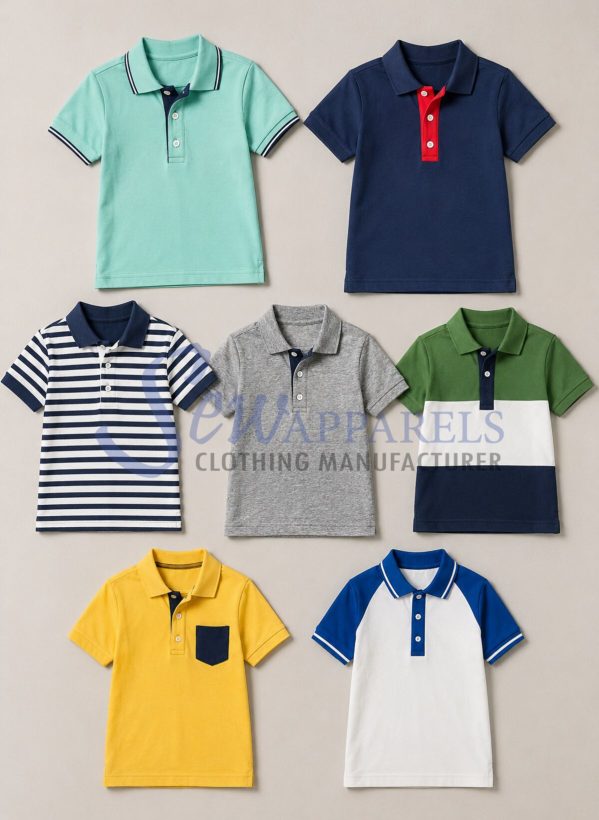
This kids polo sleeve cuff comfort review uses five checks to document material identity, relaxed dimensions, interior finish, care state and fit feedback. It does not establish dermatological, circulation or safety performance. Optional cuff constructions need supplier feasibility and appropriate product review before approval. Use Sew Apparels’ custom kids polo shirts manufacturing page to discuss the actual sleeve design, garment fabric and intended size range.
1. Kids Polo Sleeve Cuff Comfort Review: Identify the Construction
A kids polo sleeve cuff fit brief should identify the sleeve end the buyer intends to develop. Describe the cuff shape, material reference, attachment arrangement and relationship to the body fabric. Distinguish a proposed rib band from another finish rather than using one generic cuff description for every option. Ask the supplier which construction the sample actually represents.
Kids polo sleeve cuff comfort review needs that sample identity from the beginning. A kids polo cuff material sample can help compare proposals, but a loose swatch does not show the complete attachment or finished opening. Keep the swatch reference connected to the garment sample made from it. If a supplier proposes a substitute, identify the affected component and review the changed sleeve end before carrying approval forward.
A kids polo cuff specification should include the artwork or style reference, cuff material, finished dimensions and agreed method of measuring them. Record the intended appearance without inventing a universal width or tightness requirement. The responsible product team should establish the actual dimensions and acceptance criteria for the size range and fit brief.
Children polo arm rib comfort is a topic for sample review, not a material claim that can be approved from its trade name. A description such as soft rib should lead to an identified material and garment assessment. Keep the intended result and actual evidence distinct. Do not promise that one rib construction will suit every wearer or every sleeve design.
2. Compare relaxed dimensions with the approved fit
A kids polo sleeve opening sample should be checked against the agreed measurement reference. State whether the recorded value represents a flat width, a circumference or another defined measurement. Use the same method for samples being compared. Otherwise, two figures can appear inconsistent even when they describe different measurement bases rather than different cuff results.
For kids polo sleeve cuff comfort review, record the care state and sample size alongside the measurements. A new sample and one that has undergone an assessment should not be compared without that information. Do not infer a suitable fit from relaxed dimensions alone. The cuff belongs to a complete sleeve with its own construction and approved garment reference.
Children polo sleeve band fit should be reviewed through the responsible product team’s agreed fitting process. Record the observations relevant to the brief without converting them into a universal rule for all children. If a reviewer identifies a specific fit concern, document where it occurs and the sample involved. A comment attached to an identified sample is more useful than a broad request to increase comfort.
A kids polo sleeve cuff size set should preserve the relationship between sizes rather than approve the whole range from one garment. Identify the representative sizes reviewed and which remain unresolved. Ask the technical team to establish the relevant grading decisions. Do not invent a fixed increment or assume that scaling one accepted opening proves every other size acceptable.
3. Observe interior seams and local bulk
The kids polo cuff inside seam deserves its own inspection. Turn the sample to show the attachment area and record the construction actually used. Identify visible thread ends, seam allowance arrangement and local layering. Ask the supplier to explain any feature needing clarification instead of assuming that a neat exterior means the inside finish is already accepted.
Kids polo sleeve cuff comfort review should separate those interior observations from dimensions. An opening can match its stated measurement while the seam arrangement still needs a technical change. Conversely, a clean interior does not establish an appropriate opening for the approved fit. Keep both records available so a correction addresses the observed issue rather than an unrelated feature.
Kids polo rib cuff bulk should be compared through identified samples under consistent review conditions. Record the location of a noticeable concentration of material and whether it appears at the attachment join or elsewhere. Do not set an unsupported universal thickness limit. The relevant decision is whether the actual construction meets the buyer’s agreed appearance and product brief.
Children polo cuff contact points should be documented as observations within the agreed review. The responsible team should decide how fit feedback is collected and interpreted. Avoid claiming irritation-free performance from handling or a single subjective comment. If a stronger claim is proposed, identify the qualified evidence needed before using that language.
A sleeve-cuff review form
Use the following form to connect measurements and observations to the actual sample. Enter the supplier’s material references and the product team’s accepted measurement method in your working copy. The fields organise review information; they do not prescribe a cuff dimension, care procedure or medical conclusion.
| Review field | Information to record | Decision to document |
|---|---|---|
| Material and construction | Sample ID, cuff reference and attachment route | Confirm the configuration being assessed |
| Relaxed dimensions | Size, care state and measurement method | Compare with the approved fit reference |
| Interior contact | Seam arrangement, edges and local bulk observations | Identify a specific technical concern |
| Care result | Procedure reference and post-care observations | Record what changed and what remains unresolved |
| Fit feedback | Review scope, observations and sample relationship | Define the proposed technical action |
| Approval | Revision, reviewer and date | Accept the complete sleeve end or request correction |
4. Review the cuff after care and ordinary movement
A kids polo sleeve cuff wash trial needs an agreed procedure and a clear sample record. Ask the responsible technical team to identify the relevant washing and drying conditions for the assessment. ISO 6330 describes domestic washing and drying procedures for textile testing. It does not establish a universal cuff acceptance grade. Record the chosen procedure and the criteria agreed by the responsible parties rather than inventing a generic cycle count.
Kids polo sleeve cuff comfort review after care should compare the same features documented before assessment. Record the opening dimensions using the agreed method, then inspect the interior seam and local appearance. Keep changes in shape, dimensions and attachment separate in the form. A statement that the cuff passed washing is too broad when the actual observations have not been identified.
Kids polo arm opening observations can also be collected through the product team’s normal fit review. Identify the sample, care state and scope of the feedback. Do not prescribe a universal movement routine or force a sample to fit a preselected conclusion. The team should interpret specific observations in relation to the garment brief and determine whether a technical revision is needed.
For US products covered by the rule, the FTC care-label guidance requires reliable support for care instructions and addresses the complete garment when several components are involved. A body-fabric result does not automatically establish the cuff assembly’s performance. Have the responsible team connect the proposed instructions with evidence appropriate to the finished shirt and its components.
Children polo fitted cuff review should therefore retain both the starting condition and the post-care record. If the cuff material or attachment changes, identify which evidence needs updating. Do not extend a limited sample assessment into a lifespan, circulation or skin-health promise. Keep the review focused on the actual construction and the product team’s documented decisions.
5. Approve observations and technical changes together
A kids polo cuff technical revision should name the feature being changed. The supplier might propose a dimension adjustment, a different material or a revised seam arrangement, but each proposal needs an identified sample and updated record. Do not approve a vague instruction to improve softness without knowing what the supplier changed.
Kids polo sleeve cuff comfort review should compare the revised sample with the previous observation. If a dimension is adjusted, recheck it using the same measurement method and record any relevant interior changes. If the seam is revised, confirm the construction on the actual garment. Keep the reason for the change and its evidence together so the next review can assess the intended correction.
Kids polo sleeve comfort evidence should state what the completed review supports. A subjective fit observation can inform development without establishing a universal performance claim. Record accepted observations, limitations and unresolved points. If the technical correction creates a new material or care question, send that question to the responsible team before treating the revision as fully approved.
The released cuff specification should identify the selected construction, material reference, sample size set and accepted revision. Retain the care assessment and fit-review record with the approval. This gives purchasing and production teams a clear reference. When a supplier later proposes a substitute, review it against those records instead of assuming the new cuff is equivalent because it looks similar.
Buyer questions before cuff approval
Can a flat measurement establish comfort?
It is one useful input, not a complete conclusion. Kids polo sleeve cuff comfort review should connect dimensions with the actual construction and relevant fit observations. Keep the approved measurement method visible, and ask the responsible team to interpret the sample as part of the finished shirt.
Should the cuff be reviewed after washing?
Use the agreed care assessment when it is relevant to the product brief. Document the actual procedure and compare identified features before and after care. Do not assume that an unspecified wash demonstration proves the assembly’s performance under the proposed instructions.
What should a startup brand send first?
Share the sleeve-end reference, proposed material and approved fit measurements. For custom kids polo shirt manufacturing, identify the sample concerns clearly. For private label kids polo shirt production, include the intended size range and care brief so the supplier discussion addresses the actual garment.
Kids Polo Sleeve Cuff Comfort Review: Approval Brief
A complete kids polo sleeve cuff comfort review links material identity, relaxed dimensions, interior observations, care state and fit feedback in one sample record. Use that record to request specific revisions and approve the complete sleeve end. Keep subjective observations separate from stronger claims requiring qualified evidence.
The Kids Polo Buying Guides connect this focused sleeve review with related development decisions. Share the completed form with the supplier so the next sample addresses identified concerns and retains the accepted specification.
For custom kids polo shirt manufacturing, submit the cuff reference, intended sizes, destination and colour-size quantities with the quotation brief.
For private label kids polo shirt production, retain the selected sleeve-end construction and care review with the approved sample version.
Use the fabric specification simplification review when sharing a body material across styles. Keep each cuff specification and finished-garment review separate.