
Kids shorts multipack size assortment defines the exact garments that belong inside each saleable bundle. A pack can have the correct total quantity and still be wrong because one short has a different size, colour or item identity. Buyers need a controlled contents record that connects the physical shorts, pack description and order master before approving packing.
This guide explains five packing checks and provides a bundle verification grid. It focuses on assortment accuracy rather than pocket construction, fit development or choosing a commercially popular pack. The suggested records are practical workflow tools; they do not establish a universal retailer format, barcode requirement or preferred bundle size.
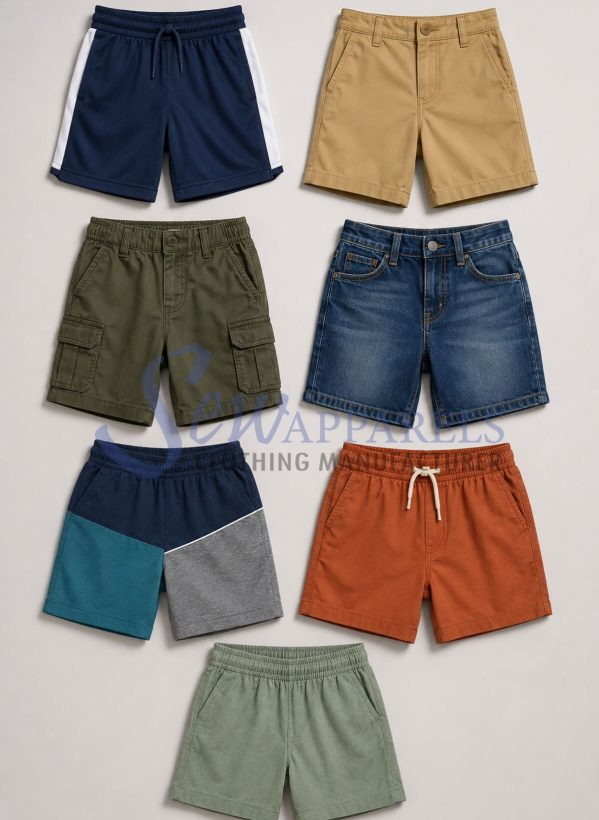
1. Kids Shorts Multipack Size Assortment: Define the Pack
Start kids shorts multipack size assortment by naming the intended pack configuration. State whether all shorts share one labelled size or whether the buyer has deliberately specified different sizes in the same bundle. Do not let a general description such as assorted shorts leave that decision open. It can mean assorted colours to one team and assorted sizes to another.
Children shorts retail multipack contents should identify each component and its quantity. Record the intended size designation exactly as agreed for the programme. Keep regional size names or retailer codes connected to their approved mapping rather than assuming similar-looking labels mean the same thing. A packing record should reference the current product and size information.
For a kids shorts single size colour multipack, show that each component uses the required size while recording its separate colour identity. The size rule and colour rule are different checks. Matching the size does not permit an unapproved colour, and matching the colour does not permit a different size.
A kids shorts intentional mixed size bundle needs an explicit composition. Identify how many of each size belong inside the pack and why the order description uses a size mix. The reason may help clarify the brief, but it does not replace the contents list. Keep this configuration distinct from a packing error that accidentally combines sizes.
Use one controlled definition for each pack version
Assign a pack version or other agreed internal reference. Record the person who can approve a change and the files that represent the current decision. If two order documents describe different contents, resolve the conflict before treating either one as permission to pack. The packing team should not have to infer which attachment is newer from a message date alone.
2. Assign exact colour, count and item contents
Kids shorts multipack size assortment needs a component list that can be compared with actual garments. Identify each short by its current programme reference, size, colour and expected count. If the same component appears more than once, record the quantity rather than repeating an ambiguous description. Use the agreed colour designation, not an informal substitute that could refer to several shades.
A kids shorts assorted colour pack record should distinguish the colour requested from the colour observed. Keep the approved colour reference accessible where the packing decision is made. A packed sample photograph can support communication, but the record should still identify which components it represents and whether the buyer approved that exact composition.
Children shorts multipack sku mapping connects the commercial pack reference with the component references. An SKU is an internal stock-keeping identifier; its meaning depends on the organisation using it. Do not assume it is the same as a retail barcode identifier or that every trading partner uses your internal naming system. Record the mapping required for this order.
Use kids shorts pack component item mapping to preserve the relationship between a bundle and its individual shorts. If component names change in an internal system, review the mapping rather than allowing an old packing sheet to point to an uncertain item. The pack record should explain what is expected without relying on a colleague’s memory of the collection.
Separate a fixed assortment from an open choice
The GS1 rule for predefined assortments (section 2.9) describes a fixed bundle sold together and explains that changing, adding or replacing an included trade item requires a new GTIN. A GTIN identifies a trade item in that standards system. Review the applicable identification decision with the responsible trading partners; do not assume a colour substitution is merely an invisible packing adjustment.
3. Match identifiers and descriptions to the physical shorts
For kids shorts multipack size assortment, compare the labels and physical contents with the controlled pack description. Confirm the relevant product references, size designations and colour records. A correct outer label does not make an incorrectly packed short correct. Likewise, a correct garment can be misrepresented by a label that describes another pack version.
Kids shorts bundle size consistency should be assessed using the information applicable to the programme. Record any unclear label or conflicting item identification. Route a fit or measurement concern to the appropriate product review instead of attempting to settle it as a packing substitution. The packing team needs a defined way to escalate uncertainty.
For kids shorts packed short identifier review, record which identifiers were compared and what each one represents. The garment reference, pack code, retailer identifier and production traceability information serve different purposes. They can be connected in a record without being treated as interchangeable codes.
The CPSC’s tracking label guidance describes permanent identifying marks on covered US children’s products and their packaging, to the extent practicable. The information concerns source and production traceability. A retail pack code alone is not a substitute for that applicable review. Keep traceability requirements assigned to the responsible team alongside commercial identification checks.
Record the sample state used for approval
Identify whether the buyer reviewed loose garments, a mock-up bundle or the proposed final packed sample. Each can answer different questions. A loose-garment comparison does not automatically approve the outer pack description, while a photograph of a closed pack does not show every component inside. Record what was actually checked and what remains to be examined.
4. Control substitutions and discrepancies during packing
Kids shorts multipack size assortment should define what happens when a required component is unavailable or a discrepancy is found. Do not let packers replace a colour or size simply to reach the total count. Hold the affected decision, record the shortage or mismatch and ask the authorised owner for a response.
A kids shorts multipack count discrepancy can involve missing, additional or wrongly repeated components. Record the expected list beside the actual contents so the difference is visible. A total-count check alone may miss a pack with two copies of one short and none of another. Component-level checking provides the information needed for a specific correction.
Use a substitution record for kids shorts: shorts colour substitution approval should identify the original component, proposed replacement, affected pack version and decision owner. This distinction is especially important when the trade-item identity or retailer description may need review. An approval should state its scope rather than become an unrestricted permission to use any available colour.
A kids shorts short multipack rework decision should describe the affected bundles, correction required and verification after the work. Keep the original observation and the final disposition connected. Marking a discrepancy closed without recording the corrected contents leaves the next team unable to understand what changed.
Follow the agreed programme process for reviewing the relevant packs. This article does not prescribe a universal inspection sample size or release threshold. The responsible team should define the appropriate checks for the actual order and retain the evidence that supports its decision.
5. Reconcile the sample bundle with the order master
Close kids shorts multipack size assortment by comparing the approved sample bundle with the current order record. Check the pack composition, identifiers and relevant label description together. If the order changed after sample approval, make that change explicit. An approved earlier sample should not silently stand in for a new composition.
A kids shorts bundle master record should identify the current contents and approval status. Include the pack reference, component list, relevant artwork or description revision and date of decision. Keep superseded versions clearly identified as history. The current record needs to be accessible to the people responsible for packing and release.
Kids shorts retailer pack specification should be reviewed for the actual sales channel. Ask the buyer to confirm the required identification and presentation details. Do not infer a universal barcode format, label position or pack count from another retailer’s order. Requirements should be recorded for this programme and checked against the submitted sample.
For kids shorts retail short bundle contents, preserve the link between the sample checked and the master record used. If the buyer approved a particular set of garments, label that set with its pack revision. Retaining a physical reference or a clear verified sample record can help resolve later questions about what the approval covered.
Bundle verification grid
Use this grid during kids shorts multipack size assortment review. Adapt the fields to the actual programme and record each component rather than only the bundle total. Example decision descriptions below are workflow prompts, not predetermined acceptance limits.
| Check | Expected and actual record | Decision to document |
|---|---|---|
| Kids shorts: kids short pack size verification | Required size for each component compared with the actual garment identity | Matches the pack definition or needs product review |
| Colour and component count | Approved colour reference and quantity beside observed contents | Correct composition or identified missing, extra or wrong component |
| Identifier relationship | Component reference, pack reference and channel identifier mapping | Mapping confirmed or clarification required |
| Discrepancy and substitution | Affected bundle, proposed correction and authorised scope | Hold, approved correction or rejected replacement |
| Final approval | Current order master, checked sample and version history | Named owner records release or remaining conditions |
Kids Shorts Multipack Size Assortment: Buyer Questions
Can a pack contain different sizes?
It can be planned that way if the buyer specifies the exact composition and the relevant descriptions reflect it. An intentional size mix needs its own controlled definition. It should never be confused with an accidental mismatch in a pack that was supposed to contain one size.
Is the total quantity enough to verify a bundle?
Kids shorts multipack size assortment approval needs component checks as well as a total count. The right total can hide an incorrect component mix. Compare the required size, colour, item identity and quantity for each component. Record the actual discrepancy so the correction targets the problem rather than just recounting the pack.
Can a similar colour replace a missing component?
Only through the programme’s authorised change process. Review the proposed replacement against the pack definition and applicable commercial identification requirements. Similar appearance does not itself establish approval, equivalent trade-item identity or agreement from the buyer.
Prepare a clear packing brief for the supplier
For custom kids shorts manufacturing, share the exact component list and channel requirements through the kids shorts manufacturing page. Ask the team to review feasibility and the information needed for the proposed pack. This guide does not promise a particular packing option, order minimum, cost or delivery schedule.
For private label kids shorts production, connect kids shorts multipack size assortment to the product references before approving the packed sample. Use the Kids Shorts Buying Guides to coordinate related development decisions. A precise contents record helps the buyer and packing team work from the same version and gives any correction a clear owner.
For custom kids shorts manufacturing, submit the controlled component list, destination and bundle quantities with the quotation request.
For private label kids shorts production, retain the approved packed-sample version and commercial assumptions together.
Use the washed-finish approval review for appearance decisions. A correct bundle count does not approve the finish of each included garment.