
Kids shorts woven versus knit collection planning starts with the role of each style, not a blanket preference for one material construction. A range can include both approaches when they answer different product needs. It can also become repetitive when similar shorts are developed twice without a clear reason. Buyers need to connect intended occasions, sample observations and development requirements before choosing which styles deserve a place.
This guide provides five checks and an occasion-to-construction matrix for children shorts material range planning. It explains how to compare proposed garments without assuming that every knit is soft, every woven is structured or either construction is automatically safer, more breathable or more durable. Those outcomes depend on the actual materials, garment design and relevant evidence.
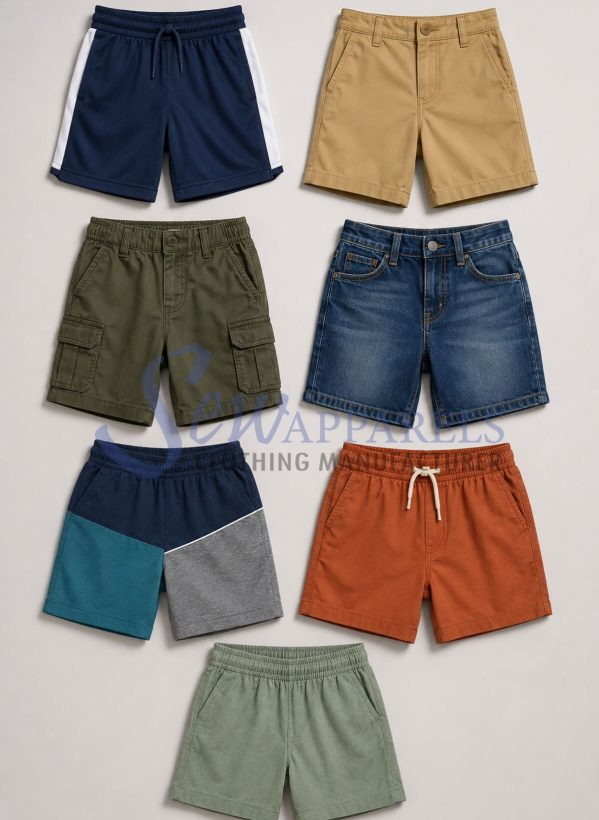
1. Kids Shorts Woven Versus Knit Collection: Define Each Role
Begin kids shorts woven versus knit collection planning with a list of intended occasions and styling requirements. Identify what the wearer is expected to do, the look the buyer wants and any practical constraints that need development review. Do not turn an occasion label into an unsupported performance claim. A casual play style and a more dressed presentation can be discussed without promising universal comfort or protective benefits.
A kids shorts knit woven occasion matrix records the brief before the team orders multiple samples. Give each candidate style a role, then explain which observations will show whether it serves that role. The matrix should allow a style to be excluded or revised; otherwise it becomes a list of reasons to keep everything regardless of duplication.
For kids summer shorts fabric assortment, record the actual programme expectations instead of assuming the season determines the best construction. A summer description does not establish breathability, drying performance or suitability for every climate. Ask which properties matter for the intended product and how the development team will assess them.
Children shorts collection role comparison should identify differences buyers can describe clearly. Consider the proposed silhouette, styling, finish, care expectations and construction work. If two styles appear to serve the same brief, write down the difference that would justify both. An extra fabric option alone may not create a useful additional collection role.
Describe roles without ranking whole material families
A kids shorts knit play short range role is a proposed place in the collection, not proof that all knits are suitable for every activity. A kids shorts woven short style requirement likewise needs a particular material and garment proposal. Keep the decision tied to that proposal so a broad category name does not replace product development.
2. Compare sample feel and care expectations
Kids shorts woven versus knit collection review should compare identified samples under consistent conditions. Record the material reference, garment revision and sample state. A fabric swatch can inform an early discussion, but it cannot answer every question about an assembled short. Seams, pockets, finishing and other components can change how the finished garment presents and behaves.
For kids shorts material construction sample hand, describe what the reviewer actually observed. Sample hand means the feel of the material when handled. Words such as soft or crisp can be useful when supported by a reference and context, but they are not a complete specification. Record the comparison rather than promising that every future garment with the same general construction will feel identical.
Kids shorts range material comparison should keep objective information and reviewer preferences distinguishable. List the supplied material description beside the sample observations. If the team needs evidence for a measurable property, assign that review to the qualified responsible person. Do not convert a favourable first impression into an untested durability or comfort claim.
For kids shorts care needs by construction, review the proposed complete garment rather than creating one care rule for all knits and another for all wovens. The FTC’s care labelling guidance explains that instructions for covered US garments need reliable evidence for the garment as a whole. Component results need to support that complete-product decision. Keep the care review connected to the exact materials and configuration being developed.
Record the state of each comparison
Identify whether observations were made before or after the programme’s agreed care procedure. Keep the relevant conditions with the sample record. A changed appearance or dimensional relationship needs an identified sample and review context. Without them, different teams may be comparing unlike stages and drawing conflicting conclusions from the same material name.
3. Keep styling needs separate from fibre assumptions
Kids shorts woven versus knit collection decisions involve more than fibre content. Knit and woven describe material construction approaches; fibre information identifies what the textile is made from. Keep both in the brief. Neither description alone settles the desired silhouette, finish, care route or sample result.
Use kids shorts short fabric occasion mapping to connect the buyer’s proposed look with a material candidate and an evaluation question. For example, the brief might call for a particular surface presentation or garment shape. The development team should assess whether the actual candidate supports it, rather than choosing on an assumed relationship between a fibre name and a styling outcome.
The FTC’s textile labelling guidance explains that most covered textile products need information including fibre content, country of origin and the responsible business identity. A construction description such as knit does not supply that fibre information. Keep verified material records available for the applicable label review rather than treating a collection description as a finished label specification.
Kids shorts casual short assortment planning should also consider the relationship between proposed styles. A material can be different while the wearer-facing role remains similar. Ask whether the difference supports a distinct brief, or whether it adds development work without clarifying the range. Keep commercial assumptions such as expected popularity separate from the evidence available for the garment.
4. Record development needs for each construction
Kids shorts woven versus knit collection planning should identify the work needed to turn each candidate into an approved garment. Do not assume one approved short can be copied into another material without review. The same intended silhouette may need different pattern or construction decisions when the actual material changes.
Kids shorts separate short block development asks whether the candidate needs its own starting pattern or a documented adaptation. A block is a basic pattern used to develop the style. The technical team should decide the appropriate path from the proposed material and design. This guide does not prescribe a universal pattern adjustment or claim that all knit and woven shorts require the same differences.
Record the sample questions before requesting development. Identify the proposed garment reference, material candidate, pattern route and decision owner. Ask which issues can be answered from the current sample and which need another version. This makes the request specific and helps prevent a series of samples that each address a different unstated assumption.
Keep adjustable-waist mechanics and pocket construction in their relevant product records. They can affect the garment, but this article’s decision is which material-development path belongs in the collection. Refer to existing construction approvals where useful and review their relevance to the new candidate. Do not recreate an old approval merely by copying its status into the new range sheet.
Make revisions visible in the range record
Identify any change in material, pattern, finish or styling brief. Record the reason and who will review the revised sample. A change can be reasonable without being automatically approved. Keep the current files and superseded references clearly distinguished so the sample team knows which proposal it is developing.
5. Remove duplication before ordering more samples
Finish kids shorts woven versus knit collection planning with an inclusion decision for each candidate. State whether it has a distinct role, needs clarification, should be combined with another proposal or should be removed. Avoid retaining every option simply because it already has a name in the spreadsheet.
Kids shorts summer short collection duplication review should compare roles as well as appearance. Two shorts may look different in photographs while answering essentially the same product brief. Conversely, similar-looking proposals may have different agreed uses or development needs. Document the actual distinction rather than assuming that either visual similarity or a different material label decides the issue.
A kids shorts short collection inclusion decision should identify the evidence considered and the next action. If an important sample question remains unanswered, record it as open. A provisional selection is useful for organising work, but it should not be confused with a complete product approval or a guarantee of commercial performance.
For the kids shorts: children short material brief, bring the selected roles, material references and development questions together. Keep the style count connected to the approved range decision. The result should explain why each candidate remains and what the next sample needs to establish.
Occasion-to-construction matrix
Use this matrix during kids shorts woven versus knit collection review. Replace the prompts with programme-specific information. It is a planning tool, not a declaration that one construction is universally best for a given occasion.
| Planning field | Record for each candidate | Decision to capture |
|---|---|---|
| Occasion and desired look | Intended role, silhouette and product presentation | Distinct need or overlap with another style |
| Material and care route | Actual material reference and complete-garment evidence questions | Review owner and information still needed |
| Sample observations | Garment revision, sample state and location-specific comments | Suitable proposal or identified development concern |
| Block development | Proposed starting pattern, adaptation and construction questions | Technical team confirms the next sample route |
| Collection inclusion | Reason to retain, revise, combine or remove the candidate | Named buyer records the next action |
Kids Shorts Woven Versus Knit Collection: Buyer Questions
Does a range need both knit and woven shorts?
Only if the selected proposals serve useful roles in the actual brief. Kids shorts woven versus knit collection planning can result in both, one construction or further development before selection. A balanced-looking list is not, by itself, evidence that every style adds value.
Can fibre content decide which style is more comfortable?
Fibre information is important, but it does not settle every wearer experience. Review the actual material, garment design and relevant sample evidence. Avoid promising universal comfort from either the fibre name or the construction category alone.
Can an approved style use a different construction without another review?
Record the proposed change and let the responsible technical team define the necessary assessment. An earlier approval provides context, not automatic release for a revised material and garment combination. Keep the current decision tied to the current sample.
Prepare the selected range for a supplier discussion
For custom kids shorts manufacturing, share the intended occasions, selected style count and material candidates through the kids shorts manufacturing page. Ask the team to review feasibility and the relevant quotation inputs. This guide does not promise a particular material option, order minimum, price or schedule.
For private label kids shorts production, connect kids shorts woven versus knit collection planning with the Kids Shorts Buying Guides and the current product brief. A clear role for each short helps the sample discussion stay focused and makes a request for another version explainable. Retain the matrix so the final collection decision can be traced to the questions and observations that informed it.
For custom kids shorts manufacturing, submit selected roles, material references, destination and quantities with the quotation request.
For private label kids shorts production, retain each style’s development route and unresolved conditions with the current sample record.
Use the integrated liner specification review for optional inner layers. A collection role does not approve a complete lined configuration.