
Kids sweatshirt print across seams needs a garment-level review because a clean artwork file cannot show how a graphic will cross an assembled junction. A motif may travel from the front body onto a sleeve, over a shoulder seam or towards a rib hem. Each crossing introduces a different surface and a different relationship between the printed area and the garment construction. Buyers should identify these junctions before approving the decorated sample.
This guide provides five artwork checks and a seam-crossing map for development discussions. The aim is to connect the intended visual effect with a proposed process, a finished sample and a version-specific approval. It does not assume that every printing method or artwork position is feasible on every sweatshirt. Confirm the actual materials, construction and decoration options with the supplier before building the order specification.
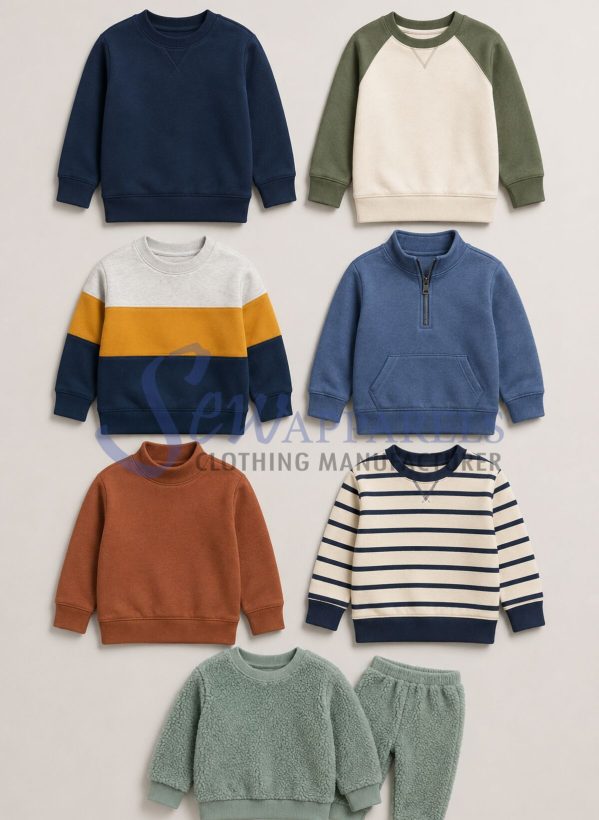
1. Map each kids sweatshirt print across seams
Start with a front, back and sleeve drawing that shows both artwork and construction lines. Mark every place where the design meets a seam, rib junction or panel boundary. Give each crossing a reference, such as shoulder A or hem B, so sample comments identify a location rather than referring vaguely to the overall print. A kids sweatshirt seam crossing print should have a clear start point, direction and intended appearance on both sides of the junction.
For a kids sweatshirt artwork across panel seam, show the important visual feature closest to that seam. A broad colour field may have a different approval priority from a face, a small letter or a narrow outline. Identify which parts must appear continuous and which breaks are intentional. Discuss these priorities on a finished garment drawing, including its resting shape, rather than relying only on a flat rectangle exported from the artwork programme.
The kids sweatshirt artwork crossing map should also record the development size, garment revision and artwork version. A graphic can intersect a different part of the armhole or hem when its dimensions stay fixed across sizes. Decide whether the artwork uses one placement rule, a graded placement or different artwork sizes. These are development questions, not assumptions about what the factory currently supplies.
Separate design intention from acceptance evidence
Write a short description of the intended effect at each marked junction. For example, an abstract stripe might allow a visible construction interruption while a brand word requires readable spacing. Avoid approving a numerical alignment limit before the team has seen the construction and sample capability. The buyer and supplier should agree a suitable reference and assessment method for the particular design.
2. Compare printing and assembly sequences
A kids sweatshirt print assembly sequence discussion should identify when decoration happens relative to cutting and sewing. Ask the supplier to explain its proposed route and any constraints relevant to the marked junctions. Printing on separate panels and printing on an assembled garment are different proposals. Neither route should be selected only because it sounds simpler; evaluate the actual sample and the supplier’s ability to control its chosen process.
For kids sweatshirt print across seams, separate panel decoration may require coordination between artwork placement and the sewing reference. Decoration after assembly needs a review of the already formed seam and surrounding surface. Ask where the artwork is positioned, how the garment is presented during the proposed process and which revision of the pattern provides the reference. Record the answer in the development file without inventing machine settings or a universal production recipe.
A kids sweatshirt junction decoration sample should use the proposed material combination and seam arrangement wherever practicable. A decoration swatch can help compare colour or surface appearance, but it cannot independently demonstrate the visual continuity of a finished shoulder or hem crossing. If the first development sample uses substitute materials, label that limitation and list the decisions that still require confirmation on the intended garment.
Explain quotation scope before comparing prices
When requesting custom kids sweatshirt manufacturing, send the junction map with the artwork files and construction references. Ask the supplier to identify any additional sampling, setup or approval steps in its proposal. Compare quotes with the same intended artwork coverage and sample scope. Do not treat an unconfirmed decoration route as a standard included service or assume the same cost structure across different suppliers.
3. Assess alignment and changing surfaces
Children sweatshirt seam print alignment should be reviewed at the location marked on the map, with the garment positioned in the agreed way. Record whether the intended visual feature remains readable or continuous and describe any interruption. For kids sweatshirt print across seams, a comment such as stripe offset at shoulder A is more actionable than print looks wrong. Keep the observation separate from the proposed correction so the technician can assess its cause.
A kids sweatshirt print interrupted surface may involve a seam ridge, a folded edge or a change from body fabric to rib. Identify what changes at the junction and compare the decoration on both sides. Ask whether the proposed artwork can accommodate the visible construction feature. If a critical logo cannot be reproduced acceptably in that position, discuss relocating or adapting it before approval instead of repeatedly requesting an undefined improvement.
For a children sweatshirt print rib junction, review the graphic on the actual rib assembly. The sample should show the intended appearance in the agreed resting condition and during any agreed handling assessment. Keep the evaluation specific to the proposed combination. A result on one body fabric and rib pair does not establish that every alternative material or decoration process will perform the same way.
Kids sweatshirt rib print compatibility requires a discussion of the material, assembled junction and decorative treatment together. Record visual changes such as an interrupted outline, uneven coverage or a different surface appearance without guessing the reason. A buyer’s observation should help the supplier investigate; it should not become a diagnosis unsupported by the process information.
Review placement across development sizes
Children sweatshirt seam registration can be documented using consistent garment landmarks and an annotated reference sample. Ask which sizes need an actual decorated check and which can initially be assessed through a placement drawing. When a small size brings the graphic close to another seam, record that interaction. The kids sweatshirt print across seams approval should make clear which sizes and versions were assessed.
4. Review the decorated garment after care
Kids sweatshirt print across seams should be assessed after the agreed care procedure as well as before it. Record the care conditions and compare the same marked junctions. Look at the relationship between the artwork and construction, including any newly visible distortion or interruption. A change in the garment’s shape and a change in the decoration are separate observations, even when they appear in the same area.
For a kids sweatshirt seam decoration care review, identify the washing and drying procedure rather than writing only washed sample. ISO 6330:2021 specifies domestic washing and drying procedures for textile testing. Use the laboratory or responsible technical team to select and document an appropriate procedure. The standard’s scope does not provide a universal pass grade for the appearance of a seam-crossing graphic.
The FTC’s care labelling guidance explains the need for reliable evidence supporting care instructions for covered garments in the United States, including the garment as a whole. Treat this as market-specific guidance. Have the responsible team review the proposed sweatshirt, decoration and destination requirements before approving consumer care wording.
A children sweatshirt seam artwork proof should connect the before-care and after-care observations to the same sample identification. If the supplier changes the artwork file, print process, materials or assembly route, determine which earlier evidence remains applicable. Keep the approved reference separate from a revised sample awaiting review so an old image does not accidentally approve a new version.
5. Approve the artwork and process record together
Kids sweatshirt printed junction approval should name the artwork version, garment revision, sample size and proposed process route. Include the marked locations and the observations accepted at each one. If a junction still needs adjustment, describe it as open rather than approving the whole garment with a general positive comment. For kids sweatshirt print across seams, this gives the next sample a defined review target.
The kids sweatshirt decoration process record should identify the supplier’s proposed route and the evidence reviewed by the buyer. Avoid recording assumed technical settings that the supplier has not confirmed. Keep the final artwork files, placement instructions and approved sample references together. Private label kids sweatshirt production benefits from a clear release record when several people review artwork, construction and merchandising separately.
A kids sweatshirt all over placement seam review also needs to distinguish intentional pattern variation from a critical matching requirement. Specify the important junctions for the actual design instead of demanding that every motif meet identically without a feasibility discussion. A collection can contain different decoration intentions, so repeat the map and approval logic for each relevant style rather than copying a single acceptance statement.
Seam-crossing artwork map for the sample brief
Use the following fields as a working record for kids sweatshirt print across seams. The map is an original development aid for organising buyer comments; it does not replace laboratory assessment or the supplier’s process controls. Keep one row for each important junction and attach the referenced drawing or photograph to the development file.
- Junction: location reference, seam type and materials on each side.
- Design intention: artwork feature and intended continuity or interruption.
- Sequence: supplier-proposed printing and assembly route.
- Sample evidence: garment revision, artwork version and assessed size.
- Alignment observation: specific appearance at the marked crossing.
- Care result: procedure reference and observations after care.
- Decision: approved reference, requested correction or further evidence needed.
For kids sweatshirt print across seams, update the map when a change affects the junction. A revised seam position, different rib or resized artwork can alter the previous assessment. Ask the technical team which checks need repeating and record its response. This keeps the approval connected to the actual revised product instead of treating an earlier favourable sample as permanent permission.
Prepare a focused development discussion
Share the artwork, junction map and construction references through our kids sweatshirts manufacturing page when preparing a product-specific enquiry. Include the intended sizes, materials and care expectations, and distinguish confirmed requirements from optional concepts. Request a supplier assessment of feasibility and quotation scope; quantities, prices, process availability and timing need confirmation for the actual programme.
Use Kids Sweatshirts Buying Guides to connect the artwork decision with the wider garment brief. Kids sweatshirt print across seams is one development topic within that brief. Keep neckline construction, fabric selection and other garment approvals in their own records, while sharing the revision references that connect them. A clear map helps the buyer and supplier discuss the same junction, sample and intended outcome.
For custom kids sweatshirt manufacturing, include the marked junctions, intended quantities and destination in your quotation brief.
For private label kids sweatshirt production, confirm the supplier-assessed process scope and sample revision before releasing artwork.
Use the shoulder-style quotation review when a changed silhouette moves the artwork crossing. Confirm the updated seam position and development scope together.