
Kids sweatshirt seasonal carryover planning starts by separating what will continue from what the new season will change. A previous sweatshirt can provide a useful development reference, but its fabric, trims, artwork and approval evidence do not automatically transfer to a revised product. Buyers need a controlled comparison before describing a repeat style as ready for another order.
This guide provides five development questions and a carryover decision record. It focuses on continuity between seasons rather than recreating a general sampling or quotation workflow. Use the previous specification, retained sample and proposed changes together. Material availability, pricing, production timing and the applicability of earlier evidence require confirmation for the actual new programme.
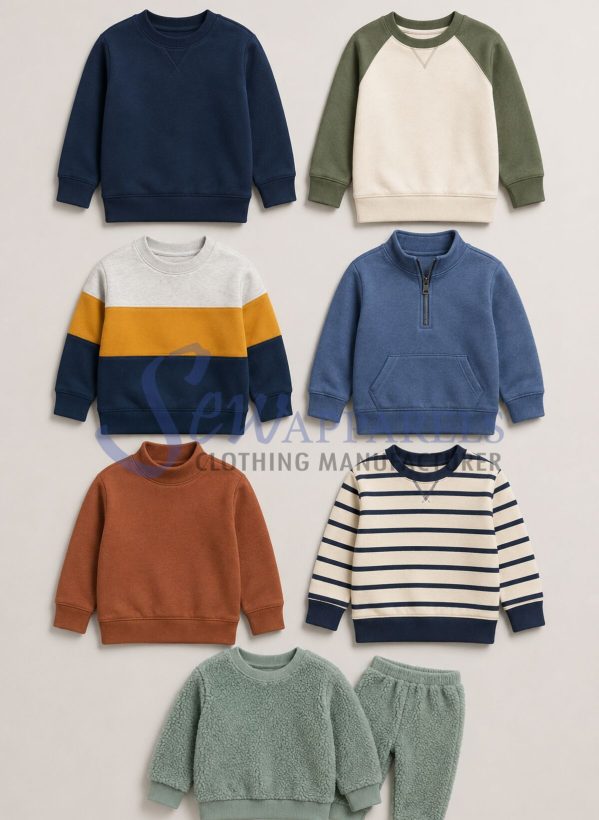
1. Kids Sweatshirt Seasonal Carryover Planning: Continuing Details
Begin kids sweatshirt seasonal carryover planning with a copy of the last approved specification, clearly identified as the previous version. List the silhouette, size range, body material, rib, construction, decoration and labels that the team intends to retain. Then list proposed changes separately. A carryover description is useful only when everyone can see which product details it covers.
Children sweatshirt carryover style control should distinguish a fully unchanged proposal from a continuing silhouette with revised materials or branding. A familiar style name does not establish that the garment is technically unchanged. Ask the merchandising and development teams to describe the new season in specific terms, such as retaining the fit while reviewing a different fabric weight, rather than using repeat order as a complete instruction.
For children sweatshirt core range planning, define which styles serve as ongoing references and which are seasonal variations. Record the intended size coverage and the role of each style in the collection. This is a buyer planning decision, not evidence of customer demand. Sales forecasts and search demand need their own validation; an organised carryover file cannot prove that a particular colour or sweatshirt will sell.
A kids sweatshirts core style carryover decision should identify the owner responsible for accepting the proposed continuity. Give the new programme a version reference even if the first proposal contains no intentional changes. That reference can then collect availability confirmations, current samples and approvals without mixing them into the archived record of the previous season.
Keep assumptions visible
Write unchanged by intention when a component is meant to continue but has not yet been confirmed. Use confirmed against the proposed specification only when the relevant evidence has been reviewed. In kids sweatshirt seasonal carryover planning, this distinction prevents a planning assumption from becoming an accidental production instruction. The supplier should be able to see which details are fixed and which still need a response.
2. Are the continuing components available?
Kids sweatshirt repeat fabric continuity needs a current supplier confirmation against the actual fabric reference. Ask whether the proposed body material is the same specification and source as the approved reference, and request details of any differences. Do not infer availability from a leftover swatch or from the fact that the factory supplied the material previously.
A kids sweatshirts new season fabric availability review should cover the intended quantity, colours and development schedule through the supplier’s proposal. If the original reference cannot be supplied, describe the alternative as a new proposal awaiting assessment. A similar commercial name does not demonstrate the same composition, finish or behaviour. Keep the replacement material reference separate until the team has accepted its actual characteristics.
For kids sweatshirt seasonal carryover planning, include rib, thread, labels and other relevant components in the continuity discussion. A change in a minor-looking trim may affect the appearance or assembly of the complete sweatshirt. Record the proposed component references and any supplier changes that have been disclosed. Ask which combinations need a sample review instead of assuming that a body fabric confirmation covers every part.
Kids sweatshirts material continuity evidence should identify the documents, references and samples used to support the decision. Keep the date and programme scope with each confirmation. If a supplier response covers only a proposed sampling quantity, do not extend it to the full order without clarification. An availability statement and a technical approval answer different questions, so keep both in the record.
Separate commercial confirmation from technical continuity
A custom kids sweatshirt manufacturing enquiry for a carryover programme should include the previous references and the proposed order scope. Request an updated quotation rather than assuming the old price or delivery arrangement continues. Ask the supplier to identify any changed assumptions in its proposal. This keeps sourcing discussions connected to the current programme without promising unchanged terms.
3. What does the retained sample actually prove?
A kids sweatshirts retained sweatshirt reference provides a physical comparison for the previous approved garment. Record its style, size, material and approval revision before using it in a new discussion. If its identity is uncertain, resolve that gap first. A sample that looks familiar but cannot be linked to the approved file should not silently become the new season’s production standard.
For kids sweatshirts carryover sample comparison, examine the retained reference alongside the new proposal and a list of intended changes. Compare the specific features relevant to those changes. A new rib reference may need a review of its assembly with the body material; a revised fabric may require further evaluation of garment appearance and fit. The technical team should define the appropriate checks for the actual combination.
Kids sweatshirt seasonal carryover planning benefits from recording both similarities and differences. Document the basis for accepting continuity, not just the reason for requesting a correction. If a feature has not been assessed in the new proposal, mark it as unverified. This avoids interpreting silence in the sample comments as approval of every retained detail.
A kids sweatshirts new colour approval route should state which colour reference and sample evidence will be reviewed for the new season. Keep colour decisions distinct from confirmation of the fabric specification. A new shade may be proposed on a continuing material, but its acceptance should still refer to the actual evidence reviewed. Do not apply an old colour approval to a newly proposed shade without a defined review.
Use a comparison that leads to a decision
Organise sample comments by component or feature, then state whether each observation supports continuity, requests a revision or needs more evidence. Include the reviewer and date. A photograph can help locate an observation, but the written record should explain what the team decided. Avoid using a general phrase such as same as last year where important differences remain unresolved.
4. Have artwork and product identifiers changed?
Kids sweatshirts repeat style artwork changes should be recorded even when the garment silhouette continues. Identify the artwork version, placement reference, colour details and any revised branding. Ask whether the decoration proposal changes materials or processes that matter to the garment review. Keep the new file separate from the previous approved artwork so a production handoff cannot select an obsolete version.
A kids sweatshirt seasonal SKU review should distinguish the brand’s internal stock code from the identifiers used in its trading channels. The same collection name may cover several size, colour or packaging combinations. Record the intended product identity for each relevant variant and ask the responsible merchandising or data team to confirm how the revised product will be represented.
For a kids sweatshirts carryover identifier review, consult the GS1 GTIN Management Standard when deciding how a trade item should be identified. Its overview supports consistent identification decisions and distinguishes new products from product changes. Apply the relevant rules with the responsible team; retaining a style name does not independently decide whether an existing GTIN remains appropriate.
Kids sweatshirt seasonal carryover planning should align the approved specification with the product data used for ordering and fulfilment. Record which file owns the current identifier decision and who approved it. If the item description, pack arrangement or branding changes, route the proposal for the relevant review rather than allowing the development team to guess the trading requirement.
Make the release files agree
A kids sweatshirts seasonal range version log can connect the specification, artwork, sample decision and product data references. It should show the current approved version of each file and which earlier version it replaces. Resolve conflicts before release, such as a new artwork file paired with an old placement instruction. For kids sweatshirt seasonal carryover planning, the log helps people find the decision; it does not replace the evidence behind it.
5. Which changes require fresh approval?
A kids sweatshirts seasonal component revision review should identify what changed, where it came from and which earlier decisions may be affected. Send this information to the responsible technical or compliance team. Avoid deciding that a change is harmless only because it is visually small. The team needs the actual component, process and destination context to determine the appropriate approval route.
For products subject to United States children’s product requirements, the CPSC’s material change testing guidance discusses changes to design, manufacturing processes or component sources that could affect compliance. Such changes can require testing and a new Children’s Product Certificate. The responsible compliance team must assess the actual change and applicable requirements; a carryover planning record does not establish certification.
Kids sweatshirts changed sweatshirt test scope should therefore be a documented decision rather than an automatic copy of the previous season’s file. Identify the earlier evidence, the changed product details and the reviewer determining its applicability. If new evidence is required, record the scope and status. Do not describe a revised product as approved while that decision remains open.
Kids sweatshirt seasonal carryover planning also needs a clear technical release for changes outside a particular regulatory review. A revised material, construction or decoration may require fresh buyer approval even when its appearance is similar. Keep the commercial order confirmation, technical acceptance and compliance decisions separate enough that each can be traced to its responsible owner.
Carryover decision record for the new season
Use one record for each meaningful change in kids sweatshirt seasonal carryover planning. The following fields are an original organising aid for the development discussion. They help the buyer and supplier locate evidence gaps and decisions without claiming that all carryover programmes use the same testing or approval requirements.
- Previous specification: style, component and approved version reference.
- Continuing detail: feature intended to remain unchanged and confirmation status.
- Proposed change: new material, colour, artwork, source or process reference.
- Evidence gap: information or comparison still needed for the decision.
- Product identity: current SKU and responsible identifier review reference.
- Approval route: technical, buyer and compliance decisions required.
- Release status: accepted version, owner, date and unresolved conditions.
Before private label kids sweatshirt production is released, check that the carryover record points to the current files. An accepted sample and an outdated specification can create contradictory instructions. Ask the responsible team to resolve those conflicts and identify the approved release set. Keep superseded references available for history while clearly distinguishing them from current instructions.
Prepare a product-specific carryover brief
Send the previous sweatshirt specification and proposed seasonal changes through our kids sweatshirts manufacturing page for a focused development enquiry. Include retained sample references and the questions that still need confirmation. Request an assessment of material continuity and the proposed programme; availability, pricing and timing remain subject to the actual supplier response.
Use Kids Sweatshirts Buying Guides to connect continuity planning with the other garment decisions. Kids sweatshirt seasonal carryover planning works best when each changed feature has its own evidence and release decision. The result is a clear new-season brief that preserves useful previous work while making revised details visible to everyone involved.
Use the fibre label verification review when the new programme changes material descriptions.