
Kids t shirt private label data consistency helps a buyer connect the garment in a carton with the product described in a retail listing. A tee can have correct sewing and attractive decoration yet carry conflicting size, material or variant information. Those discrepancies create avoidable questions when goods are received, photographed, listed or reordered. The useful starting point is one approved product record, supported by production evidence and checked against every customer-facing surface.
This guide sets out five practical checks for kids t shirt private label data consistency. It includes a reconciliation worksheet that purchasing, production and retail teams can use together. The worksheet is a buyer control tool, not a compliance certificate. Destination-market requirements, current product facts and the responsibilities of the brand or importer still need their own review.
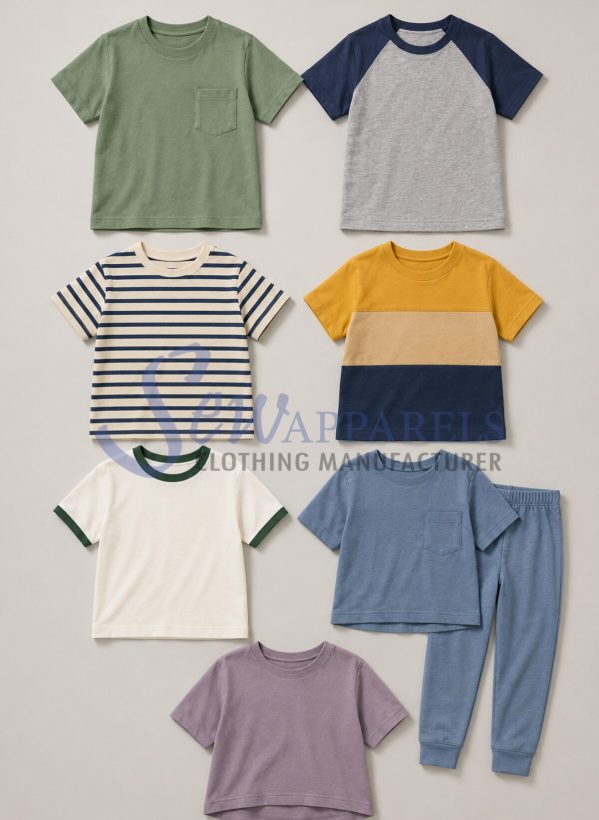
1. Kids T Shirt Private Label Data Consistency: Build the Variant Record
Start with the actual unit being ordered. Record the style reference, colour, size system, material specification revision, decoration version and intended selling market. Avoid treating an entire collection as one interchangeable record. A plain tee and a printed tee may share a fit block while needing different artwork, packaging or traceability references.
For kids t shirt private label data consistency, the record should say which document controls each field. The approved size chart can own measurements; the verified material record can own composition; the approved artwork file can own label placement and visible wording. A spreadsheet copied from last season should not silently override these sources.
A useful children tee garment packaging data match check compares one physical garment with its assigned pack rather than comparing two digital files alone. Include photographs or sample identifiers in the buyer’s own approval record where helpful, while keeping the published product description clear and factual.
Use a children t shirt sku master validation step to confirm that each active variant has a unique internal reference. If a barcode is used, the buyer’s identifier system must determine its allocation and meaning. Do not create a code simply because another supplier used a similar format. A style reference, retail identifier and production batch code can serve different purposes.
Assign a named person to kids t shirts private label tee record ownership. That person coordinates changes but should not approve technical facts outside their responsibility. Keep an approval date and revision number so a packing team can distinguish the current record from an earlier proof.
2. Reconcile fibre and origin wording with evidence
The second check for kids t shirt private label data consistency is to separate intended wording from verified facts. A design brief may request a particular blend, but a label should not be approved solely from the request. Ask which current material and production records support the wording for the variant being supplied.
For US sales, the FTC’s textile labelling guidance explains that most covered textile products need fibre content, country of origin and responsible-business identification. Care labelling is addressed separately. The guidance also discusses fibre names and electronic records. Use the applicable requirements to review the proposed label; this article does not establish a rule for every destination market.
A kids t shirt fibre origin size records file should keep those fields separate. Fibre wording describes material; origin wording describes the relevant manufacturing facts and applicable determination; size describes the brand’s sizing system. Similar-looking text does not make the three sources interchangeable.
When reviewing kids t shirts fibre composition master data, note the material revision and the evidence reference. If colourways use different approved fabrics, confirm whether their composition wording differs. Do not force all variants into one label merely to simplify purchasing.
For kids t shirts tee origin statement evidence, ask the responsible team to identify the production facts and the approved market wording. Do not infer origin from the address of a sales office or the location of a fabric supplier. Hold an unresolved field until its owner provides the basis for approval.
Keep kids t shirts production fact verification visible in the discrepancy log. A correction should identify what changed, which variants are affected and which downstream proofs must be replaced. This prevents a corrected sewn label from leaving an outdated pack or listing in circulation.
3. Match size and identifier fields across surfaces
Kids t shirt private label data consistency does not require every surface to have identical typography. It requires the information to describe the same product without creating contradictory meanings. A short pack field and a longer listing description can be compatible when both follow the same approved record.
The kids tee retail listing label consistency review should compare the variant selected by the customer with the variant inside the pack. Check size, colour name, quantity and any material wording that appears. Avoid publishing a collection-wide description when one colour or version has different verified facts.
For kids t shirts children tee size field consistency, record the size system explicitly. A brand may use an age label, a numeric size or a measurement-based reference. If a selling channel needs another format, approve a mapping rather than assuming that similar numbers mean the same fit. Keep the original measurement chart available to the teams maintaining the listing.
A kids t shirts product identifier artwork proof should show the identifier on the actual artwork revision, with the corresponding variant record beside it. Check readable text as well as any machine-readable element through the buyer’s appropriate validation process. Visual resemblance alone does not confirm that an identifier resolves correctly.
The kids t shirts channel product data record should also identify the channel and its current revision. If a marketplace requires a particular field, record how it maps to the master data. Do not change the underlying product fact merely to fit a convenient dropdown selection.
Before requesting custom kids t shirt manufacturing, collect the approved variant matrix and the label or pack fields that need supplier confirmation. This keeps the commercial discussion specific: which facts are known, which proofs are requested and who will approve them.
4. Link batch information to production records
The fourth check for kids t shirt private label data consistency concerns traceability. An identifier that distinguishes a retail variant may not identify the production run. Keep a clear relationship between the garment or packaging mark and the production records needed to interpret it.
The CPSC’s tracking-label guidance explains US children’s-product marking requirements, including permanent distinguishing marks on products and packaging to the extent practicable. The identifying information concerns the responsible business, production location and date, and manufacturing details. Codes need a route for interpretation. These requirements do not turn a tracking label into proof that all applicable safety obligations have been met.
A kids t shirts tee batch code linkage check should ask where the mark leads. Record the production reference, the relevant variant coverage and the person responsible for retrieving the supporting information. Test retrieval with the actual proposed code before approving the artwork or packing instruction.
For private label kids t shirt production, agree the information handover rather than assuming that a generic style number contains every necessary production detail. If the order uses more than one run, the records should show how each run is distinguished. The appropriate marking method and required information remain subject to the actual product and market review.
Use a kids t shirts retail data discrepancy log when a pack, label or listing contains an unresolved value. Include the affected unit, the incorrect field, the source that should control it, the owner and the proposed closure evidence. Do not close the issue simply because someone has edited a spreadsheet.
5. Approve a complete garment-to-listing data proof
Finish kids t shirt private label data consistency with a complete set of proofs. Compare the garment label, proposed packaging and a draft channel record for the same variant. An isolated label PDF cannot demonstrate that the correct label will accompany the correct size and colour in the finished pack.
The kids t shirts garment pack listing reconciliation step should record which versions were reviewed together. Where a physical proof is unavailable, state that limitation and define the later check required before release. Approval of a digital layout should not be described as verification of the packed production goods.
Make kids t shirts kids tee label data approval a documented decision. State the scope: a particular artwork revision, variant set and destination. Note open items, the release condition and the responsible approver. A supplier acknowledgement and a buyer approval may have different meanings, so record both accurately.
For kids t shirt private label data consistency, a late change should reopen only the affected checks but must reach every dependent surface. For example, a verified composition change may affect the sewn label, pack text and online material description. A size-name change may affect identifiers and assortment instructions even if the garment measurements remain unchanged.
A practical product-data reconciliation worksheet
Use the following fields for each selected tee variant. This is an illustrative record structure, not an account of a completed Sew Apparels order. Add market-specific fields and evidence references where your responsible team requires them.
- Variant identity: style, colour, size system, artwork and material revisions.
- Field being checked: size, composition, origin wording, responsible-business identity, quantity or production reference.
- Authoritative record: document name, revision, approval date and evidence owner.
- Garment value: wording or code on the proposed or actual garment label.
- Pack value: information assigned to that unit’s packaging.
- Listing value: channel, draft revision and customer-facing field.
- Discrepancy owner: person who resolves the conflict and affected variants.
- Closure evidence: corrected proof, retrieval result or approval record and release decision.
For example, suppose a pack proof carries an earlier colour name while the variant record and listing use the approved current name. Log the affected pack revision, ask its owner to replace the wording, and review the revised pack against the same variant. This is more useful than marking the entire order “checked” without identifying the change.
Questions buyers often ask
Must the garment, pack and listing use exactly the same text?
No. Kids t shirt private label data consistency is about compatible, accurate meaning. Formatting and field lengths may differ, provided approved mappings preserve the facts and applicable disclosure requirements are met.
Does a consistent data record establish compliance?
No. It helps control product information. Applicable testing, certification, labelling and other market obligations require their own evidence and responsible review.
Can one record cover every colour and size?
A shared record can cover common fields when the scope is explicit. Record variant differences separately so a convenient template does not erase a real material, artwork or identifier difference.
Prepare a clear data-consistency brief
Send the variant matrix, current material and production references, draft labels, pack proofs and proposed listing fields to the kids T-shirt manufacturing page. Identify the fields that need confirmation before discussing the approval route. For related development topics, use the Kids T-Shirts Buying Guides.
A clear kids t shirt private label data consistency brief ends with one controlled record, identified evidence owners and a defined proof set. That gives each team a practical way to resolve discrepancies before information is released across garments, packaging and sales channels.
Use decoration proof stages to identify artwork approval scope separately from verified packed-product data.