
A lab coat embroidery quotation becomes useful when the buyer defines the artwork, garment and approval scope behind the price. Two suppliers can quote the same logo name while allowing different sizes, thread colors, backing, pocket access and sample work. Separating those inputs makes it easier to compare proposals without assuming a standard per-stitch rate or treating an estimated design as a final production instruction.
This guide covers seven critical checks and an original request-for-quotation worksheet. It focuses on decoration-specific scope rather than the complete garment tender. No free digitizing, guaranteed wash durability, fixed lead time or factory capability is assumed. Obtain institution approval for branding, names and role titles, and confirm actual development terms with the supplier.
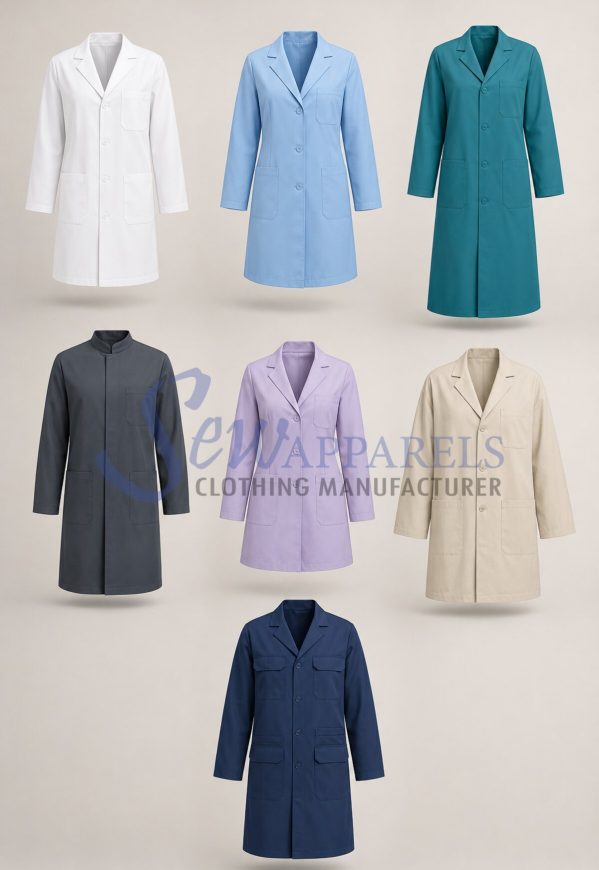
1. Identify the garment and final artwork version
Start your lab coat embroidery quotation with a style reference, fabric specification, color and size range. State whether the work concerns new cut-and-sew garments, supplied finished coats or a decoration trial. These routes can involve different access, handling and responsibility. A quote for embroidery on an open panel is not necessarily comparable to embroidery on an already assembled pocket area.
Attach the final artwork version and a dated visual reference. Identify which file is authoritative and whether the artwork may be adjusted for embroidery. A vector file can describe the intended graphic, but the supplier still needs to develop and review a suitable embroidery file. Do not assume that a clear screen image guarantees readable stitched details at the chosen size.
The lab coat logo embroidery quote should name the design version, decoration locations and outputs required. Ask the supplier to identify missing information and any assumptions used for provisional costing. If the logo is revised later, preserve the original quotation and obtain a written scope update. Silent file replacements make it difficult to establish which design the quoted charge covered.
Confirm that the buyer can authorize the artwork’s use. Institution branding rules, approved logo proportions and restrictions on personalization should be resolved before the decorated sample is approved. The supplier’s willingness to stitch a design does not establish permission to use it or institutional acceptance of its placement.
2. Specify logo dimensions and placement
The second input in a lab coat embroidery quotation is a dimensioned placement brief. State the finished logo width and height, its orientation and its reference point on the garment. Distinguish the left chest, sleeve, pocket or other location explicitly. A visual mockup is helpful, but it should be supported by measurements and a clear method for checking the finished position.
A lab coat logo size quotation should identify whether one size applies across the range or whether approved variants are required. Do not assume that a larger coat requires a larger logo. The buyer’s visual standard and the available garment area should guide the decision. Record each variant as a separate scope item when it changes the embroidery file or production arrangement.
Check the chosen location against seams, lapels, closures and pocket edges. Confirm how placement will be reviewed on the actual coat rather than only on a flat drawing. If a position crosses a construction feature, ask the supplier to review feasibility and any additional handling. Avoid presenting a proposed location as production-ready before that assessment.
Keep the quote’s tolerance and measurement expectations visible. Define the relevant position references and ask the technical parties to agree workable criteria. A supplier proposal that includes only “chest logo” leaves important decisions unresolved. Clear placement records also provide a basis for evaluating the decorated sample and checking a repeat order.
3. Confirm thread colors and stitch assumptions
A lab coat embroidery quotation needs an agreed color reference and a distinction between provisional and approved stitch information. List the artwork colors and identify how thread selection will be approved. A printed color code or digital image does not automatically provide a visually identical thread result. Review actual references under the agreed conditions before release.
The lab coat embroidery thread colour count should reflect the proposed stitched design. Ask which changes in thread, location or design variant affect the quoted scope. Record substitutions and any limitations on available colors. Do not infer a universal price increase from each additional color; obtain the supplier’s actual basis for the proposal.
A lab coat embroidery stitch count estimate should be marked as an estimate until the embroidery file and sample are reviewed. Ask what design dimensions and assumptions produced it. Quoting an artwork before digitizing can involve provisional information, while an approved file can support a more defined production request. Keep those stages separate in the comparison sheet.
Do not request excessive stitch density merely to make the logo appear more substantial. Ask the developer to assess the design together with the actual fabric, thread and backing. Sample appearance and construction need review, including small lettering, edges and the area behind the embroidery. No stitch count alone proves durability or a satisfactory finished result.
4. Define backing, pocket access and the production sequence
The fourth check in a lab coat embroidery quotation is the work sequence. State whether embroidery takes place before or after garment assembly and which components must remain functional. A logo near a chest pocket needs a clear access plan. The completed decoration should be inspected to ensure that the intended pocket opening and construction have not been unintentionally obstructed.
Lab coat pocket embroidery access can affect feasibility and handling, particularly on finished garments. Ask whether the proposed location can be reached with the available arrangement and whether any disassembly is included. If that work is proposed, record how the garment will be restored and reviewed. Do not assume that the original garment price includes additional decoration access work.
The lab coat embroidery backing scope should identify the proposed material, coverage and finishing. Ask what remains inside the garment and how the buyer will review it. Consider the complete decorated area, including its appearance and interaction with the specified fabric and care route. A backing described only as “standard” is a quotation assumption requiring clarification.
The CottonWorks sourcing and manufacturing resources offer broader context for apparel construction and quality planning. They do not prescribe an embroidery charge or establish supplier capability. Use that context to develop informed scope questions, then obtain actual process proposals and commercial terms for the identified coat and design.
5. Separate names, role titles and quantity variants
Personalization changes the lab coat embroidery quotation when individual text or approved variants are required. Identify whether garments carry a common logo, a role title, a name or a combination. Record placement and format for each field. Keep the institution’s approved wording separate from preliminary buyer notes so that a draft title does not become an accidental production instruction.
Lab coat personalized name embroidery cost inputs include the number of distinct entries, the chosen lettering format, text dimensions, garment allocation and approval requirements. Use anonymised examples during preliminary costing where actual personal information is unnecessary. Before production, provide only the approved information needed through the agreed secure process.
A lab coat role title embroidery proof should show spelling, capitalization and the intended location. Obtain institutional review when role descriptions or credentials appear. The supplier should not invent or infer titles from a name list. Approval of a common logo is not approval of every personalized text entry.
Document the lab coat embroidery order quantity split by garment style, size, color and decoration variant. Separate quantities without personalization from those requiring distinct entries. Reconcile the totals with the garment order. Ask how changes after approval will be treated, including a replacement name, altered role title or additional garment allocation.
6. Compare digitizing, sampling and repeat-order inclusions
For a comparable lab coat embroidery quotation, separate one-time development work from recurring decoration charges. A lab coat embroidery digitizing charge should identify the artwork and file outputs covered, adjustment scope and applicable use terms. Do not assume that payment automatically transfers ownership, provides unrestricted file access or guarantees reuse with another supplier.
Ask what the lab coat decoration sample charge includes: a stitched swatch, a decorated garment, specified design variants or a revised proof. These outputs answer different questions. A swatch can support an initial artwork discussion, but approval of the actual garment may still be needed for position, pocket function and presentation. Record sample delivery and any return requirements separately.
Lab coat repeat logo digitizing reuse should be confirmed in writing. Ask whether the same approved file can be used for the proposed fabric, dimensions and production arrangement. An unchanged logo name does not mean that every input remains unchanged. Record any proposed reuse credit or setup treatment as a supplier-confirmed term, including its conditions.
A lab coat embroidery quote comparison sheet should show quoted charges and unresolved inclusions without inventing rates. Compare identical scope lines and mark missing figures as confirmation required. Identify lab coat branding price exclusions, such as artwork revision, extra samples, supplied-garment handling or shipment, when the supplier excludes them. An incomplete proposal should remain visibly incomplete.
7. Lab coat embroidery quotation approval worksheet
Use the following seven-input RFQ structure to request like-for-like proposals. Add separate columns for one-time charges, recurring charges, quantities, inclusions and exclusions. These fields describe a comparison tool; they are not a price list or a promise of available services.
| Required record | One-time charge | Recurring charge | Quantity | Inclusions | Exclusions |
|---|---|---|---|---|---|
| Garment and artwork: style, material, final design reference and authorization status. | |||||
| Dimensions and position: finished logo size, placement references and approved variants. | |||||
| Thread and stitch assumptions: color references, provisional file information and sample-review requirements. | |||||
| Construction scope: backing, pocket access, assembly sequence and finishing. | |||||
| Personalization allocation: approved text formats, distinct entries and garment quantity reconciliation. | |||||
| Development and repeat terms: digitizing, sample outputs, revision scope, reuse conditions and delivery. | |||||
| Approval record: decorated sample reference, accepted scope, outstanding items and named decision owner. |
Lab coat decorated sample approval should cover the actual agreed garment and design. Review placement, lettering, thread appearance, backing finish and pocket operation. Confirm the intended care route and the evidence needed for the complete decorated garment. A pleasing first appearance is not sufficient evidence of guaranteed wash performance.
The FTC care-labeling guidance explains the need for reliable evidence supporting care instructions for covered products, including the complete garment’s components. Its institutional commercial-use exemption means scope must be checked rather than assuming every lab-coat transaction has identical labeling obligations. Agree applicable buyer and market requirements separately; the quotation itself is not a care-performance test.
Lab coat embroidery quotation: sourcing request
Complete your lab coat embroidery quotation request with the final artwork, dimensions, locations, garment details and quantity matrix. Ask Sew Apparels to confirm feasibility, itemized development and recurring charges, proposed sample work and current terms. No per-stitch rate, free setup, minimum order or turnaround is established by this guide.
Review the custom lab coat manufacturing page and the lab coats buying guides for related planning decisions. Keep private label lab coat production aligned with the approved decorated sample and documented quotation scope. A complete request helps the buyer compare genuine inclusions and move into development with fewer unanswered assumptions.