
Jogger scrub pants laundry qualification should connect an identified garment with the laundry process it is expected to enter. Fabric approval alone does not show whether the waistband elastic, ankle cuffs, drawcord, labels, decoration and seams will remain acceptable together. Before issuing a new style, a buyer needs a defined process brief, representative samples and an agreed record of appearance, measurements and component function.
This guide explains six critical checks for a practical qualification plan. It addresses garment compatibility and a documented release decision, not validation of infection-control performance. No universal industrial-laundry suitability, sterilisation claim, guaranteed service life or fixed number of wash cycles is assumed. The institution and laundry provider must confirm their own operational requirements.
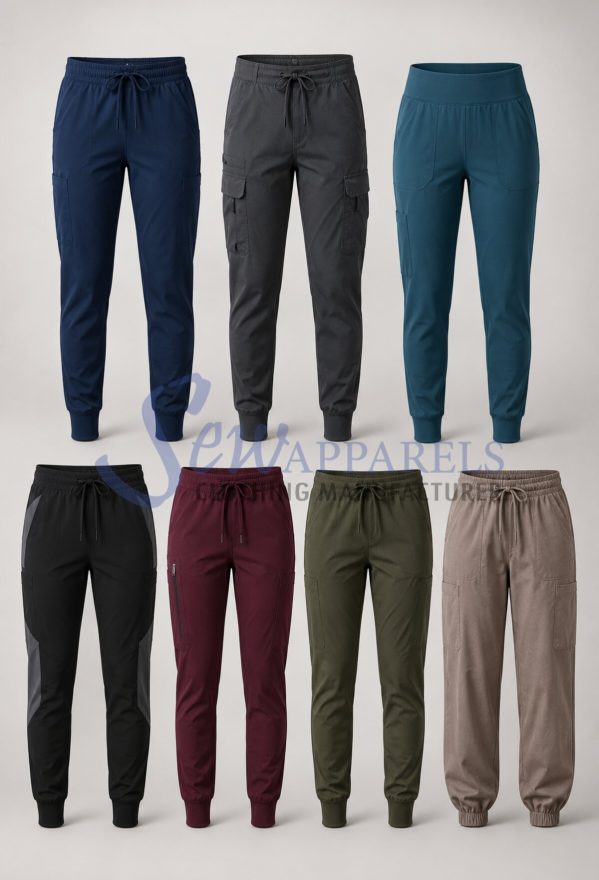
1. Obtain the actual laundry-provider process brief
Start jogger scrub pants laundry qualification by identifying where and how the intended garments will be processed. Ask the buyer which provider, programme and garment category apply. Record the current process reference and responsible contact. Do not replace that information with a general description such as “hospital wash,” because different programmes can expose materials and components to different conditions.
A jogger scrub pants laundry provider brief should identify the agreed washing, finishing, drying and handling stages relevant to garment compatibility. Obtain the provider’s documented requirements, including any restrictions on textile components or decoration. Where information is commercially sensitive, ask for sufficient approved specifications to plan the trial without demanding unnecessary operational detail.
The scrub jogger provider wash protocol used for the trial must be identified by version or date. Record the process actually used and any departures from the agreed plan. If samples are evaluated through a laboratory simulation rather than the provider’s equipment, state that distinction and obtain technical agreement on the comparison. An unspecified home wash cannot be presented as equivalent evidence.
The CDC healthcare laundry and bedding guidance provides institutional context for laundry policies. It is not a garment durability specification or a passing standard for scrub joggers. Keep the facility’s hygiene responsibilities separate from the apparel qualification record, and obtain the actual programme requirements from the responsible institution and provider.
2. Identify the complete fabric and trim package
The second step in jogger scrub pants laundry qualification is a component inventory. List the main fabric, pocketing, waistband elastic, ankle-cuff material, drawcord, eyelets or other hardware, thread, labels and decoration where applicable. Record component references and suppliers when available. An item hidden inside the garment can still affect function after processing and should not disappear from the qualification plan.
A scrub jogger trim laundry matrix links each component to its location, intended function and relevant process exposure. Identify whether the component will be assessed in isolation, within the garment or both. A trim supplier’s document can support the review, but it should not silently replace evidence for the assembled product under the defined programme.
For scrub jogger elastic heat compatibility, obtain the actual elastic specification and discuss the process with the technical parties. Do not claim that a fiber blend or a general “heat-resistant” description guarantees the waistband’s behavior. The trial should record the function the buyer needs, the observation method and the agreed acceptance criteria for the assembled garment.
Include a scrub jogger cord laundering trial when the style has a functional drawcord. Identify the cord, end finishing and attachment arrangement. Review appearance, operation and any unintended change after the defined process. If the design changes from one cord or cuff material to another, record the substitution and decide whether the existing evidence remains applicable.
Do not overlook labels and decoration. Jogger scrub pant label wash durability needs a defined identity: printed or woven label, attachment method, information carried and intended readability. The same applies to branding, embroidery backing or applied transfers. Ask whether every component on the proposed production sample matches the version used in the qualification trial.
3. Record the baseline before trial laundering
Jogger scrub pants laundry qualification requires a baseline that can be repeated after processing. Record the style version, size, color, fabric batch, trim references and sample identifier. Photograph agreed areas consistently and keep an unprocessed comparison sample when the plan requires one. Do not compare a revised garment with an old photograph whose construction or size is uncertain.
A scrub jogger laundry sample identity record should distinguish garment samples from loose material specimens. Specify which units are assigned to each process or assessment stage. Record any fitting, washing or handling that occurred before the trial. A sample with an undocumented history may provide an observation, but it is a weaker basis for approving a defined production specification.
Prepare a scrub jogger before after laundry record with named measurement points and consistent methods. Include relevant dimensions such as waist, rise, leg length and cuff opening according to the product specification. Record garment condition and relaxation requirements agreed by the technical team. Avoid mixing relaxed measurements with stretched or manually reshaped measurements without explanation.
Check operation before processing: waistband recovery, cuff behavior, drawcord movement, pocket usability and label readability as relevant. Define how observations will be made and who will review them. Appearance alone is insufficient if the original function is already uncertain. Baseline records help distinguish a pre-existing construction issue from a change observed during the trial.
The CottonWorks quality testing overview explains why textile construction, care-related appearance, sampling and conditioning matter to evaluation. Use that background to structure the request. It does not provide an automatic approval criterion for your garment, so agree the specific assessment methods and decision requirements before processing begins.
4. Inspect the garment and every relevant component
For jogger scrub pants laundry qualification, review the processed garment against the recorded baseline. Inspect the locations and functions defined in the plan. Record observations even when a sample remains acceptable, because a documented unchanged condition is more useful than an unexplained tick beside “pass.” Connect photographs and measurements to the process stage and sample identifier.
Scrub jogger component deterioration can include a visible or functional change in the identified trim package. Describe what was observed rather than assuming the mechanism. Record damaged stitching, altered cord operation, label deterioration, deformation or other relevant findings. Obtain technical review before attributing a change solely to temperature, chemistry or a particular supplier input.
Review scrub jogger colour after commercial laundering using the agreed comparison and conditions. Identify shade change, staining or differences between the main fabric and trims where observed. A photograph taken under different lighting is not a reliable numerical color comparison. If a formal color assessment is required, ask the laboratory or provider to specify the applicable method and reporting approach.
Check scrub jogger size label durability separately from the garment’s dimensions. A trouser can retain its shape while the size or identification information becomes difficult to read. Record the label’s attachment and legibility using the agreed evaluation. Include care information and other required product data as appropriate, with market-specific label requirements reviewed through the buyer’s usual compliance process.
A jogger scrub pants industrial wash trial should also consider the complete item’s presentation after the defined drying and finishing stages. Examine seam appearance, pocket position, leg balance and cuff condition. Do not confuse a provider’s acceptable folding or finishing outcome with approval of every material property. Keep each assessment connected to its stated question.
5. Review evidence and resolve changes before release
The fifth check in jogger scrub pants laundry qualification is a joint evidence review. Bring the specification, process record, baseline and post-process observations together. Ask the provider, buyer and relevant technical parties to review deviations and uncertainties. If the trial did not follow the intended conditions, decide what additional evidence is needed before describing the style as qualified.
For a scrub jogger laundry evidence review, separate results from explanations and commercial decisions. An observed dimensional change is a result; an assumed cause is a hypothesis until technically supported. Approval to order more development samples is not the same as approval to issue the garment. Record each decision with its owner, date and specification reference.
When a component is changed, define the next assessment scope and keep any sample revision charges separately approved. A new elastic, label, cord or decoration can alter the relevance of previous evidence. Keep the original sample and result linked to the original specification, then identify the revised version. Do not transfer an approval to a replacement component merely because its color or nominal description appears similar.
Discuss scrub jogger defined process suitability using precise language. Approval can refer to the identified garment version and agreed programme under the documented assessment plan. It should not imply suitability for every industrial laundry or an unlimited service life. Ask the buyer and provider to identify any conditions, unresolved observations or restrictions accompanying their acceptance.
6. Jogger scrub pants laundry qualification matrix
Use an original qualification matrix with one entry for each component or garment function. The following fields define the record; they are not completed test results and do not establish Sew Apparels capability or product performance.
| Required record | Garment or component | Process and method | Actual evidence | Review decision |
|---|---|---|---|---|
| Component and reference: identify the material, trim, label or assembly, its supplier reference and specification version. | ||||
| Location and purpose: state where it appears and what function must remain acceptable. | ||||
| Process exposure: link the entry to the provider’s agreed process and the trial actually performed. | ||||
| Baseline: record dimensions, operation, appearance or readability using the defined method. | ||||
| Observed change: identify the result, sample, stage, photograph or report reference. | ||||
| Review action: state whether more evidence, a component change or a revised sample is required. | ||||
| Sign-off: name the responsible reviewer, decision date and conditions of acceptance. |
The scrub jogger laundry release form should state the garment version, process reference and scope of approval. Attach unresolved items rather than hiding them in a general statement. If only preliminary development evaluation has been completed, label it accordingly. A clean-looking garment or readable brand label does not demonstrate sterilisation, infection prevention or comprehensive suitability for a healthcare role.
Keep the matrix available for repeat orders and changes in laundry arrangements. If the provider, process or garment specification changes, review the evidence before carrying the decision forward. Define that review trigger with the buyer. Jogger scrub pants laundry qualification is a documented relationship between an identified product and process, supported by observations and agreed decisions.
Jogger scrub pants laundry qualification: next sample inputs
Complete jogger scrub pants laundry qualification planning by sending the intended design, component list and laundry-provider requirements. Ask for a sample plan that identifies responsibilities, assessment scope and any proposed development charges. No fixed price, minimum quantity, trial duration or guaranteed result is assumed; obtain current terms and technical feasibility for the actual request.
Review the custom jogger scrub pants manufacturing page for the product discussion and the jogger scrub pants buying guides for related decisions. Keep private label jogger scrub pants production aligned with the version reviewed in the qualification record. A complete component-and-process brief makes the next development stage clearer and gives the buyer a traceable basis for approval.